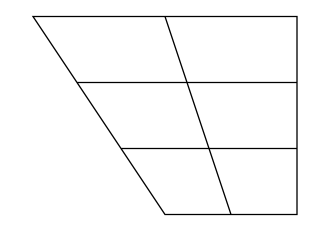
| Voiceless uvular affricate |
|---|
|
|
|
source · help |
|
| X-SAMPA | qX |
|---|
The voiceless uvular affricate is a sound used in some spoken languages. The IPA letter for this sound is ⟨qχ⟩. It is not in English.
Characteristics
- The phonation is voiced. This means that the vocal cords vibrate while the sound is being pronounced.
- The place of articulation (where the sound is produced) is palatal. This means that this sound is produced with the middle or back part of the tongue raised to the hard palate.
- It is an oral consonant. This means that air is allowed to escape through the mouth only.
- The manner of articulation (how the sound is produced) is affricate. This means that this sound is produced by first stopping the air flowing from the mouth, then allowing air flow through a constricted channel at the place this sound is produced, to make turbulence.
Examples
| Language | Word | IPA | Meaning | Notes |
|---|
| Alemannic | Most High and Highest Alemannic dialects | Gschänk | [ˈkʃæɴq͡χ] | 'present' | Velar [k͡x] in other dialects. |
| Adyghe | Natukhai | кхъэ | [q͡χa]ⓘ | 'grave' | Dialectal. Corresponds to [qʰ] in other dialects. |
| Avar | хъарахъ/څﺎراڅ | [q͡χʰːaˈraq͡χʰː]ⓘ | 'bush' | Contrasts with the ejective [q͡χʼː]. |
| Chechen | кхаара/qaara/قآآرآ | [q͡χaʔara] | 'Wednesday' |
| Chukchi | ӈирэӄ/ňirèḳ | [ŋireq͡χ] | 'two' | Allophone of [q]. |
| English | Scouse | clock | [kl̥ɒq͡χ] | 'clock' | Possible word-final realization of /k/. |
| Georgian |
Some dialects |
აფხაზეთი |
[apʰq͡χazetʰi] |
'Abkhazia' |
Only after bilabial stops. Otherwise [x]. |
| Kabardian | кхъэ/ٯّە | [q͡χa]ⓘ | 'grave' | |
| Persian | Some dialects | ﻗﻔﻞ | [q͡χofl] | 'lock' | Lenition of word-initial /q/. |
| Rendille | munkhet | [munq͡χet] | 'forgotten' | Only after nasal consonants. Otherwise [x]. |
External links
|
|---|
IPA topics |
|---|
| IPA | |
|---|
| Special topics | |
|---|
| Encodings |
- ASCII encodings
- TIPA
- Phonetic symbols in Unicode
- IPA Braille
|
|---|
|
|
|
|