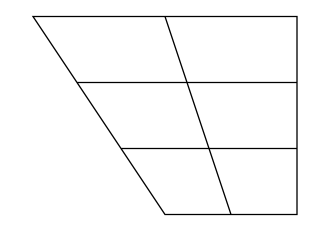
Open-mid back unrounded vowel
| Open-mid back unrounded vowel | |||
|---|---|---|---|
| ʌ | |||
| Audio sample | |||
|
source · help | |||
| Encoding | |||
| X-SAMPA | V | ||
| |||
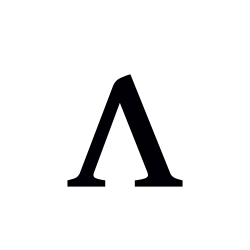
The open-mid back unrounded vowel is a sound used in some spoken languages. It is in English and is usually written as u, as in cut.
Characteristics
Examples
| Language | Word | IPA | Meaning | Notes | |
|---|---|---|---|---|---|
| Ajië[1] | kë | [kʌˀ] | 'pot' | Distinct from /ə/ | |
| Catalan | Solsonès[2] | tarda | [ˈtaɾð̞ʌ̃ː] | 'afternoon' | Realization of final unstressed /ə/ |
| Danish | slot | [ˈslʌt] | 'castle' | Usually transcribed as /ɒ/ but more mid-centralized [ɒ̽]. | |
| Emilian | most Emilian dialects[3] | Bulåggna | [buˈlʌɲːɐ] | 'Bologna' | It corresponds to a sound between /ɔ/ to /ä/; written ò in some spellings |
| English | Cape Town[4] | lot | [lʌt] | 'lot' | It corresponds to a weakly rounded [ɒ̈] in all other South African dialects. See South African English phonology |
| Natal[4] | |||||
| Cardiff[5] | thought | [θʌːt] | 'thought' | For some speakers it may be rounded and closer. See English phonology | |
| General South African[6] | no | [nʌː] | 'no' | May be a diphthong [ʌʊ̯] instead.[7] See South African English phonology | |
| General American[8] | gut | ⓘ | 'gut' | In some dialects, fronted to [ɜ], or fronted and lowered to [ɐ]. In Standard Southern British English, [ʌ] is increasingly heard in place of [ɐ] to avoid the trap–strut merger.[9] See English phonology and Northern Cities Vowel Shift | |
| Inland Northern American[10] | |||||
| Multicultural London[11] | |||||
| Newfoundland[12] | |||||
| Northern East Anglian[13] | |||||
| Philadelphia[14] | |||||
| Scottish[15] | |||||
| Some Estuary English speakers[16] | |||||
| Some Standard Southern British speakers[9] | |||||
| French | Picardy[17] | alors | [aˈlʌʀ̥] | 'so' | Corresponding to /ɔ/ in standard French. |
| German | Chemnitz dialect[18] | machen | [ˈmʌχɴ̩] | 'to do' | Allophone of /ʌ, ʌː/ (which phonetically are central [ɜ, ɜː])[19] before and after /ŋ, kʰ, k, χ, ʁ/. Exact backness varies; it is most posterior before /χ, ʁ/.[20] |
| Haida[21] | ḵwaáay | [qʷʰʌʔáːj] | 'the rock' | Allophone of /a/ (sometimes also /aː/) after uvular and epiglottal consonants.[22] | |
| Irish | Ulster dialect[23] | ola | [ʌl̪ˠə] | 'oil' | See Irish phonology |
| Kaingang[24] | [ˈɾʌ] | 'mark' | Varies between back [ʌ] and central [ɜ].[25] | ||
| Kashmiri | از | [ʌz] | 'today' | Allophone of [ɐ]. Used only in monosyllables. Typical of the Srinagar variety. | |
| Kensiu[26] | [hʌʎ] | 'stream' | |||
| Korean[27] | 너 / neo | [nʌ̹] | 'you' | See Korean phonology | |
| Lillooet | Retracted counterpart of /ə/. | ||||
| Mah Meri[28] | Allophone of /ə/; can be mid central [ə] or close-mid back [ɤ] instead.[28] | ||||
| Nepali | असल/asal | [ʌsʌl] | 'good' | See Nepali phonology | |
| Norwegian | Solør[29] | fäss | [fʌs] | 'waterfall' | In traditional dialect transcriptions, this vowel is written consequently as ⟨ä⟩, and has existed as a separate vowel in addition to ⟨æ⟩, [æ]. This is because ⟨ä⟩ has evolved from an unrounding of short ⟨o⟩. ⟨ä⟩ has morphed to [æ] with younger speakers. |
| Ossetian | Digor | майрӕнбон / majrænbon | [majrʌnbon] | 'Friday' | Common sound in the Digor dialect. In the Iron dialect, this sound is replaced by a near-open central vowel. |
| Portuguese | Greater Lisbon area[30] | leite | [ˈɫ̪ʌjt̪ɨ̞] | 'milk' | Allophone of /ɐ/ before /i/ (forming a phonetic diphthong [ʌj]). Corresponds to [e] in other accents.[30] See Portuguese phonology |
| Russian | Standard Saint Petersburg[31] | голова/golová | [ɡəɫ̪ʌˈvä] | 'head' | Corresponds to [ɐ] in standard Moscow pronunciation;[31] occurs mostly immediately before stressed syllables. See Russian phonology |
| Scottish Gaelic | Barra[32] | duine | [ˈt̪ɯɲʌ] | 'person' | Dialectal allophone of [ə] in word-final position. |
| Tamil[33] | Nasalized. Phonetic realization of the sequence /am/, may be [õ] or [ã] instead.[33] See Tamil phonology | ||||
| Xavante[34] | [jʌm] | 'seed' | The nasal version [ʌ̃] also occurs.[34] | ||
Before World War II, the /ʌ/ of Received Pronunciation was phonetically close to a back vowel [ʌ], which has since shifted forward towards [ɐ] (a near-open central unrounded vowel). Daniel Jones reported his speech (southern British) as having an advanced back vowel [ʌ̟] between his central /ə/ and back /ɔ/; however, he also reported that other southern speakers had a lower and even more advanced vowel that approached cardinal [a].[35] In American English varieties, such as in the West, the Midwest, and the urban South, the typical phonetic realization of the phoneme /ʌ/ is an open-mid central [ɜ].[36][37] Truly backed variants of /ʌ/ that are phonetically [ʌ] can occur in Inland Northern American English, Newfoundland English, Philadelphia English, some of African-American English, and (old-fashioned) white Southern American English in coastal plain and Piedmont areas.[38][39] However, the letter ⟨ʌ⟩ is still commonly used to indicate this phoneme, even in the more common varieties with central variants [ɐ] or [ɜ]. That may be because of both tradition and some other dialects retaining the older pronunciation.[40]
References
- ↑ Zetterberg, William. "So close and yet so different: Reconstructing the phonological history of three Southern New Caledonian languages | Lund University". Lund University. Retrieved 9 July 2023.
- ↑ "Anàlisi dialectològica d'uns parlars del Solsonès". prezi.com. Retrieved 2019-11-29.
- ↑ "Scrîver al bulgnaiṡ cum và". bulgnais.com (in Emilian). Archived from the original on 2020-10-26. Retrieved 2020-04-21.
- 1 2 Lass (2002), p. 115.
- ↑ Collins & Mees (1990), p. 95.
- ↑ Wells (1982), pp. 614, 621.
- ↑ Wells (1982), p. 614.
- ↑ Wells (1982), p. 485.
- 1 2 Cruttenden (2014), p. 122.
- ↑ W. Labov, S. Ash and C. Boberg (1997), A national map of the regional dialects of American English, Department of Linguistics, University of Pennsylvania, retrieved May 27, 2013
- ↑ Cruttenden (2014), p. 91.
- ↑ Thomas (2001), pp. 27–28, 61–63.
- ↑ Trudgill (2004), p. 167.
- ↑ Thomas (2001), pp. 27–28, 73–74.
- ↑ Scobbie, Gordeeva & Matthews (2006), p. 7.
- ↑ Altendorf & Watt (2004), p. 188.
- ↑ "Picardie : phonétique". Retrieved 29 January 2015.
- ↑ Khan & Weise (2013), pp. 235, 238.
- ↑ Khan & Weise (2013), p. 236.
- ↑ Khan & Weise (2013), p. 238.
- ↑ Lawrence (1977), pp. 32–33.
- ↑ Lawrence (1977), pp. 32–33, 36.
- ↑ Ní Chasaide (1999), pp. 114–115.
- ↑ Jolkesky (2009), pp. 676–677, 682.
- ↑ Jolkesky (2009), pp. 676, 682.
- ↑ Bishop (1996), p. 230.
- ↑ Lee (1999).
- 1 2 Kruspe & Hajek (2009), p. 245.
- ↑ Borg (1987), p. 10.
- 1 2 Cruz-Ferreira (1995), pp. 91–2.
- 1 2 Yanushevskaya & Bunčić (2015), p. 225.
- ↑ Borgstrøm (1937), p. 76.
- 1 2 Keane (2004), p. 114.
- 1 2 Nikulin & Carvalho (2019), p. 263.
- ↑ Jones (1972), pp. 86–88.
- ↑ Gordon (2004b), p. 340.
- ↑ Tillery & Bailey (2004), p. 333.
- ↑ Thomas (2001), pp. 27–28, 112–115, 121, 134, 174.
- ↑ Gordon (2004a), pp. 294–296.
- ↑ Roca & Johnson (1999), p. 135.
| |||||||||||