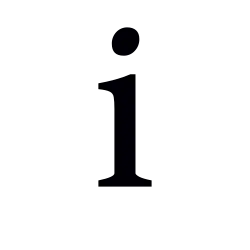
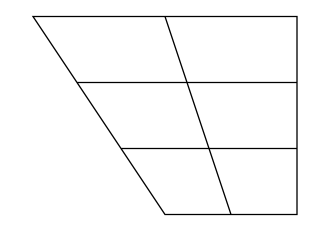
The close front unrounded vowel(also called high front unrounded vowel), is a type of vowel. It is an i in the International Phonetic Alphabet. It sounds like the English word meet. It is also called a long-e in American English.[1] In English this sound has more length then it should and is not usually pronounced as a pure vowel(it is a diphthong).[2] A pure [i] sound can be heard in languages such as French with words like chic.
Dankovičová, Jana (1999), "Czech", Handbook of the International Phonetic Association: A guide to the use of the International Phonetic Alphabet, Cambridge: Cambridge University Press, pp.70–74, ISBN978-0-521-65236-0
Doke, Clement Martyn; Mofokeng, S. Machabe (1974), Textbook of Southern Sotho Grammar (3rded.), Cape Town: Longman Southern Africa, ISBN978-0-582-61700-1
Donaldson, Bruce C. (1993), "1. Pronunciation", A Grammar of Afrikaans, Mouton de Gruyter, pp.1–35, ISBN9783110134261
Duanmu, San (2007) [First published 2000], The Phonology of Standard Chinese (2nded.), Oxford: Oxford University Press, ISBN978-0-19-921578-2
Dudenredaktion; Kleiner, Stefan; Knöbl, Ralf (2015) [First published 1962], Das Aussprachewörterbuch (in German) (7thed.), Berlin: Dudenverlag, ISBN978-3-411-04067-4
Engstrand, Olle (1999), "Swedish", Handbook of the International Phonetic Association: A Guide to the usage of the International Phonetic Alphabet, Cambridge: Cambridge University Press, pp.140–142, ISBN978-0-521-63751-0
Hall, Christopher (2003) [First published 1992], Modern German pronunciation: An introduction for speakers of English (2nded.), Manchester: Manchester University Press, ISBN978-0-7190-6689-4
Jones, Daniel; Ward, Dennis (1969), The Phonetics of Russian, Cambridge University Press
Landau, Ernestina; Lončarića, Mijo; Horga, Damir; Škarić, Ivo (1999), "Croatian", Handbook of the International Phonetic Association: A guide to the use of the International Phonetic Alphabet, Cambridge: Cambridge University Press, pp.66–69, ISBN978-0-521-65236-0
Lee, Wai-Sum; Zee, Eric (2003), "Standard Chinese (Beijing)", Journal of the International Phonetic Association, 33 (1): 109–112, doi:10.1017/S0025100303001208
Martínez-Celdrán, Eugenio; Fernández-Planas, Ana Ma.; Carrera-Sabaté, Josefina (2003), "Castilian Spanish", Journal of the International Phonetic Association, 33 (2): 255–259, doi:10.1017/S0025100303001373, ISSN0025-1003
Okada, Hideo (1999), "Japanese", in International Phonetic Association (ed.), Handbook of the International Phonetic Association: A Guide to the Use of the International Phonetic Alphabet, Cambridge University Press, pp.117–119, ISBN978-0-52163751-0
Riad, Tomas (2014), The Phonology of Swedish, Oxford University Press, ISBN978-0-19-954357-1
Roach, Peter (2004), "British English: Received Pronunciation", Journal of the International Phonetic Association, 34 (2): 239–245, doi:10.1017/S0025100304001768, ISSN0025-1003
Rogers, Derek; d'Arcangeli, Luciana (2004), "Italian", Journal of the International Phonetic Association, 34 (1): 117–121, doi:10.1017/S0025100304001628, ISSN0025-1003
Sarlin, Mika (2014) [First published 2013], "Sounds of Romanian and their spelling", Romanian Grammar (2nded.), Helsinki: Books on Demand GmbH, pp.16–37, ISBN978-952-286-898-5
Verhoeven, Jo (2005), "Belgian Standard Dutch", Journal of the International Phonetic Association, 35 (2): 243–247, doi:10.1017/S0025100305002173
Zimmer, Karl; Orgun, Orhan (1999), "Turkish"(PDF), Handbook of the International Phonetic Association: A guide to the use of the International Phonetic Alphabet, Cambridge: Cambridge University Press, pp.154–158, ISBN978-0-521-65236-0, archived from the original(PDF) on 2018-07-25, retrieved 2022-02-22