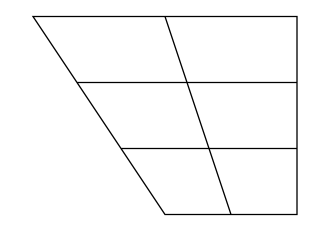
| Voiced linguolabial fricative |
|---|
|
|
|
source · help |
The voiced linguolabial fricative is a sound used in some spoken languages. It is not in English.
Characteristics
- The phonation is voiced. This means that the vocal cords vibrate while the sound is being pronounced.
- The place of articulation (where the sound is produced) is linguolabial. This means that this sound is produced with the tongue against the upper lip.
- The manner of articulation (how the sound is produced) is fricative. This means that this sound is produced by constricting air flow through a narrow channel at the place of articulation, to make turbulence.
Examples
| Language | Word | IPA | Meaning | Notes |
|---|
| Araki | v̈ev̈e | [ð̼eð̼e] | 'mother' | The "v̈" represents the voiced linguolabial fricative. |
| Tangoa | [ð̼atu] | 'stone' | Part of a full series of linguolabials in this language. |
| Big Nambas | [ið̼a] | 'he is' | Found in several Malekula languages of Vanuatu. |
| Bijago (Kajoko) | [nɔːð̼ɔ] | 'to die' | Found in the Kajoko dialect; rare outside of Vanuatu. |
| Nese | [ð̼eð̼e] | 'butterfly' | Linguolabials often appear before non-rounded vowels. |
Related pages
|
|---|
IPA topics |
|---|
| IPA | |
|---|
| Special topics | |
|---|
| Encodings |
- ASCII encodings
- TIPA
- Phonetic symbols in Unicode
- IPA Braille
|
|---|
|
|
|
|