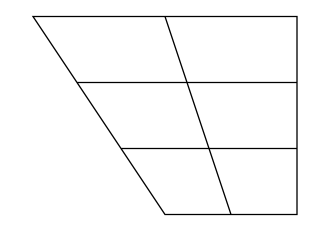
| Voiced bilabial flap |
|---|
|
|
|
|
source · help |
The voiced bilabial tap or flap is a sound used in some spoken languages. It is not in English.
Characteristics
- The phonation is voiced. This means that the vocal cords vibrate while the sound is being pronounced.
- The place of articulation (where the sound is produced) is bilabial. This means that this sound is produced with both lips.
- The manner of articulation (how the sound is produced) is tap. This means that this sound is produced with a single contraction of the muscles. The thing that produces the sound (usually the tongue) touches something else for a very short amount of time.
- The manner of articulation (how the sound is produced) is flap. This means that this sound is produced with a single contraction of the muscles. The thing that produces the sound (usually the tongue) touches something else for a very short amount of time.
- It is an oral consonant. This means that air is allowed to escape through the mouth only.
- It is a central consonant. This means that this sound is produced by directing the air along the center of the tongue, but not to the sides.
Examples
| Language |
Word |
IPA |
Meaning |
Notes |
|---|
| Chinese |
Taiwanese Hakka Sixian[1] |
𤸁苶苶仔 |
[kʰʲoʲ˥ ŋʲap˨ ŋʲaⱱ̟˨ ɛ˥˧] |
'tired' |
|
| Mambay |
vbwah |
[ⱱ̟wâˁħ] |
'fog' |
Phonemic. |
| Mangbetu |
[nɔ́w̆à] |
'to refrain' |
In free variation with labiodental flap |
| Mono |
vwa |
[w̆a] |
'send' |
Contrasts with /v/ and /w/. In free variation with labiodental flap |