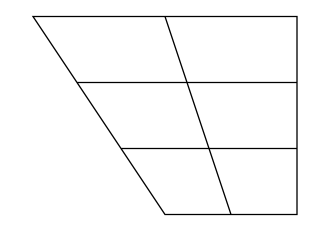
Voiced labiodental approximant
| Voiced labiodental approximant | |||
|---|---|---|---|
| ʋ | |||
| Audio sample | |||
|
source · help | |||
| Encoding | |||
| X-SAMPA | P, v\ | ||
| |||

The voiced labiodental approximant is a consonant. It is used in some languages. The letter for this sound in the International Phonetic Alphabet is ⟨ʋ⟩. It is in Cockney English, written as ⟨r⟩ in ran.[1]
Features
- The phonation is voiced. This means that the vocal cords vibrate while the sound is being pronounced.
- The place of articulation (where the sound is produced) is labiodental. This means that this sound is produced with the lower lips and the upper teeth.
- The manner of articulation (how the sound is produced) is approximant. This means that this sound is produced by narrowing the vocal tract at the place this sound is produced. However, it is not narrowed enough to produce a turbulent airstream.
Occurrence
| Language | Word | IPA | Meaning | |
|---|---|---|---|---|
| English | Cockney | ran | [ʋæn] | 'ran' |
References
| |||||||||||