Characteristics
- The phonation is voiced. This means that the vocal cords vibrate while the sound is being pronounced.
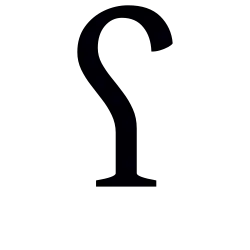
- The place of articulation (where the sound is produced) is pharyngeal. This means that this sound is produced with the root of the tongue against the back of the throat (the pharynx).
- The manner of articulation (how the sound is produced) is fricative. This means that this sound is produced by constricting air flow through a narrow channel at the place of articulation, to make turbulence.
Examples
Occurrence of [ʕ]
| Language | Word | IPA | Meaning |
| Arabic | عَيْن | [ʕajn] | 'eye or spring' |
|
Approximant
| Voiced pharyngeal approximant |
|---|
|
|
|
source · help |
|
| X-SAMPA | ?\_o |
|---|
The voiced pharyngeal approximant is a sound used in some spoken languages. It is not in English.
Characteristics
- The phonation is voiced. This means that the vocal cords vibrate while the sound is being pronounced.
- The place of articulation (where the sound is produced) is pharyngeal. This means that this sound is produced with the root of the tongue against the back of the throat (the pharynx).
- The manner of articulation (how the sound is produced) is approximant. This means that this sound is produced by narrowing the vocal tract at the place this sound is produced. However, it is not narrowed enough to produce a turbulent airstream.
Examples
Occurrence of [ʕ̞]
| Language | Word | IPA | Meaning |
| Danish | ravn | [ʕ̞ɑ̈wˀn] | 'raven' |
|
|
|---|
IPA topics |
|---|
| IPA | |
|---|
| Special topics | |
|---|
| Encodings |
- ASCII encodings
- TIPA
- Phonetic symbols in Unicode
- IPA Braille
|
|---|
|
|
|
|