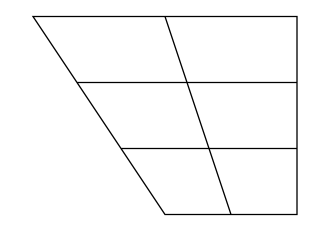
Features
Features of the voiced labial–velar approximant:
- Its secondary articulation is labialised, which means the lips are rounded.
- It is an oral consonant. This means that air is allowed to escape through the mouth only.
- It is a central consonant. This means that this sound is produced by directing the air along the center of the tongue, but not to the sides.
Occurrence
| Language | Word | IPA | Meaning | Notes |
|---|
| Abkhaz | ауаҩы/auaòy | [awaˈɥə] | 'human' | See Abkhaz phonology |
| Alemannic | Bernese German | Giel | [ɡ̊iə̯w] | 'boy' | Allophone of [l] |
| Arabic | Modern Standard | وَرْد/ward | [ward] | 'rose' | See Arabic phonology |
| Assamese | ৱাশ্বিংটন/washington | [waʃiŋtɔn] | 'Washington' | |
| Assyrian | ܟܬܒ̣ܐ [[[Syriac alphabet|ctava]]] Error: {{Lang}}: Latn text/non-Latn script subtag mismatch (help) | [ctaːwa] | 'book' | Most speakers. [v] and [ʋ] are used in the Urmia dialects. |
| Basque | lau | [law] | 'four' | |
| Belarusian | воўк/voŭk | [vɔwk] | 'wolf' | See Belarusian phonology |
| Bengali | ওয়াদা/uada | [wada] | 'promise' | Allophone of [o] and [u] when preceding a vowel word-initially. See Bengali phonology |
| Berber |
ⴰⵡⴰⵍ/awal |
[æwæl] |
'speech' |
|
| Catalan | quart | [ˈkwɑɾt] | 'fourth' | Post-lexically after /k/ and /ɡ/. See Catalan phonology |
| Chinese | Cantonese | 挖/waat | [wɑːt̚˧]ⓘ | 'dig' | See Cantonese phonology |
| Mandarin | 挖/wā | [wa̠˥]ⓘ | See Mandarin phonology |
| Danish | hav | [hɑw] | 'ocean' | Allophone of [v] |
| Dutch | Colloquial | kouwe | [ˈkʌu̯wə] | 'cold' | Lenited allophone of /d/ after /ʌu̯/. See Dutch phonology |
| Standard Surinamese | welp | [wɛɫp] | 'cub' | May also occur in this context in some continental Dutch accents and/or dialects.[4][5] Corresponds to [ʋ] in most of the Netherlands and to [β̞] in Belgium and (southern) parts of the Netherlands. See Dutch phonology |
| English | weep | [wiːp] | 'weep' | See English phonology |
| Esperanto | aŭto | ['awto] | 'car' | See Esperanto phonology |
| French | oui | [wi] | 'yes' | See French phonology |
| German | Quelle | [kweːlə] | 'source' | Some regions |
| Hawaiian | wikiwiki | [wikiwiki] | 'fast' | May also be realized as [v]. See Hawaiian phonology |
| Hebrew | Oriental | כּוֹחַ/kowaḥ | [ˈkowaħ] | 'power' | See Modern Hebrew phonology |
| Hindustani |
Hindi |
विश्वास |
[ʋɪʃwaːs] |
'believe' |
See Hindustani phonology |
| Urdu |
وشواس |
| Irish | vóta | [ˈwoːt̪ˠə] | 'vote' | See Irish phonology |
| Italian | uomo | [ˈwɔːmo] | 'man' | See Italian phonology |
| Kabardian | уэ/wǎ | [wa]ⓘ | 'you' | |
| Korean | 왜가리/waegari | [wɛɡɐɾi] | 'heron' | See Korean phonology |
| Luxembourgish | zwee | [t͡swe̝ː] | 'two' | Allophone of /v/ after /k, t͡s, ʃ/. See Luxembourgish phonology |
| Malay | wang | [waŋ] | 'money' | |
| Mayan |
Yucatec |
witz |
[wit͡s] |
'mountain' |
|
| Nepali | हावा | [ɦäwä] | 'wind' | See Nepali phonology |
| Odia | ଅଗ୍ରୱାଲ୍/agrawāl | [ɔgɾɔwäl] | 'Agrawal' | |
| Pashto | ﻭﺍﺭ/war | [wɑr] | 'one time' | |
| Persian | Dari | ورزش/warzeš | [wærzeʃ] | 'sport' | |
| Colloquial | ون/naw | [now], [næw] | 'new' | As a diphthong. |
| Polish | łaska | [ˈwäskä]ⓘ | 'grace' | See Polish phonology. Corresponds to [ɫ] in older pronunciation and eastern dialects |
| Portuguese | Most dialects | quando | [ˈkwɐ̃du] | 'when' | Post-lexically after /k/ and /ɡ/. See Portuguese phonology |
| boa | [ˈbow.wɐ] | 'good' (f.) | Epenthetic glide or allophone of /u/, following a stressed rounded vowel and preceding an unrounded one. |
| General Brazilian | qual | [ˈkwaw] | 'which' | Allophone of /l/ in coda position for most Brazilian dialects. |
| Romanian | dulău | [d̪uˈl̪əw] | 'mastiff' | See Romanian phonology |
| Serbo-Croatian | Croatian[16] | vuk | [wûːk] | 'wolf' | Allophone of /ʋ/ before /u/.[16] See Serbo-Croatian phonology |
| Seri | cmiique | [ˈkw̃ĩːkːɛ] | 'person' | Allophone of /m/ |
| Slovene | cerkev | [ˈt͡sèːrkəw] | 'church' | Allophone of /ʋ/ in the syllable coda. Voiceless [ʍ] before voiceless consonants. See Slovene phonology |
| Sotho | sewa | [ˈsewa] | 'epidemic' | See Sesotho phonology |
| Spanish | cuanto | [ˈkwãn̪t̪o̞] | 'as much' | See Spanish phonology |
| Swahili | mwanafunzi | [mwɑnɑfunzi] | 'student' | |
| Swedish | Central Standard[20] | [gå] Error: {{Lang}}: invalid parameter: |date= (help) | [gʷoː] | 'go' | Labialized approximant consonant; allophone of /ɡ/ in casual speech before the protruded vowels /ɔ, oː/. See Swedish phonology |
| Tagalog | araw | [ˈɐɾaw] | 'day' | See Tagalog phonology |
| Thai | แหวน /waen | [wɛn˩˩˦] | 'ring' | |
| Ukrainian | вовк/voŭk | [vɔwk] | 'wolf' | See Ukrainian phonology |
| Vietnamese | tuần | [t̪wən˨˩] | 'week' | See Vietnamese phonology |
| Welsh | gwae | [ɡwaɨ] | 'woe' | See Welsh phonology |
| West Frisian | skowe | [skoːwə] | 'to shove' | |
Nasal
| Nasalized voiced labial–velar approximant |
|---|
|
The nasal labial-velar approximant is a sound used in some spoken languages. It is not in English.
Characteristics
- The phonation is voiced. This means that the vocal cords vibrate while the sound is being pronounced.
- The place of articulation (where the sound is produced) is labial–velar. This means that this sound is produced with the lips and with the back part of the tongue (the dorsum) against the soft palate (the velum) at the same time. The dorsal closure is released before the labial closure, but they overlap for most of the time.
- It is a nasal consonant. This means that air is allowed to escape through the nose, either exclusively (nasal stops) or in addition to through the mouth.
- The manner of articulation (how the sound is produced) is approximant. This means that this sound is produced by narrowing the vocal tract at the place this sound is produced. However, it is not narrowed enough to produce a turbulent airstream.
Examples
| Language | Word | IPA | Meaning | Notes |
|---|
| Guaraní | Paraguayan[22] | guaraníme | [ɰ̃ʷãɾ̃ãˈnĩmẽ] | 'in Guarani' | Allophone of /ɰ/ in the digraph ⟨gu⟩, nasalized due to vowel-consonant harmony.[22] |
| Kaingang[23] | [w̃ĩ] | 'to see' | Possible word-initial realization of /w/ before a nasal vowel.[24] |
| Polish | są | [sɔw̃] | 'they are' | See Polish phonology |
| Portuguese | Most dialects[25][26] | são | [sɐ̃w̃] | 'saint', 'they are' | Allophone of /w/ after nasal vowels. See Portuguese phonology |
| Some dialects[27] | muamba | [ˈmw̃ɐ̃bɐ] | 'smuggling', 'jobbery',
'stash' | Non-syllabic allophone of /u/ between nasal sounds. |
| Marathi | संशय / saṃśay | [sə̃w̃ʃəe̯] | 'doubt' | Anuswara (ṁ) preceding र (r), व (v), श (ś), ष (ṣ), स (s), ह (h) or ज्ञ (jñ/dnya) is rendered as 'w̃'. |
| Seri | cmiique | [ˈkw̃ĩːkːɛ] | 'person' | Allophone of /m/. |
| Shipibo[28] | banwan[29] | [βɐ̃ˈw̃ɐ̃] | 'parrot' | Allophone of /w/ after nasal vowels.[28] |
| Telugu | ఆమ్లం / āmlaṃ | [aːw̃alaw̃] | 'acid' | Common colloquial pronunciation of intervocalic and final m. May also be a [ʋ̃].[30] |
| Uwa | táw̃aya | [ˈtaw̃aja] | 'yellow' | |
| Yoruba | wọ́n | [w̃ɔ̃́n] | 'they' | Allophone of /w/ before nasal vowels. |
Notes
- ↑ Guidelines for Transcription of English Consonants and Vowels (PDF), archived from the original (PDF) on 2012-08-13, retrieved 2022-07-12; see the examples on the fifth page.
- ↑ "Recording dialect from Egmond aan Zee (Bergen), North Holland)". www.meertens.knaw.nl. Retrieved 26 January 2022.
- ↑ "Recording and video from dialect of Katwijk, South Holland". www.youtube.com. Retrieved 26 January 2022.
- 1 2 Landau et al. (1999), p. 68.
- ↑ Engstrand (2004), p. 167.
- 1 2 Estigarribia, Bruno (2020). A Grammar of Paraguayan Guarani (PDF). London: UCL Press.
- ↑ Jolkesky (2009:676, 681) harvcoltxt error: no target: CITEREFJolkesky2009 (help)
- ↑ Jolkesky (2009:681) harvcoltxt error: no target: CITEREFJolkesky2009 (help)
- ↑ Cruz-Ferreira (1995:127) harvcoltxt error: no target: CITEREFCruz-Ferreira1995 (help)
- ↑ Bisol (2005:179) harvcoltxt error: no target: CITEREFBisol2005 (help)
- ↑ Lipski, John M. (1975). "Portuguese vinho: diachronic evidence for biphonemic nasal vowels" (PDF). Archived (PDF) from the original on 2024-08-12. Retrieved 2025-05-08.
- 1 2 Valenzuela, Márquez Pinedo & Maddieson (2001:283) harvcoltxt error: no target: CITEREFValenzuelaMárquez_PinedoMaddieson2001 (help)
- ↑ "Shipibo language, alphabet and pronunciation". www.omniglot.com. Retrieved 2019-11-27.
- ↑ a study of telugu regional and social dialects: a prosodic analysis by j. venkateswara sastry
References
- Barbosa, Plínio A.; Albano, Eleonora C. (2004), "Brazilian Portuguese", Journal of the International Phonetic Association, 34 (2): 227–232, doi:10.1017/S0025100304001756
- Carbonell, Joan F.; Llisterri, Joaquim (1992), "Catalan", Journal of the International Phonetic Association, 22 (1–2): 53–56, doi:10.1017/S0025100300004618, S2CID 249411809
- Engstrand, Olle (2004), Fonetikens grunder (in Swedish), Lund: Studenlitteratur, ISBN 91-44-04238-8
- Fougeron, Cecile; Smith, Caroline L. (1993), "French", Journal of the International Phonetic Association, 23 (2): 73–76, doi:10.1017/S0025100300004874, S2CID 249404451
- France, Angela (2004). "Problemas na variante tensa da fala carioca" [Problems with tense variant of carioca speech]. DELTA: Documentação de Estudos em Lingüística Teórica e Aplicada (in Portuguese). 20 (spe). São Paulo: 33–58. doi:10.1590/S0102-44502004000300005. ISSN 0102-4450.
- Gilles, Peter; Trouvain, Jürgen (2013), "Luxembourgish", Journal of the International Phonetic Association, 43 (1): 67–74, doi:10.1017/S0025100312000278
- Greenberg, Mark L. (2006), A Short Reference Grammar of Standard Slovene, Kansas: University of Kansas
- Jassem, Wiktor (2003), "Polish", Journal of the International Phonetic Association, 33 (1): 103–107, doi:10.1017/S0025100303001191
- Ladefoged, Peter (2005), Vowels and Consonants (2nd ed.), Blackwell
- Landau, Ernestina; Lončarić, Mijo; Horga, Damir; Škarić, Ivo (1999), "Croatian", Handbook of the International Phonetic Association: A guide to the use of the International Phonetic Alphabet, Cambridge: Cambridge University Press, pp. 66–69, ISBN 0-521-65236-7
- Martínez-Celdrán, Eugenio; Fernández-Planas, Ana Ma.; Carrera-Sabaté, Josefina (2003), "Castilian Spanish", Journal of the International Phonetic Association, 33 (2): 255–259, doi:10.1017/S0025100303001373, archived from the original on 2021-08-17, retrieved 2022-07-12
- Ohala, John; Lorentz, James (1977), "Story of [w]: An exercise in the phonetic explanation for sound patterns" (PDF), Berkeley Linguistics Society annual meeting 3 proceedings, pp. 577–599, archived from the original (PDF) on 2009-03-26, retrieved 2022-07-12
- Pukui, Mary Kawena; Elbert, Samuel H. (1986), Hawaiian Dictionary, Honolulu: University of Hawaiʻi Press, ISBN 0-8248-0703-0
- Rogers, Derek; d'Arcangeli, Luciana (2004), "Italian", Journal of the International Phonetic Association, 34 (1): 117–121, doi:10.1017/S0025100304001628
- Šuštaršič, Rastislav; Komar, Smiljana; Petek, Bojan (1999), "Slovene", Handbook of the International Phonetic Association: A guide to the use of the International Phonetic Alphabet, Cambridge: Cambridge University Press, pp. 135–139, doi:10.1017/S0025100300004874, ISBN 0-521-65236-7, S2CID 249404451
- Thompson, Laurence (1959), "Saigon phonemics", Language, 35 (3): 454–476, doi:10.2307/411232, JSTOR 411232
- Watson, Janet (2002), The Phonology and Morphology of Arabic, New York: Oxford University Press
- Masica, Colin (1991). The Indo-Aryan Languages. Cambridge Language Surveys. Cambridge: Cambridge University Press. ISBN 978-0-521-29944-2.
|
|---|
IPA topics |
|---|
| IPA | |
|---|
| Special topics | |
|---|
| Encodings |
- ASCII encodings
- TIPA
- Phonetic symbols in Unicode
- IPA Braille
|
|---|
|
|
|
|