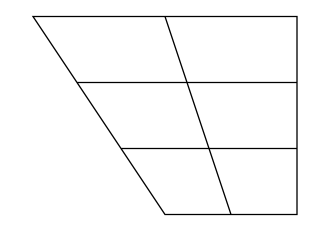
Characteristics
- The phonation is voiced. This means that the vocal cords vibrate while the sound is being pronounced.
- The place of articulation (where the sound is produced) is labiodental. This means that this sound is produced with the lower lips and the upper teeth.
- The manner of articulation (how the sound is produced) is stop, or plosive. This means that this sound is produced by obstructing airflow in the vocal tract. (The term plosive contrasts with nasal stops, where the blocked airflow is redirected through the nose.)
Examples
| Language | Word | IPA | Meaning | Notes |
|---|
| English | subversive | [sʌb̪ˈvɚsɪv] | 'subversive' | Common allophone of /b/ before the labiodentals /f/ and /v/ (although it is also possible for the labiodentals to shift to bilabial [ɸ] and [β], respectively, instead). See English phonology. |
| Ibanag | bavi | [bab̪ᵛiː] | ˈpig/pork' | Slightly affricated; allophonic variant of /v/ for some elderly speakers, especially those who lack front teeth. May be a flap /ⱱ/ instead. |
| Sika | | | Allophone of /ⱱ/ in careful pronunciation. |
| Slovenian/Slovene | ob vodi | [ob̪‿ˈʋɔ̀ːdí] | 'by the water' | Allophone of /b/ before /f, ʋ/. See Slovene phonology. |
|
|---|
IPA topics |
|---|
| IPA | |
|---|
| Special topics | |
|---|
| Encodings |
- ASCII encodings
- TIPA
- Phonetic symbols in Unicode
- IPA Braille
|
|---|
|
|
|
|