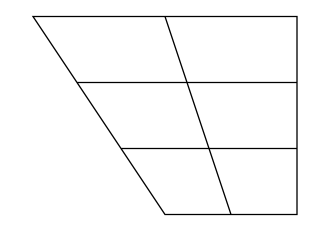
The voiced palatal approximant is a sound used in some spoken languages. It is used in English, written as y, as in yes. Linguists usually call this symbol "yod," since in English, the name for the letter J starts with the /dʒ/ sound.
Characteristics
The phonation is voiced. This means that the vocal cords vibrate while the sound is being pronounced.
The manner of articulation (how the sound is produced) is approximant. This means that this sound is produced by narrowing the vocal tract at the place this sound is produced. However, it is not narrowed enough to produce a turbulent airstream.
It is an oral consonant. This means that air is allowed to escape through the mouth only.
It is a central consonant. This means that this sound is produced by directing the air along the center of the tongue, but not to the sides.
Unspecified for rounding approximant consonant; the language also features an unrounded palatal approximant semivowel (which may replace /ʝ̞/ before /e/).[1]
Unspecified for rounding approximant consonant; the language also features an unrounded palatal approximant semivowel.[26] Contrast with /j/. See Spanish phonology
It is a nasal consonant. This means that air is allowed to escape through the nose, either exclusively (nasal stops) or in addition to through the mouth.
The manner of articulation (how the sound is produced) is approximant. This means that this sound is produced by narrowing the vocal tract at the place this sound is produced. However, it is not narrowed enough to produce a turbulent airstream.
Allophone of /ɲ/ between vowels, nasalizing the preceding vowel.
Other dialects, occasional in rapid, unguarded speech[40]
niños
[ˈnij̃os]
'kids'
Allophone of /ɲ/. Because nasality is retained and there is no potential merger with any other Spanish phonemes, this process is rarely noticed, and its geographical distribution has never been determined.
↑Merrill (2008), p.108. sfnp error: no target: CITEREFMerrill2008 (help)
↑Canepari (2005:335) harvcoltxt error: no target: CITEREFCanepari2005 (help)
↑Jolkesky (2009:676, 681) harvcoltxt error: no target: CITEREFJolkesky2009 (help)
↑Jolkesky (2009:681) harvcoltxt error: no target: CITEREFJolkesky2009 (help)
↑Klingler, Thomas A.; Neumann-Holzschuh, Ingrid (2013). "Louisiana Creole". In Michaelis, Susanne Maria; Maurer, Philippe; Haspelmath, Martin; Huber, Magnus (eds.). The survey of pidgin and creole languages. Vol.2: Portuguese-based, Spanish–based, and French-based languages. Oxford University Press. ISBN978-0-19-967770-2.
↑Gussman (2007) harvcoltxt error: no target: CITEREFGussman2007 (help)
↑Perini (2002:?) harvcoltxt error: no target: CITEREFPerini2002 (help)