American theater of World War II
| American theater of World War II | |||||||
|---|---|---|---|---|---|---|---|
| Part of World War II | |||||||
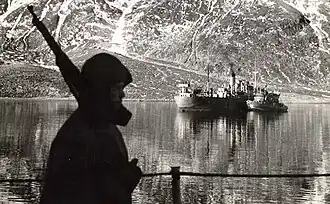 A United States Coast Guardsman on sentry duty in Alaska during World War II | |||||||
| |||||||
| Belligerents | |||||||
|
Allies:  Free France  Netherlands (from 1940)  Costa Rica (from 1941)  Cuba (from 1941)  Dominican Republic (from 1941)  El Salvador (from 1941)  Guatemala (from 1941)  Haiti (from 1941)  Honduras (from 1941)  Nicaragua (from 1941)  Panama (from 1941)  Brazil (from 1942)  Mexico (from 1942)  Bolivia (from 1943)  Colombia (from 1943)  Argentina (from 1945)  Chile (from 1945)  Ecuador (from 1945)  Paraguay (from 1945)  Peru (from 1945)  Uruguay (from 1945)  Venezuela (from 1945) |
Axis: Germany  Italy  Japan | ||||||
| Commanders and leaders | |||||||

The American theater of the Second World War was a minor theater covered all of the American continent from North to South America and 200 mi (320 km) of nearby ocean in World War II.
Because geographically, North and South America seperated from major fronts (Europe, Mediterranean and Middle East, Pacific, etc.) so threats from an Axis invasion of the United States or any other parts of the American continent were unlikely and therefore less engagements in the continent. Military operations include the Battle of the River Plate (also part of the Pacific War), Operation Drumroll, the Aleutian Islands campaign, Fu-Go ballon bombs and many more.