Greenland in World War II
| Greenland in World War II | |||||||
|---|---|---|---|---|---|---|---|
| Part of World War II | |||||||
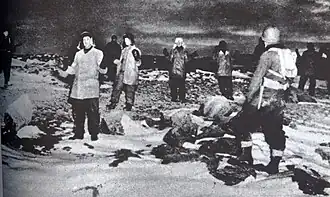 A German weather modification crew surrended to the U.S. military, October 1944 | |||||||
| |||||||
| Belligerents | |||||||
 Greenland  Denmark  United States |
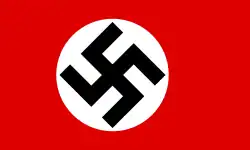 Nazi Germany | ||||||
| Strength | |||||||
| 15 | 19 | ||||||
| Casualties and losses | |||||||
| 1 death[1] | 1 death | ||||||
Before World War II, Greenland was a Danish territory and was isolated to the rest of the world. After Nazi Germany invaded Denmark (codenamed Operation Weserübung) on 9 April 1940, Greenland was still able to maintain itself as an Allied nation because the British Navy captured all ships from Europe. Initially, the United Kingdom and Canada planned to occupy essential parts of the island but the United States, a neutral country before Pearl Harbour, declined a "third party involvement". Eske Brun and Aksel Svane, those who were living in northern and southern Greenland, had used provisions from a 1925 act to declare the island an "autonomous" region, guaranting the island's best interest if Germany occupies Denmark. The step was cooperated by the Danish embassy in Washington, D.C., and the United States Department of State, leading to the 1920 American statement that no third party countries will recognize Greenland as a nation. The expanded diplomacy was the extension of the Monroe Doctrine.
References