Flinders Street railway station
Flinders Street | ||||||||||||||||||||||||||||||||||||||||||||
|---|---|---|---|---|---|---|---|---|---|---|---|---|---|---|---|---|---|---|---|---|---|---|---|---|---|---|---|---|---|---|---|---|---|---|---|---|---|---|---|---|---|---|---|---|
| PTV metropolitan and regional rail station | ||||||||||||||||||||||||||||||||||||||||||||
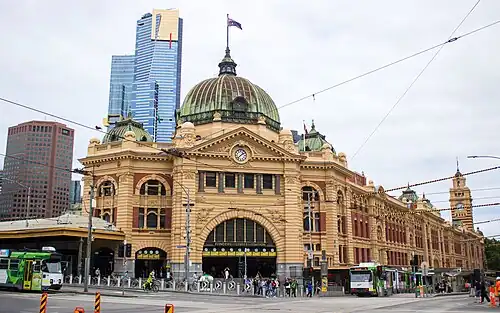 Main entrance, corner of Flinders and Swanston Streets | ||||||||||||||||||||||||||||||||||||||||||||
| General information | ||||||||||||||||||||||||||||||||||||||||||||
| Location | 207–361 Flinders Street[1] Melbourne, Victoria 3000 Australia | |||||||||||||||||||||||||||||||||||||||||||
| Coordinates | 37°49′05″S 144°58′01″E / 37.818078°S 144.96681°E | |||||||||||||||||||||||||||||||||||||||||||
| Owned by | VicTrack | |||||||||||||||||||||||||||||||||||||||||||
| Operated by | Metro Trains | |||||||||||||||||||||||||||||||||||||||||||
| Line(s) | ||||||||||||||||||||||||||||||||||||||||||||
| Distance | 1.23 kilometres from Southern Cross | |||||||||||||||||||||||||||||||||||||||||||
| Platforms | 13 (plus one removed) | |||||||||||||||||||||||||||||||||||||||||||
| Tracks | 15 | |||||||||||||||||||||||||||||||||||||||||||
| Train operators | ||||||||||||||||||||||||||||||||||||||||||||
| Connections |
| |||||||||||||||||||||||||||||||||||||||||||
| Construction | ||||||||||||||||||||||||||||||||||||||||||||
| Structure type | At-grade | |||||||||||||||||||||||||||||||||||||||||||
| Parking | None | |||||||||||||||||||||||||||||||||||||||||||
| Bicycle facilities | None | |||||||||||||||||||||||||||||||||||||||||||
| Architectural style | Melbourne | |||||||||||||||||||||||||||||||||||||||||||
| Other information | ||||||||||||||||||||||||||||||||||||||||||||
| Status | Premium station | |||||||||||||||||||||||||||||||||||||||||||
| Station code | FSS | |||||||||||||||||||||||||||||||||||||||||||
| Fare zone | Myki Zone 1 | |||||||||||||||||||||||||||||||||||||||||||
| Website | Public Transport Victoria | |||||||||||||||||||||||||||||||||||||||||||
| History | ||||||||||||||||||||||||||||||||||||||||||||
| Opened | 12 September 1854 | |||||||||||||||||||||||||||||||||||||||||||
| Electrified | 28 May 1919 (1500 V DC overhead) | |||||||||||||||||||||||||||||||||||||||||||
| Previous names | Melbourne Terminus | |||||||||||||||||||||||||||||||||||||||||||
| Passengers | ||||||||||||||||||||||||||||||||||||||||||||
| Passengers (2019-2020) | 21.504 million[4]  24.07% | |||||||||||||||||||||||||||||||||||||||||||
| Passengers (2020-2021) | 8.528 million[4] 60.34% | |||||||||||||||||||||||||||||||||||||||||||
| Passengers (2021–2022) | 11.393 million[4]  33.59% | |||||||||||||||||||||||||||||||||||||||||||
| Passengers (2022–2023) | 18.793 million[4] 64.96% | |||||||||||||||||||||||||||||||||||||||||||
| Passengers (2023–2024) | 20.345 million[4] 8.26% | |||||||||||||||||||||||||||||||||||||||||||
| Passengers (2024–2025) | 19.633 million[5] 3.5% | |||||||||||||||||||||||||||||||||||||||||||
| ||||||||||||||||||||||||||||||||||||||||||||
| ||||||||||||||||||||||||||||||||||||||||||||
Building details | ||||||||||||||||||||||||||||||||||||||||||||
| General information | ||||||||||||||||||||||||||||||||||||||||||||
| Status | Complete | |||||||||||||||||||||||||||||||||||||||||||
| Type | Railway station terminus | |||||||||||||||||||||||||||||||||||||||||||
| Architectural style | Federation/Edwardian Period Baroque[1] | |||||||||||||||||||||||||||||||||||||||||||
| Elevation | 20.6 metres (68 ft) AHD | |||||||||||||||||||||||||||||||||||||||||||
| Construction started | 1900 | |||||||||||||||||||||||||||||||||||||||||||
| Completed | 1909 | |||||||||||||||||||||||||||||||||||||||||||
| Cost | £A 514,000 | |||||||||||||||||||||||||||||||||||||||||||
| Technical details | ||||||||||||||||||||||||||||||||||||||||||||
| Material | ||||||||||||||||||||||||||||||||||||||||||||
| Design and construction | ||||||||||||||||||||||||||||||||||||||||||||
| Architect | James W. Fawcett | |||||||||||||||||||||||||||||||||||||||||||
| Architecture firm | Fawcett and Ashworth | |||||||||||||||||||||||||||||||||||||||||||
| Engineer | H.P.C. Ashworth | |||||||||||||||||||||||||||||||||||||||||||
| Official name | Flinders Street Railway Station Complex | |||||||||||||||||||||||||||||||||||||||||||
| Criteria | A, E, F, G | |||||||||||||||||||||||||||||||||||||||||||
| Designated | 20 August 1982 | |||||||||||||||||||||||||||||||||||||||||||
| Reference no. | H1083[1] | |||||||||||||||||||||||||||||||||||||||||||
| Heritage Overlay number | HO649[1] | |||||||||||||||||||||||||||||||||||||||||||

Flinders Street station is the central railway station of the rail network of Melbourne, Australia. It is on the corner of Flinders and Swanston Streets next to the Yarra River in the middle of the central business district, stretching from Swanston Street to Queen Street and covering two city blocks.
Flinders Street is the main station for the Melbourne suburban rail network. Trains on the City Loop lines (Mernda, Hurstbridge, Frankston, Craigieburn, Upfield, Lilydale, Belgrave, Alamein and Glen Waverley lines), Werribee, Laverton (Altona), Williamstown and Sandringham lines stop here. Flinders Street also sees Bairnsdale V/Line trains.
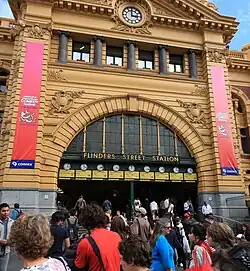
The Flinders Street clocks under the dome show the time of the next trains leaving the station. The clocks date back to the 1860s being the most iconic things in Flinders Street and is well known by the residents.
History

The first railway station in the Flinders Street site was called in a lot of names, some called the station just Melbourne. Others showed Melbourne Terminus or Flinders Street.
The first Flinders Street station was just a collection of sheds. It was completed in 1854 and was officially opened on 12 September by Sir Charles Hotham.
The terminus was the first city railway station in Australia, and the opening day saw the first steam train trip in the country. It travelled to Sandridge (now Port Melbourne), over the Sandridge Bridge (which has now been redeveloped in 2006 as a pedestrian and cycle bridge across the Yarra River). The steam train travelled along the now light rail Port Melbourne line. Route 109 runs the line now.
Melbourne's two other early central-city stations, Spencer Street Station (now Southern Cross) and Princes Bridge, opened in 1859.
Princes Bridge was originally separated from Flinders Street, even though it was only on the opposite side of Swanston Street. Once the railway line was extended under the street to join the two, the two stations merged into one Flinders Street and the Federation Square now occupies Princes Bridge. Meanwhile, Spencer Street and Flinders Street were connected in 1894.
In 1882 the government decided to build a new central passenger station to replace the existing construction. A worldwide design competition was held in 1899, with 17 entries received.
The £500 winning prize went to railway employees J. W. Fawcett and H. P. C. Ashworth, whose design included a giant dome and clock tower. Work began in 1901 and ended in 1910.
Redevelopment
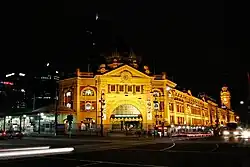
Flinders Street had undergone redevelopment starting from 1982. It involved cleaning and repair, as well as improving general ability for people who are disabled to move around the station.
The works included:
- Works on Platform 10, including putting a new ground covering on it
- New escalators to provide better access to Platforms 10, 12 and 13
- An additional lift on Platform 10 (giving a total of two lifts for Platforms 10, 12 and 13)
- New lighting and Relocating the V/Line booking office to the main ticket office
- Developing a new commercial area on the site of the V/Line booking office
- Improving the underground footway from Elizabeth Street to Southbank and Degraves Street to Flinders Street
- Waterproofing the roof
- Developing a business case for possible uses of vacant space, including the disused ballroom (pictured here)
- And steam cleaning the facade along with New LCD Passenger Information Displays (PIDS) installed on the platforms, subways and in the main entrance.
Each weekday, about 105,000[6] people and 1,500 trains use the station. In 2023, Flinders Street was seen as the busiest train station ever in Victoria. 20 million people used it.[7]
Metro Tunnel link
As part of the Metro Tunnel project, a new CBD station was built to connect with Flinders Street.[8] In November 2017, the CBD South station would be named "Town Hall" for the nearby Melbourne Town Hall.[9] The station opened in late 2025.[10] Town Hall station connects with Flinders Street station with underground subways through Campbell Arcade and Degraves Street.[11]
On 1 February 2026, the "Big Switch" happened where the Pakenham line, the Cranbourne line and the Sunbury line were moved out of the City Loop and into the Metro Tunnel. As a result, platforms 4 and 5 no longer serve Sunbury trains, platforms 6 and 7 have been occupied by Frankston trains, and platform 8 has been changed to Sandringham trains.[12] Metro Tunnel services can be easily accessed from Flinders Street by taking the subway connection into Town Hall station.
Platforms
Flinders Street Station's platforms are numbered from north to south, with platform 1 being the furthest north, and generally serve specific lines as follows.
Trains may use a different platform if the platform it is originally going to be at has another train at it.
Suburban trains
| Flinders Street platform arrangement | ||||||
|---|---|---|---|---|---|---|
| Platform | Line | Where to? | Using | Stopping Pattern | What is after? | Source |
| 1 | Mernda line Hurstbridge line |
Mernda, Macleod, Greensborough, Eltham or Hurstbridge | City Loop, always. | All station trains and express (skip-stop) trains | The Mernda and Hurstbridge lines run clockwise in the City Loop, going to Jolimont station and Clifton Hill station before they split off afterwards.
Platform 1 is the longest railway platform in Australia, and the fourth longest in the world, at 708 metres long. |
[13][14] |
| 2 | Glen Waverley line Alamein line Lilydale line Belgrave line |
Glen Waverley, Alamein, Blackburn, Lilydale, Ringwood or Belgrave | City Loop or Richmond. The trains use the City Loop normally but during weekday mornings they go Richmond. | Trains can go direct to Richmond or take the City Loop before Richmond. After Richmond up ahead is Burnley station, where the Glen Waverley line splits off. At Camberwell station, the Alamein line splits off. Finally, at Ringwood station, the Belgrave and Lilydale lines split off. | [15][16][17][18] | |
| 3 | ||||||
| 4 | ||||||
| 4 | Craigieburn line Upfield line |
Broadmeadows, Craigieburn or Upfield | City Loop (counterclockwise) or Southern Cross (clockwise). The train goes to Southern Cross normally but during weekday afternoons, it uses the City Loop. | The trains can go direct to Southern Cross or take the City Loop to North Melbourne station where the two lines seperate. | [19][20] | |
| 5 | ||||||
| 6 | Frankston line | Cheltenham, Mordialloc, Carrum or Frankston | Direct to Richmond. | The train will then go direct to Richmond, South Yarra and to Caulfield station and leave the Cranbourne and Pakenham lines and continue to Frankston. | [21] | |
| 7 | ||||||
| 8 | Sandringham line | Sandringham | All station trains. | Trains going to Sandringham will follow the Cranbourne, Pakenham and Frankston lines to South Yarra before the Sandringham line goes on its separate way to Sandringham.
These trains run only at 7pm and before 9am on weekends. |
[22] | |
| Werribee line Williamstown line |
Williamstown or Werribee | Direct to Southern Cross, then to North Melbourne and beyond. | From Monday to Friday, express trains to Werribee will run using Southern Cross to go to North Melbourne, and after that they run to Newport. Then trains skip the Altona line using seperate railway tracks to go to Laverton and continues past to end at Werribee.
On weekends, the trains go to Newport station. The line will then use the slow tracks to Altona station and arrive at Laverton station. The train will finally go to Werribee station. Trains to Laverton run from Monday to Friday only. |
[23][24] | ||
| 9 | All station trains and express trains | |||||
| 10 | Werribee line | Laverton | ||||
| 12 | Sandringham line | Sandringham | Direct to Richmond. | All station trains | Another platform for Sandringham trains. | [22] |
| 13 | ||||||
| 14 | None | Not in use. Platform 14 is an emergency exit only. | ||||
V/Line
| Flinders Street platform arrangement | |||||
|---|---|---|---|---|---|
| Platform | Line | Where to? | Using | Can passengers get on the train? | About the error about template V/Line color does not exist (Please remove this table when fixed) |
| 7 | <span style="background-color:#Lua error: expandTemplate: template "V/Line color" does not exist.; border:0.1em solid #Lua error: expandTemplate: template "V/Line color" does not exist.;"> Gippsland line | Traralgon or Bairnsdale | Richmond | Yes, but only if they are going to V/Line stations outside Pakenham. | Can somebody fix the Lua errors please? Thank you! |
| 10 | <span style="background-color:#Lua error: expandTemplate: template "V/Line color" does not exist.; border:0.1em solid #Lua error: expandTemplate: template "V/Line color" does not exist.;"> Gippsland line | Southern Cross | No. Passengers from stations before Pakenham can get off at Flinders Street station, but passengers cannot get on board here. Also, people staying on the V/Line train will go to Southern Cross. | ||
Notes:
- The eastern end of Platform No. 1 is designated as Platform No. 14, past the Platform 1 escalators.
- Platform 11 is out of use and has no track.
References
- 1 2 3 4 "Flinders Street Railway Station Complex". Victorian Heritage Database. Government of Victoria. Archived from the original on 13 May 2018. Retrieved 22 July 2018.
- ↑ Rush hour only
- ↑ Special events only
- 1 2 3 4 5 Annual metropolitan train station patronage (station entries) Data Vic
- ↑ "Annual metropolitan train station patronage (station entries) - 2024-2025".
- ↑ "Department of Infrastructure: Flinders Street Station". Archived from the original on 2009-10-29. Retrieved 2007-08-26.
- ↑ "Annual metropolitan train station patronage (station entries) - Victorian Government Data Directory". data.vic.gov.au. Retrieved 16 October 2024.
- ↑ Preiss, Benjamin (3 April 2017). "City Square shuts down as work begins on Metro Tunnel". The Age. Archived from the original on 24 June 2018. Retrieved 24 June 2018.
- ↑ Steve, Lillebuen; Jacks, Timna (29 November 2017). "Metro Tunnel: New train station names revealed". The Age. Archived from the original on 24 June 2018. Retrieved 24 June 2018.
- ↑ "Station Construction Underway On The Metro Tunnel | Premier of Victoria". www.premier.vic.gov.au. Retrieved 2023-06-14.
- ↑ Build, Victoria’s Big (2023-06-01). "Town Hall Station design and location". Victoria’s Big Build. Archived from the original on 2024-04-20. Retrieved 2023-06-14.
- ↑ "Victoria is flipping 'the big switch' on its Metro Tunnel. Here's what is changing". ABC News. 2026-01-31. Retrieved 2026-02-01.
- ↑ "Hurstbridge Line". Transport Victoria. Retrieved 2026-05-14.
- ↑ "Mernda Line". Transport Victoria. Retrieved 2026-05-14.
- ↑ "Alamein Line". Transport Victoria. Retrieved 2026-05-14.
- ↑ "Belgrave Line". Transport Victoria. Retrieved 2026-05-14.
- ↑ "Glen Waverley Line". Transport Victoria. Retrieved 2026-05-14.
- ↑ "Lilydale Line". Transport Victoria. Retrieved 2026-05-14.
- ↑ "Craigieburn Line". Transport Victoria. Retrieved 2026-05-14.
- ↑ "Upfield Line". Transport Victoria. Retrieved 2026-05-14.
- ↑ "Frankston Line". Transport Victoria. Retrieved 2026-05-14.
- 1 2 "Sandringham Line". Transport Victoria. Retrieved 2026-05-14.
- ↑ "Werribee Line". Transport Victoria. Retrieved 2026-05-14.
- ↑ "Williamstown Line". Transport Victoria. Retrieved 2026-05-14.
- Jenny Davies (2008). Beyond the Façade: Flinders Street, More than just a Railway Station. Publishing Solutions. ISBN 978-1-921488-03-0.