Prince Naruhiko Higashikuni
Prince Naruhiko Higashikuni | |
|---|---|
東久邇宮稔彦王 | |
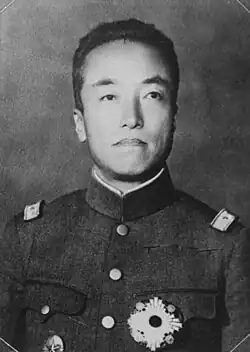 Formal portrait, c. 1936 | |
| Prime Minister of Japan | |
| In office 17 August 1945 – 9 October 1945 | |
| Monarch | Hirohito |
| Preceded by | Kantarō Suzuki |
| Succeeded by | Kijūrō Shidehara |
| Personal details | |
| Born | 3 December 1887 Kyoto City, Empire of Japan |
| Died | 20 January 1990 (aged 102) Tokyo Metropolis, Japan |
| Political party | Independent |
| Spouse(s) |
Toshiko, Princess Yasu
(m. 1915; died 1978) |
| Children | Morihiro Higashikuni Moromasa Higashikuni Akitsune Higashikuni Toshihiko Higashikuni |
| Mother | Terao Utako |
| Father | Asahiko, Prince Kuni |
| Alma mater | Imperial Japanese Army Academy Army War College |
| Occupation | Imperial Prince General |
| Awards | Order of the Chrysanthemum Order of the Rising Sun with Paulownia Flowers, Order of the Golden Kite |
| Signature | 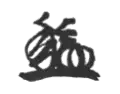 |
| Military service | |
| Allegiance |  Empire of Japan |
| Branch/service |  Imperial Japanese Army |
| Years of service | 1908–1945 |
| Rank | General  |
| Commands | IJA 4th Division, Imperial Japanese Army Air Service, IJA 2nd Army, General Defense Command |
| Battles/wars | |
| Prince Higashikuni | |
| Tenure | 3 November 1906 – 14 October 1947 |
| Successor | Title abolished |
| Head of the House of Higashikuni | |
| Tenure | 3 November 1906 – 20 January 1990 |
| Successor | Nobuhiko Higashikuni |
Naruhiko, Prince Higashikuni (東久邇宮稔彦王, Higashikuni-no-miya Naruhiko Ō; 3 December 1887 – 20 January 1990) was a member of the Japanese imperial family and general of the army.[1] He was the prime minister of Japan from 17 August to 9 October 1945.[2]
He is the only member of the Japanese imperial family to head a cabinet, and Japan's shortest-serving prime minister, serving for only 54 days.
References
- ↑ Bix, Herbert P. (1995). "Inventing the 'Symbol Monarchy' in Japan, 1945-52". Journal of Japanese Studies. 21 (2): 338. doi:10.2307/133011. JSTOR 133011.
- ↑ "Prince Suggested That Hirohito Quit; Higashi-Kuni Says He Gave Emperor Three Suitable Times for Abdication Considered Abdication; Admiral Ueda Released". New York Times. March 4, 1946. p. 6.
| Empire of Japan (1868–1947) |
| ||||||
|---|---|---|---|---|---|---|---|
| Japan (1947–present) |
| ||||||
 Category | |||||||