Kōki Hirota
Junior Second Rank Kōki Hirota | |
|---|---|
廣田 弘毅 | |
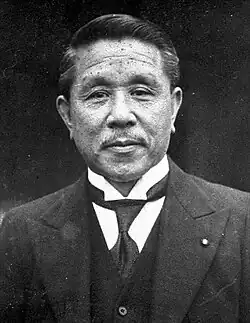 Portrait, c. 1936 | |
| Prime Minister of Japan | |
| In office 9 March 1936 – 2 February 1937 | |
| Monarch | Hirohito |
| Preceded by | Keisuke Okada |
| Succeeded by | Senjūrō Hayashi |
| Minister for Foreign Affairs | |
| In office 4 June 1937 – 26 May 1938 | |
| Prime Minister | Fumimaro Konoe |
| Preceded by | Naotake Satō |
| Succeeded by | Kazushige Ugaki |
| In office 14 September 1933 – 2 April 1936 | |
| Prime Minister | Saitō Makoto Keisuke Okada Himself |
| Preceded by | Uchida Kōsai |
| Succeeded by | Hachirō Arita |
| Member of the House of Peers | |
| In office 31 May 1937 – 13 December 1945 Nominated by the Emperor | |
| Personal details | |
| Born | 14 February 1878 Chūō-ku, Fukuoka, Empire of Japan |
| Died | 23 December 1948 (aged 70) Sugamo Prison, Tokyo, Allied-occupied Japan |
| Cause of death | Execution by hanging |
| Political party | Independent |
| Spouse(s) |
Shizuko Hirota
(m. 1905; died 1946) |
| Alma mater | Tokyo Imperial University |
| Signature | 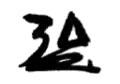 |
| Criminal conviction | |
| Criminal status | Executed |
| Conviction(s) | Crimes against peace War crimes |
| Trial | International Military Tribunal for the Far East |
| Criminal penalty | Death |
Kōki Hirota (廣田 弘毅, Hirota Kōki; 14 February 1878 – 23 December 1948) was a Japanese diplomat and politician who was the prime minister of Japan from 1936 to 1937. He was executed by hanging for war crimes committed during the Second Sino-Japanese War at the Tokyo Trials.[1][2]
References
Other websites
| Empire of Japan (1868–1947) |
| ||||||
|---|---|---|---|---|---|---|---|
| Japan (1947–present) |
| ||||||
 Category | |||||||