Bedouin
| Part of a series on the | ||||||||
| Arab world | ||||||||
|---|---|---|---|---|---|---|---|---|
 | ||||||||
|
Political Issues
|
||||||||
|
Geography
|
||||||||
|
||||||||
|
||||||||
|
Foreign relations
|
||||||||
|
Military
|
||||||||
|
Economy
|
||||||||
|
Transportation
|
||||||||
|
Culture
|
||||||||
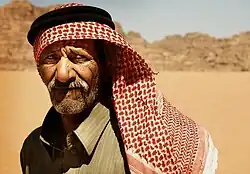
Bedouins are pastorally nomadic Arab tribes who have historically inhabited the Arabian, Syrian and Saharan Deserts.[1]
They call themselves the people of the tent, because they travelled around, living in tents. Bedouin were camel raisers and drivers, sheep and goat nomads, cattle driving nomads, and merchants. Today many Bedouin have given up the nomadic life and live and work in towns. The Bedouin are the original Breeders of the Arabian Horse.
Related pages
References
| Countries and territories of the Middle East |
| ||||
|---|---|---|---|---|---|
1 Only recognized by Turkey; see Cyprus dispute. 2 Status disputed with Morocco. | |||||
Palestine topics | |||||||||
|---|---|---|---|---|---|---|---|---|---|
| History |
| ||||||||
| Conflict |
| ||||||||
| Geography |
| ||||||||
| Politics |
| ||||||||
| Government |
| ||||||||
| Security |
| ||||||||
| Foreign affairs |
| ||||||||
| Economy |
| ||||||||
Culture and society |
| ||||||||
| Media |
| ||||||||
| Diaspora |
| ||||||||
| Ethnic groups |
| ||||||||
Outline Category · Portal | |||||||||
This article is issued from Wikipedia. The text is available under Creative Commons Attribution-Share Alike 4.0 unless otherwise noted. Additional terms may apply for the media files.