1820 United States presidential election
 | |||||||||||||||||||||||||||||
235 members[a] of the Electoral College 118 electoral votes needed to win | |||||||||||||||||||||||||||||
|---|---|---|---|---|---|---|---|---|---|---|---|---|---|---|---|---|---|---|---|---|---|---|---|---|---|---|---|---|---|
| Turnout | 10.1%[1]  6.8 pp | ||||||||||||||||||||||||||||
| |||||||||||||||||||||||||||||
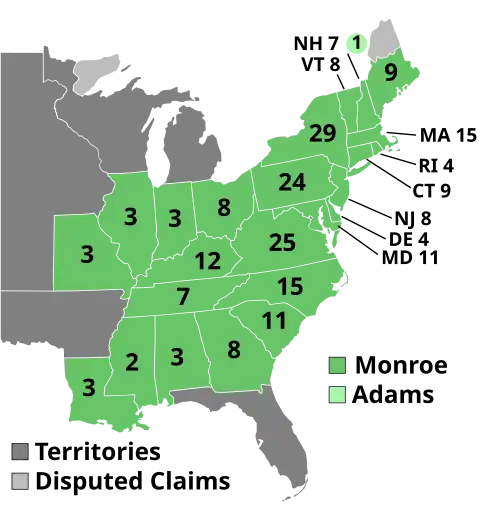 Presidential election results map. Green denotes states won by Monroe and Light Green denotes a New Hampshire elector William Plumer's vote for John Quincy Adams. Numbers indicate the number of electoral votes cast by each state. Missouri's statehood status and subsequent electoral votes were disputed, and are therefore not counted in the above infobox. | |||||||||||||||||||||||||||||
| |||||||||||||||||||||||||||||
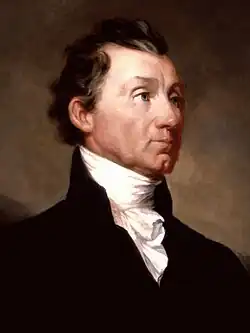
The 1820 United States presidential election was the 9th election in the history of the United States. It was held from November 1 to December 6, 1820.
This was the last of three candidates in U.S. history in which a nominee ran unopposed for President, the other two being the elections of George Washington in 1788-89 and 1792.
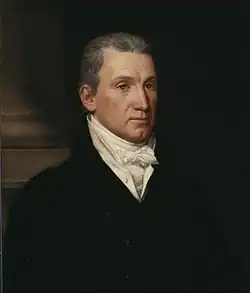
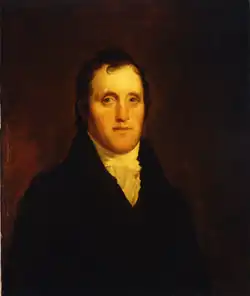
The Democratic-Republican Ticket of President James Monroe of Virginia and Vice President Daniel D. Tompkins won the election, securing 231 of 232 electoral votes. The lone elector, William Plumer of New Hampshire, voted as a faithful elector for Secretary of State and future President John Quincy Adams.
This election marked the first time in U.S. history that the incumbent party won the presidency three consecutive times. It also marked the only time in U.S. history that three separate candidates won the presidency for two consecutive terms.[c]
Nominations
 | |||||||||||||||||||||||||||||
| James Monroe | Daniel D. Tompkins | ||||||||||||||||||||||||||||
|---|---|---|---|---|---|---|---|---|---|---|---|---|---|---|---|---|---|---|---|---|---|---|---|---|---|---|---|---|---|
| for President | for Vice President | ||||||||||||||||||||||||||||
 |
 | ||||||||||||||||||||||||||||
| 5th President of the United States (1817–1825) |
6th Vice President of the United States (1817–1825) | ||||||||||||||||||||||||||||
Notes
- ↑ Electors were elected to all 235 apportioned positions; however, Missouri's statehood status and subsequent 3 electoral votes were disputed.
- ↑ Massachusetts voted 68% in favor of the Federalist Party; however, there was no Federalist nominee. Its electors were ultimately awarded to Monroe.
- ↑ Jefferson started the Democratic-Republican control of the presidency when he won in 1800 against President John Adams and retained control in 1804 when he defeated Charles C. Pinckney. James Madison held this control with his victories in 1808 against Pinckney and in 1812 against DeWitt Clinton. Monroe, himself, later held this chain with his first term election in 1816 against Rufus King
References
- ↑ "National General Election VEP Turnout Rates, 1789-Present". United States Election Project. CQ Press.