1812 United States presidential election
 | ||||||||||||||||||||||||||||||||
217 members of the Electoral College 109 electoral votes needed to win | ||||||||||||||||||||||||||||||||
|---|---|---|---|---|---|---|---|---|---|---|---|---|---|---|---|---|---|---|---|---|---|---|---|---|---|---|---|---|---|---|---|---|
| Turnout | 40.4%[1]  3.6 pp | |||||||||||||||||||||||||||||||
| ||||||||||||||||||||||||||||||||
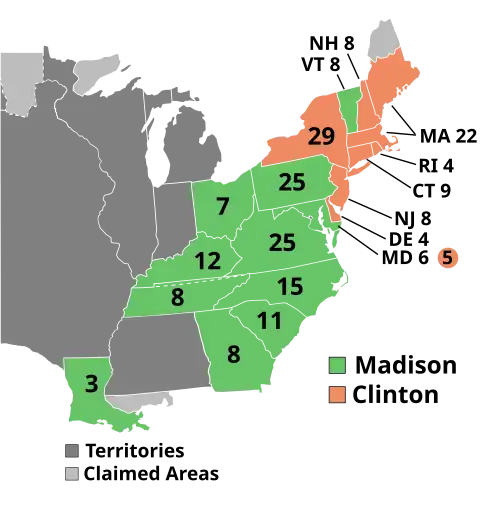 Presidential election results map. Green denotes states won by Madison and Salmon denotes states won by Clinton. Numbers indicate the number of electoral votes cast by each state. | ||||||||||||||||||||||||||||||||
| ||||||||||||||||||||||||||||||||
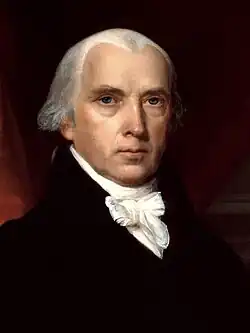

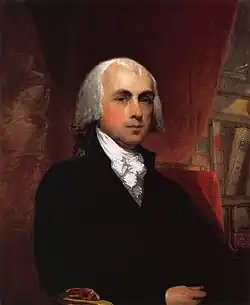
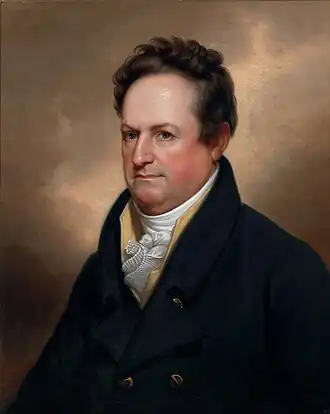
The 1812 United States presidential election was the 7th election in the history of the United States. It occurred from October 30 to December 2, 1812. This election was between the Democratic-Republican nominee, President James Madison of Virginia and the Federalist nominee, Lieutenant Governor and NYC Mayor DeWitt Clinton of New York.[c] Madison won the election with 128 electoral votes. King got 89 electoral votes.
Nominees
Democratic-Republican Party
 | |||||||||||||||||||||||||||||
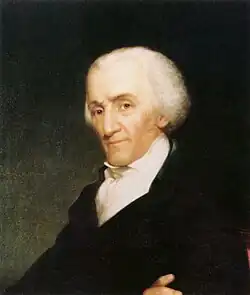
| James Madison | Elbridge Gerry | ||||||||||||||||||||||||||||
|---|---|---|---|---|---|---|---|---|---|---|---|---|---|---|---|---|---|---|---|---|---|---|---|---|---|---|---|---|---|
| for President | for Vice President | ||||||||||||||||||||||||||||
 |
 | ||||||||||||||||||||||||||||
| 4th President of the United States (1809–1817) |
9th Governor of Massachusetts (1810–1812) | ||||||||||||||||||||||||||||
Presidential
- James Madison, 4th President of the United States (1809-1817) (Nominee)
- DeWitt Clinton, 5th Lieutenant Governor of New York (1811-1813) & 47th, 49th and 51st Mayor of New York City (1803-1807, 1808-1810, 1811-1815) (Federalist endorsed nominee)
- George Clinton, 4th Vice President of the United States (1805-1812) (Died on April 20, 1812)
Vice Presidential
- Elbridge Gerry, 9th Governor of Massachusetts (1810–1812) (Nominee)
- John Langdon, 3rd Governor of New Hampshire (1810–1812)
Federalist Party
 | |||||||||||||||||||||||||||||
| DeWitt Clinton | Jared Ingersoll | ||||||||||||||||||||||||||||
|---|---|---|---|---|---|---|---|---|---|---|---|---|---|---|---|---|---|---|---|---|---|---|---|---|---|---|---|---|---|
| for President | for Vice President | ||||||||||||||||||||||||||||
 |
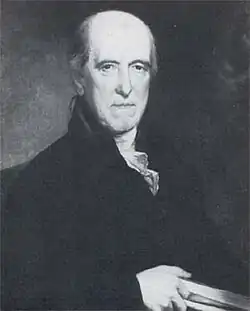 | ||||||||||||||||||||||||||||
| 5th Lieutenant Governor of New York (1811–1813) 47th, 49th and 51st Mayor of New York City (1803–1807, 1808–1810, & 1811–1815) |
5th & 11th Attorney General of Pennsylvania (1791–1800, 1811–1816) | ||||||||||||||||||||||||||||
Presidential
- DeWitt Clinton, 5th Lieutenant Governor of New York (1811-1813) & 47th, 49th and 51st Mayor of New York City (1803-1807, 1808-1810, 1811-1815) (Nominee)
- John Marshall, 4th Chief Justice of the United States (1801-1835) (Declined to contest)
Vice Presidential
- Jared Ingersoil, 5th & 11th Attorney General of Pennsylvania (1791–1800, 1811–1816) (Vice presidential nominee)
Straight-Federalist
| |||||||||||||||||||||||||||||
| Rufus King | William R. Davie | ||||||||||||||||||||||||||||
|---|---|---|---|---|---|---|---|---|---|---|---|---|---|---|---|---|---|---|---|---|---|---|---|---|---|---|---|---|---|
| for President | for Vice President | ||||||||||||||||||||||||||||
 |
 | ||||||||||||||||||||||||||||
| 3rd U.S. Minister to Great Britain (1796–1803) |
10th Governor of North Carolina (1798–1799) | ||||||||||||||||||||||||||||
Notes
- ↑ While commonly labeled as the Federalist candidate, Clinton technically ran as a Democratic-Republican and was not nominated by the Federalist party itself, the latter simply deciding not to field a candidate. This did not prevent endorsements from state Federalist parties (such as in Pennsylvania), but he received the endorsement from the New York state Democratic-Republicans as well.
- ↑ John Langdon had originally been nominated as Madison's running mate; however, Langdon declined the nomination and Gerry was chosen instead.
- ↑ Clinton was nominated officially under the Democratic-Republican Party
References
- ↑ "National General Election VEP Turnout Rates, 1789-Present". United States Election Project. CQ Press.