1808 United States presidential election
 | |||||||||||||||||||||||||||||
176 members of the Electoral College 89 electoral votes needed to win | |||||||||||||||||||||||||||||
|---|---|---|---|---|---|---|---|---|---|---|---|---|---|---|---|---|---|---|---|---|---|---|---|---|---|---|---|---|---|
| Turnout | 36.8%[1]  13.0 pp | ||||||||||||||||||||||||||||
| |||||||||||||||||||||||||||||
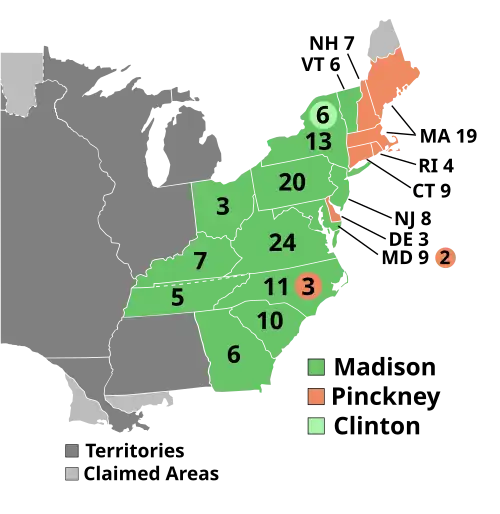 Presidential election results map. Green denotes states won by Madison/Clinton and Salmon denotes states won by Pinckney/King. Numbers indicate the number of electoral votes cast by each state. | |||||||||||||||||||||||||||||
| |||||||||||||||||||||||||||||

The 1808 United States presidential election was the 6th election in the history of the United States. It occurred from November 4 to December 7, 1808. This election was between the Democratic-Republican nominee, Secretary of State James Madison of Virginia and the Federalist nominee, former Minister to France Charles C. Pinckney of South Carolina. Madison won the election with 122 electoral votes. Pinckney got 45 electoral votes.
This is also the first time that an unsuccessful presidential nominee would win their party's nomination for a second time and lose the election[a][b], as Pinckney had won the Federalist presidential nomination in 1804 but had lost to President Thomas Jefferson.
Nominations
Democratic-Republican Party
 | |||||||||||||||||||||||||||||
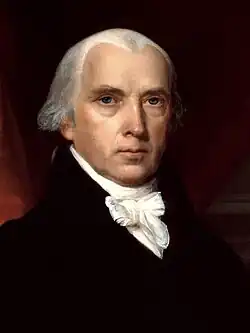
| James Madison | George Clinton | ||||||||||||||||||||||||||||
|---|---|---|---|---|---|---|---|---|---|---|---|---|---|---|---|---|---|---|---|---|---|---|---|---|---|---|---|---|---|
| for President | for Vice President | ||||||||||||||||||||||||||||
 |
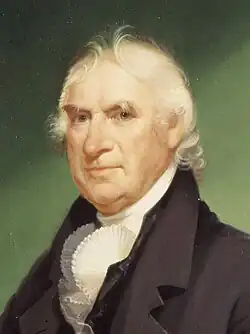 | ||||||||||||||||||||||||||||
| 5th Secretary of State (1801-1809) |
4th Vice President of the United States (1805–1812) | ||||||||||||||||||||||||||||
Presidential
- James Madison, 5th U.S. Secretary of State from Virginia (1801-1809) (Nominee)
- James Monroe, 4th Ambassador to the United Kingdom from Virginia (1803-1807) (1816 Nominee) (Later became POTUS in 1817)
- George Clinton, 4th Vice President of the United States (1805-1812) (Vice presidential nominee)
Vice Presidential
- George Clinton, 4th Vice President of the United States (1805-1812) (Vice presidential nominee)
- John Langdon, 3rd and 5th Governor of New Hampshire (1805-1809, 1810-1812)
- Henry Dearborn, 5th U.S. Secretary of War (1801-1809)
- John Quincy Adams, U.S. senator from Massachusetts (1803-1808) (1824 Nominee) (Later became POTUS in 1825) (Son of 2nd President John Adams [1797-1801])
Federalist Party
 | |||||||||||||||||||||||||||||
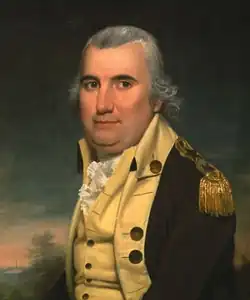
| Charles C. Pinckney | Rufus King | ||||||||||||||||||||||||||||
|---|---|---|---|---|---|---|---|---|---|---|---|---|---|---|---|---|---|---|---|---|---|---|---|---|---|---|---|---|---|
| for President | for Vice President | ||||||||||||||||||||||||||||
 |
 | ||||||||||||||||||||||||||||
| 6th U.S. Minister to France (1796–1797) |
3rd U.S. Minister to Great Britain (1796–1803) | ||||||||||||||||||||||||||||
Presidential
- Charles Cotsworth Pinckney, 6th U.S. Minister to France (1796–1797) (Nominee)
Vice Presidential
- Rufus King, 3rd U.S. Minister to Great Britain (1796–1803) (Vice presidential nominee)
Notes
- ↑ Thomas Jefferson had won the nomination twice in 1796 and 1800, but had won the Vice Presidency in 1796, thus being deemed as a partial win
- ↑ This would only happen four more times in U.S. history. Those were Henry Clay in 1824, 1832, and 1844; William Jennings Bryan in 1896, 1900, and 1908; Thomas E. Dewey in 1944 and 1948; and Adlai Stevenson II in 1952 and 1956
References
- ↑ "National General Election VEP Turnout Rates, 1789-Present". United States Election Project. CQ Press.