1896 United States presidential election
 | ||||||||||||||||||||||||||||||||
447 members of the Electoral College 224 electoral votes needed to win | ||||||||||||||||||||||||||||||||
|---|---|---|---|---|---|---|---|---|---|---|---|---|---|---|---|---|---|---|---|---|---|---|---|---|---|---|---|---|---|---|---|---|
| Turnout | 79.3%[1]  4.6 pp | |||||||||||||||||||||||||||||||
| ||||||||||||||||||||||||||||||||
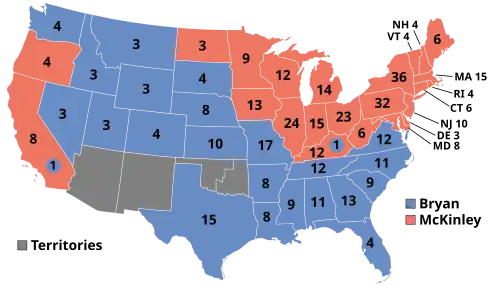 Presidential election results map. Red denotes those won by McKinley/Hobart, blue denotes states won by Bryan/Sewall and the Democratic/Populist ticket of Bryan/Watson. Numbers indicate the number of electoral votes allotted to each state. | ||||||||||||||||||||||||||||||||
| ||||||||||||||||||||||||||||||||
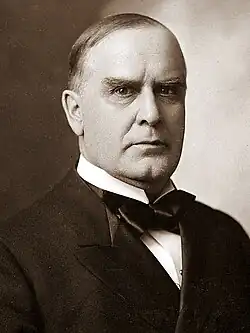
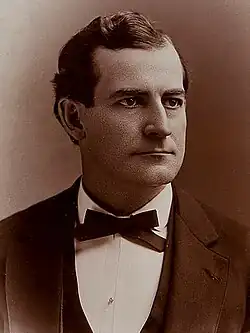
The 1896 United States presidential election was the 28th presidential election in the United States. It happened on Tuesday, November 3, 1896. Former Governor William McKinley, the Republican candidate, defeated Democrat William Jennings Bryan. The 1896 campaign happened during an economic depression called the Panic of 1893. The election is considered to mark the change from the "Third Party System" to the "Fourth Party System".[2]
Although, McKinley's 1896 nomination was his first time securing the nomination, he had received 10+ delegates in every convention since 1888.
Candidates
Republican Party
 | |||||||||||||||||||||||||||||
| William McKinley | Garret Hobart | ||||||||||||||||||||||||||||
|---|---|---|---|---|---|---|---|---|---|---|---|---|---|---|---|---|---|---|---|---|---|---|---|---|---|---|---|---|---|
| for President | for Vice President | ||||||||||||||||||||||||||||
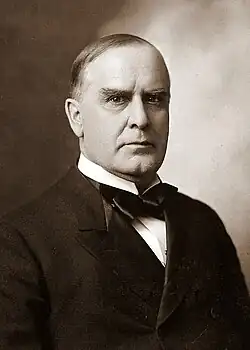 |
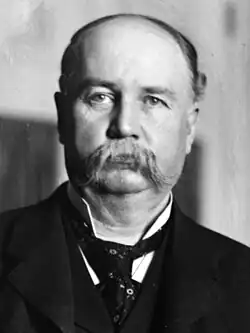 | ||||||||||||||||||||||||||||
| 39th Governor of Ohio (1892–1896) |
24th President of the New Jersey Senate (1881–1882) | ||||||||||||||||||||||||||||
Presidential
- William McKinley, 39th Governor of Ohio (1892-1896) (Nominee)
- Thomas B. Reed, Speaker of the United States House of Representatives (1889-1891; 1895-1899)
- Matthew Quay, U.S. senator from Pennsylvania (1887-1899; 1901-1904)
- Levi P. Morton, 22nd Vice President of the United States (1889-1893) and 31st Governor of New York (1895-1896)
- William B. Allison, U.S. senator from Iowa (1873-1908)
Vice Presidential
- Garret Hobart, 24th President of the New Jersey Senate (1881–1882) (Vice presidential nominee)
- Henry Clay Evans, former Congressman from Tennessee (1889–1891)
- Morgan Bulkeley, 54th Governor of Connecticut (1889–1893)
- James A. Walker, U.S. representative from Virginia (1895–1899)
- Charles W. Lippett, 44th Governor of Rhode Island (1895–1897)
- Thomas B. Reed, 32nd & 34th Speaker of the House (1889-1891, 1895-1899) and Congressman from Maine (1877-1899)
- Chauncey Depew, former Secretary of State of New York (1864-1865)
- John M. Thurston, U.S. senator from Nebraska (1895-1901)
- Fredrick D. Grant, former U.S. Minister to Austria-Hungary (1889-1893)
- Levi P. Morton, 22nd Vice President of the United States (1889-1893) and 31st Governor of New York (1895-1896)
Democratic Party
 | |||||||||||||||||||||||||||||
| William Jennings Bryan | Arthur Sewall | ||||||||||||||||||||||||||||
|---|---|---|---|---|---|---|---|---|---|---|---|---|---|---|---|---|---|---|---|---|---|---|---|---|---|---|---|---|---|
| for President | for Vice President | ||||||||||||||||||||||||||||
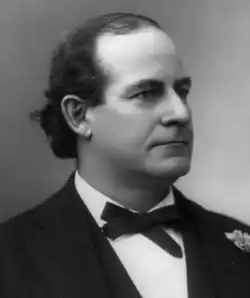 |
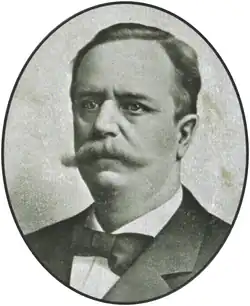 | ||||||||||||||||||||||||||||
| U.S. Representative for NE-01 (1891–1895) |
President of the Maine Central Railroad (1884–1893) | ||||||||||||||||||||||||||||
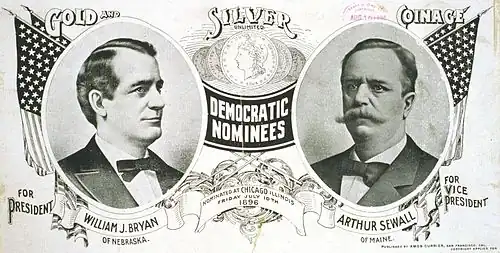 | |||||||||||||||||||||||||||||
Presidential
- William Jennings Bryan, former Congressman from Nebraska (1891-1895) (Nominee)
- Richard P. Bland, former Congressman from Missouri (1873-1895; 1897-1899)
- Robert E. Pattison, 19th Governor of Pennsylvania (1883-1887; 1891-1895)
- Joseph Blackburn, U.S. senator from Kentucky (1885-1897; 1901-1907)
- Horace Boies, 14th Governor of Iowa (1890-1894)
- John R. McLean, newspaper publisher from Ohio (1877-1914)
- Claude Matthews, Governor of Indiana (1893-1897)
- Sylvester Pennoyer, 8th Governor of Oregon (1887-1895)
- William E. Russell, 37th Governor of Massachusetts (1891-1894) (Declined)
- John W. Daniel, U.S. senator from Virginia (1887-1910) (Declined)
- Joseph C. Sibley, former Congressman from Pennsylvania (1893-1895; 1899-1907) (Not nominated)
Vice Presidential
- Arthur Sewall, former President of the Maine Central Railroad from Maine (1884–1893) (Vice presidential nominee)
- George F. Williams, former Congressman from Massachusetts (1884–1893)
- Walter Clark, Associate Justice of the North Carolina Supreme Court (1889–1903)
- William F. Harrity, 9th Chair of the Democratic National Committee from Pennsylvania (1892-1896)
- J. C. S. Blackburn, U.S. senator from Kentucky (1885-1897, 1901-1907)
- Robert E. Pattison, 19th & 21st Governor of Pennsylvania (1883-1887, 1891-1895)
- Henry M. Teller, U.S. senator from Colorado (1876-1882, 1885-1909) and 15th U.S. Secretary of the Interior (1882-1885)
- Sylvester Pennoyer, 8th Governor of Oregon (1873–1895, 1897-1899)
- Stephen M. White, U.S. senator from California (1893-1899) and 18th Lieutenant Governor of California (1887-1891)
- J. Hamilton Lewis, Congressional nominee for Washington's at-large district (Ineligible, not yet 35 years old)
- John R. McLean, owner and publisher of The Washington Post and The Cincinnati Enquirer from Ohio (1905-1916, 1881-1916) (Declined)
- Richard P. Bland, former Congressman from Missouri (1905-1916, 1881-1916) (Declined)
- Joseph C. Sibley, former Congressman from Pennsylvania (1893-1895, 1899-1907) (Declined)
- John W. Daniel, U.S. senator from Virginia (1887-1910) (Declined)
- James R. Williams, former Congressman from Illionis (1889-1895, 1899-1905) (Declined)
- Horace Boies, 14th Governor of Iowa (1890-1894) (Declined)
- George W. Fithian, former Congressman from Illionis (1889-1895) (Declined)
References
- ↑ "Voter Turnout in Presidential Elections". The American Presidency Project. UC Santa Barbara.
- ↑ Williams (2010)
Other websites

Wikimedia Commons has media related to United States presidential election, 1896.
- United States presidential election of 1896 at the Encyclopædia Britannica
- Presidential Election of 1896: A Resource Guide from the Library of Congress
- 1896 popular vote by counties
- How close was the 1896 election? — Michael Sheppard, Massachusetts Institute of Technology
- McKinley & Hobart campaign handkerchief in the Staten Island Historical Society Online Collections Database
- Election of 1896 in Counting the Votes Archived 2019-09-23 at the Wayback Machine