Traditionalism (perennialism)
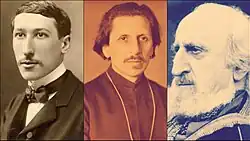
Traditionalism, also called the Traditionalist School, is a school of thought within perennial philosophy. It began with René Guénon in the 20th century and teaches that there is a single original, metaphysical truth that is the source of all major world religions. Unlike universalist perennialism, which focuses on similarities in religious experiences across cultures, Traditionalism argues that all major religions originate from a metaphysical source called Tradition and are fully expressed in their "orthodox" forms.
Tradition has both exoteric and esoteric aspects. The exoteric aspect includes ceremonies, rituals, and rules, while the esoteric aspect is concerned with the spiritual and intellectual side of the tradition. Traditionalists often contrast "tradition" with "modernity". Tradition comes from a transcendent origin, whereas modernity generally ignores this dimension. Traditionalists defend this transcendent aspect of reality in traditional religions and worldviews, while viewing modern or liberal interpretations as rationalistic, materialistic, and individualistic.
The distinction between "Traditionalism" and "Perennialism" is not always clear. Some Traditionalists equate their philosophy with perennialism, but not all perennialists consider themselves Traditionalists. Although Guénon is considered the founder of Traditionalism, he called himself only a perennialist. Aldous Huxley, who popularized the term "perennial philosophy" in his 1945 book, had a mystical universalist view that differs from the Traditionalist School.
Historian Mark Sedgwick identifies René Guénon, Ananda Coomaraswamy, Frithjof Schuon, Seyyed Hossein Nasr, Julius Evola, Mircea Eliade, and Alexandr Dugin as the seven most prominent Traditionalists.[1] Sedgwick notes that some strands of Traditionalism, especially Guénon’s, are politically quietist, but Traditionalism has influenced various social and political areas, including environmentalism (as in Nasr’s work),interfaith dialogue initiatives in Jordan (Prince Ghazi bin Muhammad and the Royal Aal al-Bayt Institute for Islamic Thought), support for traditional arts and philosophy by King Charles III, and far-right politics (Evola, Eliade, Dugin).[2][3][4] Scholars debate whether far-right uses of Traditionalism truly align with its thought.
Background
Etymology
The word "tradition" comes from the Latin traditio, meaning "to hand over."[5] It refers to passing down knowledge, practices, skills, laws, and other cultural elements.[6] Seyyed Hossein Nasr sees tradition as a "living presence" that leaves an imprint but cannot be reduced to that imprint.[7] Tradition has two levels: passing knowledge to the next generation, and being a living force that transcends its mark, similar to a Platonic form.
Perennialism
Traditionalists believe all major religions are based on the same primordial and universal metaphysical truths. This is called philosophia perennis or perennial philosophy, which includes both absolute Truth and infinite Presence.[8] Absolute Truth is the "perennial wisdom" that underlies all orthodox religions, while infinite Presence is the "perennial religion" living in their hearts.[9]
Frithjof Schuon explained that philosophia perennis represents the total primordial and universal truths not belonging to any single system. Religio perennis represents the essence of all forms of worship, prayer, and morality.[10] Traditionalists rely on metaphysical intuition rather than mystical experiences to perceive this wisdom.[11][10]
Schuon described the process of understanding the eternal wisdom as discernment, separating the real from the illusory and concentrating on the Real to achieve awareness of the absolute and infinite.[12]
Concept of Tradition
Beverly J. Lanzetta describes tradition as the backbone of perennial philosophy.[13] For Nasr and other Traditionalists, tradition is sacred, divine, and carries the sacred message through time.[14] It includes revelation, philosophy, art, and culture, reminding humans of the "Divine Center."[15]
Nasr defines tradition as truths revealed to humanity by divine messengers, shaping law, society, arts, sciences, and knowledge.[16] Tradition aligns with God’s will and allows humans to connect with the divine through prophetic revelations.[17]
Tradition and modernity
Nasr sees tradition as as old as humanity itself, while modernity is detached from divine origins.[18][19] Modernism is focused on human and material concerns, in contrast to the transcendent principles of tradition.[18] Schuon identified modern characteristics such as rationalism, materialism, relativism, individualism, scientism, atheism, and progressivism as opposed to tradition.[20]
Exoteric and esoteric dimensions
Tradition has exoteric and esoteric dimensions.[21] Exoteric aspects include rites, laws, and doctrines. Esoteric aspects involve spiritual and intellectual essence, accessible only to those who understand the inner dimension.[21] All esoteric paths require affiliation to a major religion.[22]
Traditionalists also believe in a Primordial Tradition, uniting all truths of all religions.[21] For Guénon, it represents unity beyond culture, guiding humans to awareness of supreme Unity.[23] For Nasr, it flows from an Absolute Truth expressed in diverse ways across time.[24]
People
Traditionalism began with René Guénon. Other representatives include Ananda Coomaraswamy, Frithjof Schuon, Titus Burckhardt, Martin Lings, Hossein Nasr, William Stoddart, Jean-Louis Michon, Marco Pallis, Lord Northbourne, Huston Smith, Awadh Kishore Saran, Harry Oldmeadow, Reza Shah-Kazemi and Patrick Laude. Some scholars also include Julius Evola and Mircea Eliade, though their inclusion is debated.[25][26]
René Guénon
Guénon (1886–1951) focused on the contrast between traditional worldviews and modernism, which he saw as a historical anomaly.[27] He believed the world reflects metaphysical principles preserved in religious teachings, lost in modern times.[28] He criticized modern denial of the metaphysical realm.[28]
Guénon was attracted to Sufism and joined the Shadhili order in 1912. After his doctoral thesis was rejected, he left academia in 1923.[27] He promoted a return to traditional worldviews and opposed Theosophy and Spiritism. He moved to Egypt in 1930 and lived there until his death.[27]
Ananda Coomaraswamy
Coomaraswamy’s idea of Tradition is similar to Guénon’s Primordial Tradition.[29] He used philosophia perennis to describe universal metaphysical principles and Tradition for specific cultures.[29]
Frithjof Schuon
Schuon described tradition as a semi-divine reality guiding humanity to awareness of the Absolute.[30] Religions differ because cultures differ, but all emanate from the same divine source, which he called the "transcendent unity of religions."[31]
Seyyed Hossein Nasr
Nasr developed a comprehensive framework of Tradition, drawing from Guénon.[32] Tradition comes from the divine source, influencing all aspects of life and providing access to "Supreme Knowledge" (philosophia perennis).[33]
Influence
Sedgwick notes that Traditionalism has inspired environmental respect, music, interfaith dialogue, and various political movements, from Donald Trump to fascist and racist ideologies.[34] Some Traditionalists focus on politics, others on religion and self-realization.[35]
In the Muslim world
Through Sufism, Guénon’s Traditionalism influenced Asia and the Islamic world.[note 1]
Iran
In Iran, Hossein Nasr and Ali Shariati introduced Traditionalism. Although it did not gain mass popularity, it influenced the elite. Three members of the Supreme Council of the Cultural Revolution were familiar with Traditionalist ideas.2002
Pakistan
Pakistani writer Hasan Askari was influenced by Guénon, affecting the teachings of Darul Uloom Karachi.[36] Other influenced figures include A. K. Brohi and Muhammad Ajmal.
Morocco
The Budshishiyya Sufi order in Morocco has strands influenced by Traditionalism.[37]
Far-right and right-wing populist movements
Sedgwick notes that 21st-century thinkers like Aleksandr Dugin use the traditional/modern contrast to support far-right politics. Some Traditionalists, like Julius Evola and Mircea Eliade, were involved in European fascist movements. Influences extend to figures such as Savitri Devi, Steve Bannon, Dugin, and Olavo de Carvalho.[38]
Environmentalism
Seyyed Hossein Nasr applied Traditionalist ideas to environmentalism starting in 1966.[39] He argued that ecological crises result from a loss of harmony between humans and God and that modern science and technology, focused on material progress, contribute to environmental destruction.[40][41] Traditional knowledge and the sacred are necessary to restore balance.[42]
Interfaith dialogue
Nasr applied Traditionalist ideas to interfaith dialogue, following Schuon's concept of the "transcendent unity of religions." This recognizes a shared metaphysical source in all religions, especially their esoteric traditions.[43] Examples include dialogue in Bosnia (Rusmir Mahmutćehajić) and Jordan (Prince Ghazi bin Muhammad and the Royal Aal al-Bayt Institute for Islamic Thought). The Jordanian initiative included the 2007 letter "A Common Word Between Us and You" and received support from global Christian, Jewish, and Muslim leaders.[44] A dialogue with Buddhism led to the book Common Ground Between Islam & Buddhism.[45]
King Charles III
Mark Sedgwick notes that King Charles III, then Prince of Wales, was influenced by Traditionalism, particularly on environmentalism, organic farming, sacred art, and architecture.[46] He contributed articles and speeches to Traditionalist publications like Sacred Web.[47]
Notes
- ↑ See works by Mahmoud Bina, Osman Bakar, Ranjit Fernando.
References
- ↑ Sedgwick 2004, p. xiii.
- ↑ Vernon, Mark (28 July 2023). "Book review: Traditionalism: The radical project for restoring sacred order by Mark Sedgwick". Church Times. Retrieved 16 May 2025.
- ↑ Patridge, Esme (19 September 2022). "Charles will be our Perennialist King". Retrieved 16 May 2025.
- ↑ Evans, Jules (5 October 2018). "Perennialism and fascism". Philosophy for Life. Retrieved 16 May 2025.
- ↑ Aslan 1998, p. 48.
- ↑ Howard 2011, p. 103.
- ↑ Liu 2000, p. 255.
- ↑ Lings & Minnaar 2007, p. xi-xii.
- ↑ Lings & Minnaar 2007, p. xii.
- 1 2 Oldmeadow 2010, p. vii.
- ↑ Smith 1987, p. 554.
- ↑ Oldmeadow 2010.
- ↑ Lanzetta 1996, p. 93.
- ↑ Lumbard 2013, p. 178.
- ↑ Lumbard 2013, pp. 178–179.
- ↑ King 2000, p. 203.
- ↑ Khoei & Arabshahi 2013, p. 401.
- 1 2 Lumbard 2013, p. 179.
- ↑ Lakhani 2010, p. 53.
- ↑ Schuon 1997.
- 1 2 3 Aslan 1998, p. 50.
- ↑ Guénon 2001, p. 48.
- ↑ Quinn 1997, p. 15.
- ↑ Gangadean 2009, p. 138.
- ↑ Rose, Matthew. A World After Liberalism: Philosophers of the Radical Right. Yale University Press, 2021. pp.50-52.
- ↑ Spineto, Natale. "Mircea Eliade and traditionalism." Aries, v. 1, n. 1, p. 62-87, 2001.
- 1 2 3 Kalin 2015, p. 127.
- 1 2 Kalin 2015, p. 128.
- 1 2 Quinn 1997, pp. 12–13.
- ↑ Aymard & Laude 2004, p. 80.
- ↑ Howard 2011, p. 102.
- ↑ Howard 2011, pp. 103–104.
- ↑ Howard 2011, p. 104.
- ↑ Sedgwick, Mark (June 2023). Traditionalism: The Radical Project for Restoring Sacred Order. Random House. ISBN 978-0241487945.
- ↑ Sedgwick, Mark (June 2023). Traditionalism: The Radical Project for Restoring Sacred Order. Random House. ISBN 978-0241487945.
- ↑ Iliescu, Radu (9 February 2005). "Michel Vâlsan, Guénon's work in Orient (excerpt)". Projet René Guénon. Retrieved 17 October 2023.
- ↑ Sedgwick 2004, p. 242.
- ↑ Teitelbaum, Benjamin R. (21 April 2020). War for Eternity: The Return of Traditionalism and the Rise of the Populist Right. Penguin Books Limited. p. 121. ISBN 978-0-14-199204-4.
- ↑ Quadir 2013, p. 13.
- ↑ Stone 2005, p. 1802.
- ↑ Jahanbegloo 2010, p. 198.
- ↑ Aslan 2004, p. 23.
- ↑ Sedgwick 2023. sfn error: multiple targets (2×): CITEREFSedgwick2023 (help)
- ↑ "A Common Word". A Common Word. Royal Aal Al Bayt Institute for Islamic Thought. Retrieved 18 June 2025.
- ↑ <Shah-Kazemi, Reza (2010). Common Ground Between Islam & Buddhism (PDF). Fons Vitae. ISBN 978-1891785627. Retrieved 18 June 2025.
- ↑ Sedgwick 2004, p. 214-215.
- ↑ HRH Charles Prince of Wales. "Library items classified under: HRH Charles Prince of Wales". The Matheson Trust. Retrieved 22 May 2025.
Sources
- Primary
- Coomaraswamy (1977), Lipsey, Roger (ed.), Coomaraswamy Selected Papers 2: Metaphysics, Princeton University Press
- Guénon, René (2001), Perspectives on Initiation, New York: Sophia Perennis
- Nasr, S.H. (2005). "Introducing the Writings of Frithjof Schuon". The Essential Frithjof Schuon. G - Reference,Information and Interdisciplinary Subjects Series. World Wisdom. ISBN 978-0-941532-92-1.
- Nasr, S.H. (1989). Knowledge and the Sacred (The Gifford Lectures). State University of New York Press. ISBN 978-0-7914-0177-4.
- Nasr, S. H. (2006). "Religious Art, Traditional Art, Sacred Art". In Nasr, Seyyed Hossein; O'Brien, Katherine (eds.). The Essential Sophia. Word Wisdom. ISBN 978-1933316109.
- Schuon, Frithjof (1982), From the Divine to the Human, Bloomington, IN: World Wisdom
- Schuon, Frithjof (2009), Logic and Transcendence, Bloomington, IN: World Wisdom, ISBN 978-193331673-4
- Secondary
- Accart, Xavier (2005), René Guénon ou Le renversement des clartés, Paris, Milano: Arché, ISBN 978-2-912770-03-5
- Aslan, Adnan (1998). "Religion and Tradition". Religious Pluralism in Christian and Islamic Philosophy: The Thought of John Hick and Seyyed Hossein Nasr. Routledge. ISBN 978-0700710256.
- Aymard, J.B.; Laude, P. (2004). "Esoterism and Tradition". Frithjof Schuon: Life and Teachings. SUNY series in Western Esoteric Traditions. State University of New York Press. ISBN 978-0-7914-6205-8.
- Template:Cite contribution
- Davies, Peter; Lynch, Derek (2004), The Routledge Companion to Fascism and the Far Right, Routledge, ISBN 0-415-21494-7
- Gangadean, A.K. (2009). "The Quest for the Universal Global Science". Meditations of Global First Philosophy: Quest for the Missing Grammar of Logos. SUNY series in Western Esoteric Traditions. State University of New York Press. ISBN 978-0-7914-7606-2.
- Hahn, L.E.; Auxier, R.E.; Stone, L.W. Jr., eds. (2001). The Library of Living Philosophers n° 28: The Philosophy of Seyyed Hossein Nasr. Chicago: Open Court. ISBN 978-0-812-69413-0.
- Howard, D. (2011). Being Human in Islam: The Impact of the Evolutionary Worldview. Culture and Civilization in the Middle East. Taylor & Francis. ISBN 978-1-136-82027-4.
- Jahanbegloo, Ramin (2010). In Search of the Sacred: A Conversation with Seyyed Hossein Nasr on His Life and Thought. Santa Barbara, CA: Praeger. ISBN 978-0-31338-324-3.
- Kalin, Ibrahim (2015), "Guénon, Rene (1886–1951)", in Leaman, Oliver (ed.), The Biographical Encyclopedia of Islamic Philosophy, Bloomsbury Publishing
- Khoei, Ehsan Shakeri; Arabshahi, Zohreh (2013). "Tradition in Seyyed Hossein Nasr and Dariush Shayegan's Thought". International Research Journal of Applied and Basic Sciences. 7 (7): 398–404.
- King, Sallie B (2000). "The Philosophia Perennis and the Religion of the World". In Hahn, Lewis Edwin; Auxier, Randall E.; Stone Jr., Lucian W. (eds.). The Philosophy of Seyyed Hossein Nasr. Open Court. ISBN 978-0812694147.
- Lakhani, M.A. (2010). "Understanding Tradition". The Timeless Relevance of Traditional Wisdom. Library of perennial philosophy. World Wisdom. ISBN 978-1-935493-19-8.
- Lanzetta, Beverly J. (1996). "The Mystical Basis of Panikkar's Thought". In Prabhu, J. (ed.). The Intercultural Challenge of Raimon Panikkar. Faith meets faith. Orbis Books. ISBN 978-1-57075-056-4.
- Lings, Martin; Minnaar, Clinton (2007), The Underlying Religion: An Introduction to the Perennial Philosophy, World Wisdom, ISBN 978-1-933316-43-7
- Liu, Shu-hsien (2000). "Reflections on Tradition and Modernity: A Response to Seyyed Hossein Nasr from a Neo-Confucian Perspective". In Hahn, Lewis Edwin; Auxier, Randall E.; Stone Jr., Lucian W. (eds.). The Philosophy of Seyyed Hossein Nasr. Open Court. ISBN 978-0812694147.
- Lumbard, Joseph E.B. (2013). "Seyyed Hossein Nasr on Tradition and Modernity". In Marshall, D. (ed.). Tradition and Modernity: Christian and Muslim Perspectives. Georgetown University Press. ISBN 978-1-58901-982-9.
- Template:Cite contribution
- Oldmeadow, Harry (2010), Frithjof Schuon and the Perennial Philosophy, Word Wisdom, ISBN 978-1-935493-09-9
- Oldmeadow, Harry (2004). Journeys East: 20th Century Western Encounters with Eastern Religious Traditions. Bloomington, IN: World Wisdom. ISBN 978-094153257-0.
- Oldmeadow, Harry (2011), Traditionalism: Religion in the light of the Perennial Philosophy, Sophia Perennis, ISBN 978-1597311311
- Quadir, Tarik M. (2013). Traditional Islamic Environmentalism: The Vision of Seyyed Hossein Nasr. Lanham, MD: University Press of America. ISBN 978-0-7618-6143-0.
- Quinn, W.W. (1997). "The Tradition". The Only Tradition. G - Reference,Information and Interdisciplinary Subjects Series. State University of New York Press. ISBN 978-0-7914-3214-3.
- Sayem, Md. Abu (2019). "The Eco-Philosophy of Seyyed Hossein Nasr". Islamic Studies. 58 (2): 271–295. ISSN 2710-5326.
- Schwindt, Daniel (2016), The Case Against the Modern World: A Crash Course in Traditionalist Thought, CreateSpace Independent Publishing Platform, ISBN 978-1532825347
- Sedgwick, Mark (2004), Against the Modern World: Traditionalism and the Secret Intellectual History of the Twentieth Century, Oxford University Press
- Smith, Huston (1987), "Is There a Perennial Philosophy?", Journal of the American Academy of Religion, 55 (3): 553–566, doi:10.1093/jaarel/LV.3.553, JSTOR 1464070
- Taylor, Bron (2008), Encyclopedia of Religion and Nature, A&C Black
Writings on the subject
- Traditionalism
- Diaz, Marta Dominguez (2014). "Traditionalism". Encyclopedia of Psychology and Religion. Boston, MA: Springer US. pp. 1803–1807. doi:10.1007/978-1-4614-6086-2_703. ISBN 978-1-4614-6085-5.
- Mark Sedgwick, Against the Modern World: Traditionalism and the Secret Intellectual History of the Twentieth Century ISBN 0-19-515297-2
- Harry Oldmeadow, Traditionalism: Religion in the Light of the Perennial Philosophy (2000) ISBN 955-9028-04-9
- Carl W. Ernst, "Traditionalism, the Perennial Philosophy and Islamic Studies" in the MESA Bulletin (1994).
- René Guénon
- Xavier Accart, René Guénon ou Le renversement des clartés Paris, Milano: Arché, 2005 (ISBN 978-2-912770-03-5).
- Marie-France James, Esoterisme et Christianisme: autour de René Guénon (1981).
- Jean-Pierre Laurant, "Le problème de René Guénon", Revue de l'histoire des religions (1971).
- Jean-Pierre Laurant, René Guénon: Les enjeux d'une lecture (2006) ISBN 2-84454-423-1
- Jean-Pierre Laurant and Paul Barbanegra, eds, René Guénon [Cahier de l'Herne] (1985).
- Pierre-Marie Sigaud, ed., Rene Guenon [Dossiers H] (1984).
- Julius Evola
- Franco Ferraresi, "Julius Evola: Tradition, Reaction and the Radical Right" in Archives Européennes de Sociologie (1987).
- Roger Griffin, "Revolts Against the Modern World: The Blend of Literary and Historical Fantasy in the Italian New Right" in Literature and History (1985).
- Writings by Traditionalists
- Aziz, Taimur; Nasr, Seyyed Hossein (2017). "On Tradition, Metaphysics, and Modernity". The Harvard Review of Philosophy. 24. Philosophy Documentation Center: 63–70. doi:10.5840/harvardreview2017241. ISSN 1062-6239.
- Evola, Julius (2002). Men Among the Ruins: Post-War Reflections of a Radical Traditionalist. Inner Traditions/Bear. ISBN 978-0-89281-905-8.
- Keeble, Brian (2000). "Tradition – the radical option?" (PDF). Sacred Web. 6: 15–22. Archived from the original (PDF) on 9 February 2024. Retrieved 24 November 2025.
- Lakhani, M.A. (2010a). "What is Tradition?". The Timeless Relevance of Traditional Wisdom. Library of perennial philosophy. World Wisdom. ISBN 978-1-935493-19-8.
- Nasr, Hossein (1989). Knowledge and the Sacred: Revisioning Academic Accountability. SUNY Press. ISBN 978-0-7914-0176-7.
- Omar, Irfan A. (1995). "The Need for a Sacred Science: An Intellectual Defence of the Tradition by Seyyed Hossein Nasr". American Journal of Islam and Society. 12 (2). International Institute of Islamic Thought: 263–267. doi:10.35632/ajis.v12i2.2377. ISSN 2690-3741.
- Andrew Rawlinson, The Book of Enlightened Masters: Western Teachers in Eastern Traditions ISBN 0-8126-9310-8
- Huston Smith, Forgotten Truth: The Common Vision of the World's Religions (1976), reprint ed. 1992, Harper San Francisco, ISBN 0-06-250787-7
- Alice Lucy Trent, The Feminine Universe: An Exposition of the Ancient Wisdom from the Primordial Feminine Perspective (2010) Golden Order Press, ISBN 1-4537-8952-9
- William W. Quinn, Jr., The Only Tradition (1996) ISBN 0-7914-3213-0
- Ranjit Fernando (1991). The Unanimous Tradition: Essays on the Essential Unity of All Religions. Sri Lanka Institute of Traditional Studies. ISBN 978-955-9028-01-7.
- Perennialism
- Antoine Faivre, ed, Dossier on "Perennialisme" in Aries 11 (1990).
Other websites

- Sacred Web – a Traditionalist journal
- Religio Perennis
- World Wisdom Books
- Fons Vitae Books
- Revista de Estudios Tradicionales
- La Tradición – Textos Tradicionales (Spanish)
- Traditionalists.org - a website for the study of Traditionalism and the Traditionalists
- A review of some Traditionalist books by Carl W. Ernst "Traditionalism, the Perennial Philosophy, and Islamic Studies", Middle East Studies Association Bulletin, vol. 28, no. 2 (December 1994), pp. 176–81
Template:Seyyed Hossein Nasr