Kannabi
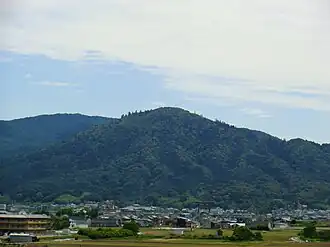
In Shinto, there is a concept known as Kannabi (神奈備), also referred to as kaminabi or kamunabi, which denotes a region that houses a kami or is itself a shintai (a repository in which a kami resides). These regions are typically forests or mountains,[2][3] and examples include Mount Miwa[1] and Nachi Falls.[3]
Overview
Kannabi can have sacred trees called shinboku or rocks called Iwakura.[3] Kannabi may also have shimenawa, torii gates, and sandō which show the way to them.
Shrines that worship kannabi do not always have a honden or haiden like other shrines. Instead, they enshrine the natural kannabi as deities. One example is Ōmiwa Shrine.[1] Kanasana Jinja is another shrine where the mountain itself is the shintai.[4]
Related pages
- Age of the Gods
- Ko-Shintō
- Himorogi・Iwakura
- Shintai・Yorishiro
- Shinboku
- Sacred mountains・Mountain worship
- Kannagi
- Chinju no Mori
References
- 1 2 3 Tamura, Yoshiro (2000). "The Birth of the Japanese Nation". Japanese Buddhism - A Cultural History. Tokyo: Kosei Publishing Company. pp. 21. ISBN 4-333-01684-3.
- ↑ "Archived copy". Archived from the original on 2023-04-10. Retrieved 2023-04-07.
{{cite web}}: CS1 maint: archived copy as title (link) - 1 2 3 霊峰富士など。山岳信仰を参照
- ↑ "Glossary of Shinto Names and Terms: K". www2.kokugakuin.ac.jp. Retrieved 2023-04-06.