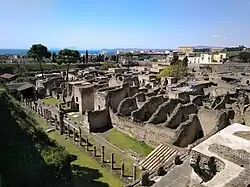
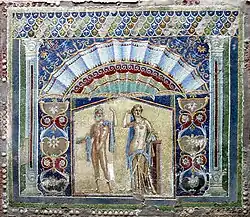
Herculaneum todayHerculaneum: Neptune and Salacia, wall mosaic in house number 22
Herculaneum was an ancient Roman town. It was completely destroyed when the volcano Mount Vesuvius erupted on 24 August, 79 AD.[1][2][3] Herculaneum was covered by volcanic mud during the eruption, which quickly hardened to a semi-rock material.[4] Herculaneum is a UNESCOWorld Heritage Site.[3]
Unlike Pompeii, the deep pyroclastic material which covered it preserved most objects in its path. Archaeologists have recovered wooden and other objects such as rooves, beds, doors, and food. Some 300 skeletons were discovered along the sea shore. It was thought until then that the town had been evacuated by its inhabitants.
Herculaneum was a wealthier town than Pompeii, however it was not as famous after the eruption of Vesuvius in 79 AD. It had many fine houses with a lavish use of coloured marble cladding, mosaics and wall paintings.
Vineyard Landscape of Piedmont: Langhe-Roero and Monferrato
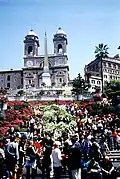
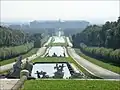
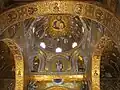
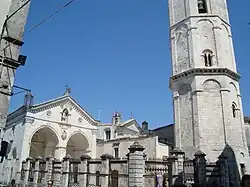
The Last Supper by Leonardo da Vinci in the Church of Santa Maria delle Grazie, Milan Venice Spanish Steps, Rome Royal Palace of Caserta Arab-Norman Palermo, Palatine Chapel Sanctuary of Monte Sant'Angelo