Fur (heraldry)
In heraldry a fur is a pattern originally based on animal furs. The most famous fur is Ermine.
Ermine
Ermine is a fur based on the fur of the Ermine. [1] It is the most common Fur in heraldry
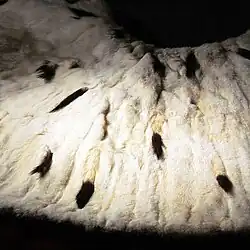 Ermine fur, from the robes of Peter I of Serbia
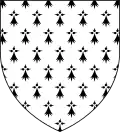 Ermine
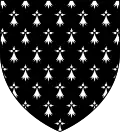 Ermines (counter-ermine)
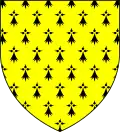 Erminois
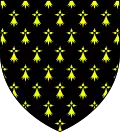 Pean
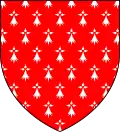 Gules ermined argent
Vair
Vair is a fur that is normally an angular blue (azure) and white (argent) pattern in heraldry.[2] It is based on the Eurasian red squirrel.[3]
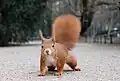 Eurasian red squirrel (S. vulgaris)
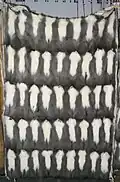 Squirrel bellies on a rack
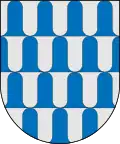 Vair ancien the old curvy version
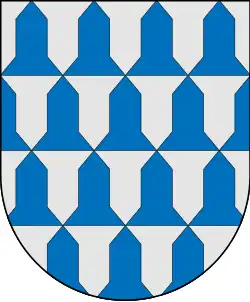 Vair plain the modern version
Variants
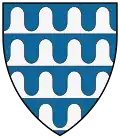 Vair ancien inverted
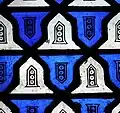 Vair inverted from the Tichborne arms in Winchester Castle
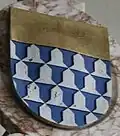 The same arms at St Andrew's, Tichborne
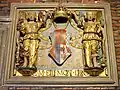 Coat of arms of Jane Seymour at Hampton Court Palace
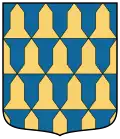 Vairy or and azure
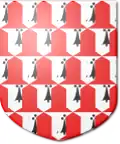 Vairy ermine and gules
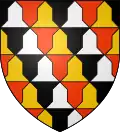 Checked vairy
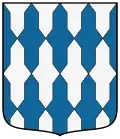 Counter-vair
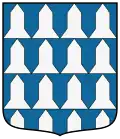 Vair in pale
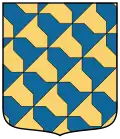 Vairy in bend or and azure
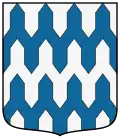 Vair in pointe
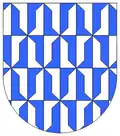 Alternate vair
Potent
Potent[lower-roman 1] (German: Sturzkrückenfeh, meaning "upside-down crutch vair") is a type of heraldic pattern made of T-shaped figures. It is like vair, but instead of the usual bell shapes, the design uses T-shapes called potents because they look like crutches.
When colours other than silver (argent) and blue (azure) are used, the pattern is called potenté or potenty of those colours. Some experts think this pattern started as a result of mistakes when drawing vair, but others believe it is an old and proper form.
A common variation is counter-potent or potent-counter-potent (German: Gegensturzkrückenfeh), which is made like counter-vair. Another version is potent in point (German: Verschobenes Gegensturzkrückenfeh, "displaced counter-potent"). In theory, other forms such as potent in bend or potent of four colours could also exist.[4][5]
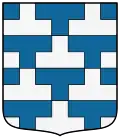 Potent
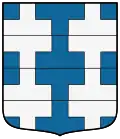 Counter-potent
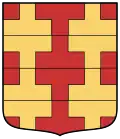 Counter-potenté
gules and or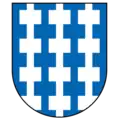 Potent in pale
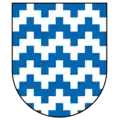 Potent in point
Rare furs
Three other rare fur patterns appear in continental heraldry. Their origins are unclear, but they probably developed from variations of vair made to look like the fur or skin of other animals.
In plumeté or plumetty, the pattern is drawn to look like feathers. In papelonné or papellony, the pattern is drawn as scales that look like a butterfly’s wings — which is where the name comes from.
In German heraldry, a type called Kürsch (meaning "vair bellies") shows the shapes as hairy and brown. The name "vair bellies" is probably not correct, because the belly of a red squirrel is always white, even though its summer coat can be reddish brown. [4][5]
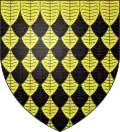 Plumeté or and sable
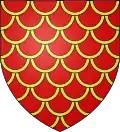 Gules, papelonné or
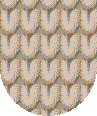 Kürsch
References
Notes
- ↑ Sometimes called varry cuppy.
Citations
- ↑ Woodcock, Thomas; Robinson, John Martin (1988). The Oxford Guide to Heraldry. Oxford: Oxford University Press. pp. 88–89. ISBN 0-19-211658-4.
- ↑ Woodcock, Thomas; Robinson, John Martin (1988). The Oxford Guide to Heraldry. Oxford: Oxford University Press. pp. 88–89. ISBN 0-19-211658-4.
- ↑ Veale (2005), p. 224.
- 1 2 Woodward & Burnett (1892), pp. 68–71.
- 1 2 Fox-Davies (1909), pp. 79–83.
Bibliography
- Boutell, Charles; Arthur Charles Fox-Davies (1914), The Handbook to English Heraldry, London: Reeves & Turner.
- Fox-Davies, Arthur Charles (1909), A Complete Guide to Heraldry, London: T.C. & E.C. Jack.
- Veale, Elspeth M. (2005), The English Fur Trade in the Later Middle Ages (2nd ed.), London: London Folio Society, ISBN 0-900952-38-5.
- Woodward, John; George Burnett (1892), A Treatise on Heraldry British and Foreign with English and French Glossaries, Edinburgh: W. & A.K. Johnston.
| |||||||||||||
| Types |
| Conventional elements of coats of arms | |||||||||||
| Topics |
| ||||||||||||
| Achievement | |||||||||||||
| Charges |
| ||||||||||||
| Tinctures |
| ||||||||||||
| Applications | |||||||||||||
| Related |
| ||||||||||||
| |||||||||||||