Conjugated carbonyl
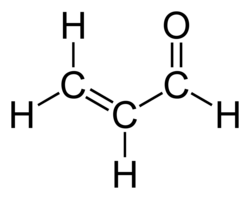
A conjugated carbonyl is a functional group in organic chemistry. Conjugated carbonyls are made of a carbonyl group that is connected by a chemical bond to another double bonded group, usually an alkene. They are called "conjugated" because the double bonds of these groups make a conjugated system.
Conjugated carbonyls are also called α,β–unsaturated carbonyls. This is because the two carbons with the double bond are also called the α and β carbon atoms, with the α carbon being next to the carbonyl and the β carbon being on the other side of the double bond.
Chemistry
Conjugated carbonyls are electrophiles at the carbonyl carbon and the β carbon. Nucleophilic addition can happen at both carbons.[1]
Hard nucleophiles prefer to react at the carbonyl group, which is called 1,2-addition or direct addition. The nucleophile attacks the carbonyl carbon and the lone pair moves to the oxygen, making an alkoxide that is separated from the alkene group by the lack of double bonds on the carbonyl carbon. Protonation of the alkoxide gives a secondary or tertiary alcohol that still has the alkene group.
Soft nucleophiles prefer to react at the β carbon, which is called 1,4-addition or conjugate addition. The nucleophile attacks the β carbon and the lone pair becomes delocalised across the oxygen atom and the α carbon, making an enolate. Protonation happens at the α carbon, so the product keeps the carbonyl group but not the conjugated alkene.
Sources
- ↑ John McMurray (2023-09-20). "19.13 Conjugate Nucleophilic Addition to α,β-Unsaturated Carbonyls". Organic Chemistry: A Tenth Edition. Houston, TX: OpenStax.