April 2015 lunar eclipse
| Total eclipse | |||||||||||||||||
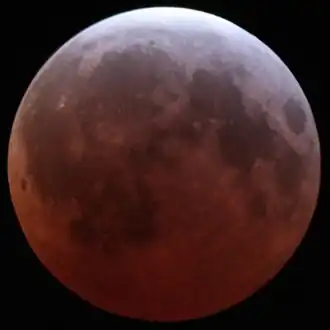 Totality as viewed from Los Angeles, California, 12:00 UTC | |||||||||||||||||
| Date | April 4, 2015 | ||||||||||||||||
|---|---|---|---|---|---|---|---|---|---|---|---|---|---|---|---|---|---|
| Gamma | 0.4460 | ||||||||||||||||
| Magnitude | 1.0019 | ||||||||||||||||
| Saros cycle | 132 (30 of 71) | ||||||||||||||||
| Totality | 4 minutes, 43 seconds | ||||||||||||||||
| Partiality | 209 minutes, 1 second | ||||||||||||||||
| Penumbral | 357 minutes, 31 seconds | ||||||||||||||||
| |||||||||||||||||
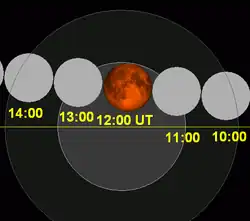
A total lunar eclipse happened on 4 April 2015. It is the first of the two lunar eclipses in 2015, and the third of the tetrad (four total lunar eclipses in a row).
Totality only lasted for 4 minutes 43 seconds,[1] making it the shortest totality of a lunar eclipse in almost five centuries.
Background
A lunar eclipse happens when the Moon passes within Earth's umbra (shadow).[2]
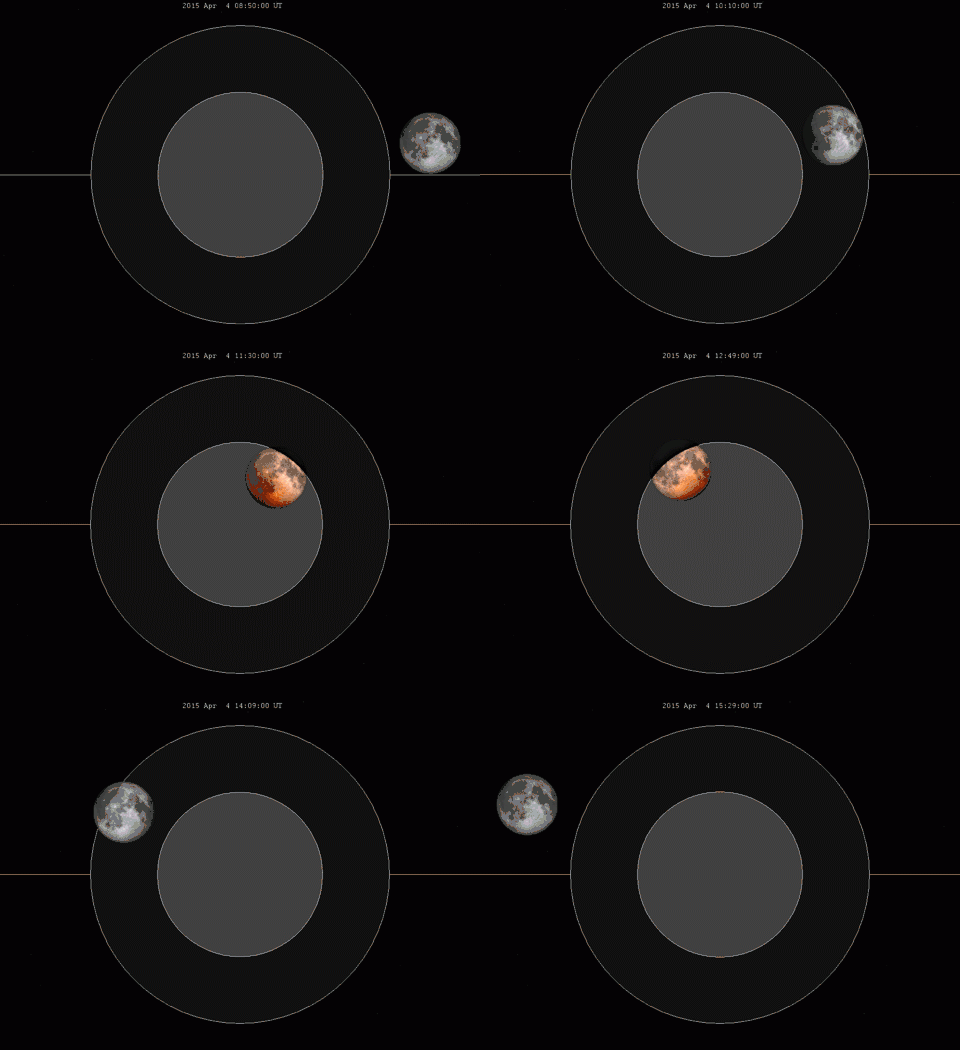
The animation below shows how the Moon looks when passing through Earth's shadow. The Moon turns red within the umbral shadow. The southern part of the Moon will be the closest to the center of the shadow, making it the darkest, and the most reddish in appearance.
Dispute
Some people argued that this lunar eclipse was not a total one. Eclipse watchers noted that during totality, there was a shiny edge on the Moon, which showed that the Moon was not completely in the Earth's shadow.[3]
Images
 Mexico City, Mexico, 11:00 UTC
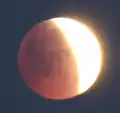 Minneapolis, Minnesota, 11:09 UTC
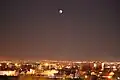 Denver, Colorado, 11:50 UTC
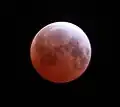 Santa Clara County, California, 12:02 UTC
 Bangkok, Thailand, 12:37 UTC
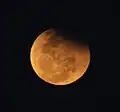 Pune, India, 13:38 UTC
References
- ↑ Espenak, Fred. "Total Lunar Eclipse of 2015 Apr 04" (PDF). NASA's GSFC.
- ↑ Fred Espenak and Jean Meeus. "Visual Appearance of Lunar Eclipses". NASA. Retrieved April 13, 2014.
- ↑ "The Lunar Eclipse Wasn't Total After All?!". Sky & Telescope. 6 April 2015.
| Lists of lunar eclipses |
| ||||
|---|---|---|---|---|---|
| Lunar eclipses by era |
| ||||
| Lunar eclipses by saros series |
| ||||
 Partial eclipses |
| ||||
 Total eclipses |
| ||||
 Penumbral eclipses |
| ||||
| Related |
| ||||
| |||||
