1856 United States presidential election
 | |||||||||||||||||||||||||||||||||||||||||
296 members of the Electoral College 149 electoral votes needed to win | |||||||||||||||||||||||||||||||||||||||||
|---|---|---|---|---|---|---|---|---|---|---|---|---|---|---|---|---|---|---|---|---|---|---|---|---|---|---|---|---|---|---|---|---|---|---|---|---|---|---|---|---|---|
| Turnout | 79.4%[1]  9.9 pp | ||||||||||||||||||||||||||||||||||||||||
| |||||||||||||||||||||||||||||||||||||||||
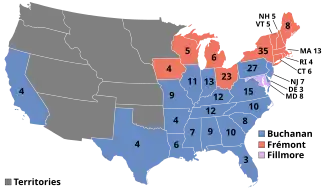 Presidential election results map. Blue denotes states won by Buchanan/Breckinridge, Red by Frémont/Dayton, and Lavender by Fillmore/Donelson. Numbers indicate the number of electoral votes cast by each state. | |||||||||||||||||||||||||||||||||||||||||
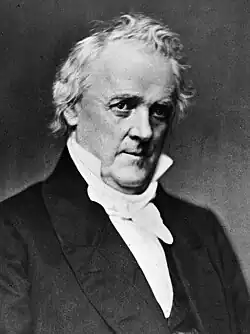
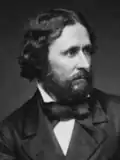
The 1856 United States presidential election was the 18th election in the history of the United States. It occurred on November 4, 1856.
This election was a three-way race between the Democratic nominee, former Secretary of State James Buchanan of Pennsylvania, the Republican nominee, former Senator John C. Frémont of California, and the Know-Nothing (American) nominee, former President Millard Fillmore of New York. Buchanan won the election with 174 electoral votes, while Frémont got 114 electoral votes and Fillmore got 8 electoral votes.
This was the last election to be held before the Republican hold on the presidency, which lasted from the election of Abraham Lincoln as the 16th president in 1860 until the election of Franklin D. Roosevelt to his first term as the 32nd president in 1932. During that 68 year time period (1861-1933), only two Democrats were elected as the President of the United States, those being Grover Cleveland and Woodrow Wilson[a]
Slavery was a major issue in the election, with the Democrats being largely for it, the Republicans being largely against it, and the Know Nothings were divided on the issue.
This election would also decide which of the two parties would replace the now-abolished Whig Party as the main opponent of the Democratic Party, with the Republicans being successful as in the next election, the 1860 presidential election, the Republican nominee Abraham Lincoln would win the election in a four race.
Nominations
Democratic Party
 | |||||||||||||||||||||||||||||
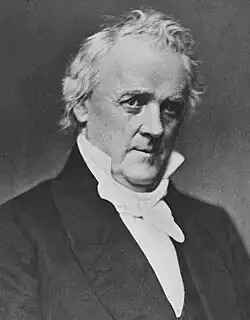
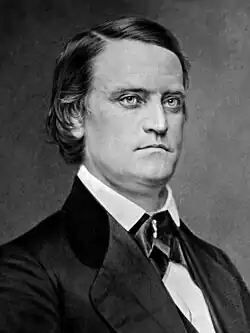
| James Buchanan | John C. Breckinridge | ||||||||||||||||||||||||||||
|---|---|---|---|---|---|---|---|---|---|---|---|---|---|---|---|---|---|---|---|---|---|---|---|---|---|---|---|---|---|
| for President | for Vice President | ||||||||||||||||||||||||||||
 |
 | ||||||||||||||||||||||||||||
| U.S. Minister to Great Britain (1853–1856) |
Former Congressman from Kentucky (1851–1855) | ||||||||||||||||||||||||||||
Presidential
- James Buchanan, U.S. Minister to Great Britain (1853-1856) and 17th U.S. Secretary of State (1845-1849) from Pennsylvania (Nominee)
- Lewis Cass, U.S. senator from Michigan (1853-1857) (1848 Nominee) (Later became Buchanan's Sec. of State)
- Stephen A. Douglas, U.S. senator from Illionis (1847-1861) (1860 Northern Democratic Nominee) (Withdrew on 17th Ballot in support of Buchanan)
- Franklin Pierce, 14th President of the United States from New Hampshire (1853-1857) (Withdrew on 15th Ballot in support of Douglas)
Vice Presidential
- John C. Breckinridge, former Congressman from Kentucky (1851-1855) (Vice presidential nominee)
- John A. Quitman, U.S. representative from Mississippi (1851-1855)
- Linn Boyd, former congressman from Kentucky (1835-1837, 1839-1855) and 20th Speaker of the House (1851-1855)
- James A. Bayard Jr., U.S. senator from Delaware (1851-1864, 1867-1869)
- Herschel V. Johnson, 41st Governor of Georgia (1851-1855) (1860 Northern Vice Presidential Nominee)
- Aaron V. Brown, 11th Governor of Tennessee (1845-1847) (Later became Buchanan's Postmaster General)
- James C. Dobbin, 22nd Secretary of the Navy (1851-1855)
- Thomas J. Rusk, U.S. senator from Texas (1846-1857)
- Benjamin Fitzpatrick, U.S. senator from Alabama (1848-1849, 1853-1855, 1855-1861) (1860 Northern Vice Presidential Nominee; Declined)
- James Seddon, former Congressman from Virginia (1845-1847, 1849-1851) (Declined)
- Trusten Polk, Democratic nominee for Governor of Missouri (Declined)
Republican Party
 | |||||||||||||||||||||||||||||
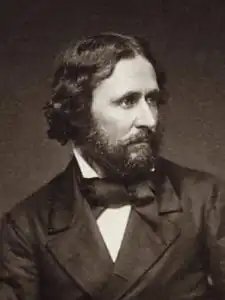
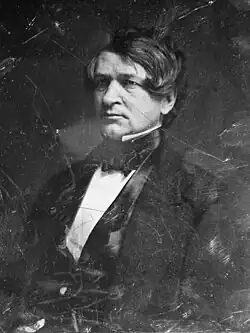
| John C. Frémont | William L. Dayton | ||||||||||||||||||||||||||||
|---|---|---|---|---|---|---|---|---|---|---|---|---|---|---|---|---|---|---|---|---|---|---|---|---|---|---|---|---|---|
| for President | for Vice President | ||||||||||||||||||||||||||||
 |
 | ||||||||||||||||||||||||||||
| U.S. Senator from California (1850-1851) |
U.S. Senator from New Jersey (1851-1853) | ||||||||||||||||||||||||||||
Presidential
- John C. Frémont, former U.S. senator from California (1850-1851) (Nominee)
- John McLean, Associate Justice of the Supreme Court from California (1829-1861) (Temporarly withdrew)
- Charles Sumner, U.S. senator from Massachusetts (1851-1874) (Withdrew)
- Nathaniel P. Banks, U.S. representative from Massachusetts (1851-1855) and 21st Speaker of the House (1856-1857) (Withdrew)
- William H. Seward, U.S. Senator from New York (1849-1861)
- Salmon P. Chase, 23rd Governor of Ohio (1856-1860)
Vice Presidential
- William L. Dayton, former U.S. senator from New Jersey (1851-1853) (Vice presidential nominee)
- Abraham Lincoln, former U.S. representative from Illionis (1847-1849) (1860 Nominee) (Became POTUS in 1861)
- Nathaniel P. Banks, U.S. representative from Massachusetts (1851-1855) and 21st Speaker of the House (1856-1857) (not nominated – declined)
- David Wilmot, former Congressman from Pennsylvania (1845-1851) (declined – withdrawn)
- Charles Sumner, U.S. senator from Massachusetts (1851-1874) (not nominated – declined)
- John A. King, former Congressman of New York (1845-1851)
- Thomas Ford, 3rd Lieutenant Governor of Ohio (1856-1858) (not nominated – declined)
- Henry Wilson, U.S. senator from Massachusetts (1855-1873) (not nominated – declined) (1872 VP Nominee) (Became VPOTUS in 1873)
Know Nothing Party
| 1856 Know-Nothing Party ticket | |||||||||||||||||||||||||||||
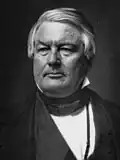
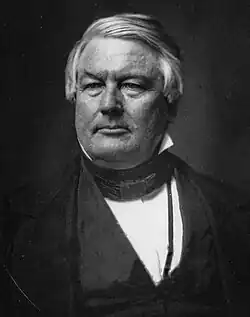
| Millard Fillmore | Andrew Jackson Donelson | ||||||||||||||||||||||||||||
|---|---|---|---|---|---|---|---|---|---|---|---|---|---|---|---|---|---|---|---|---|---|---|---|---|---|---|---|---|---|
| for President | for Vice President | ||||||||||||||||||||||||||||
 |
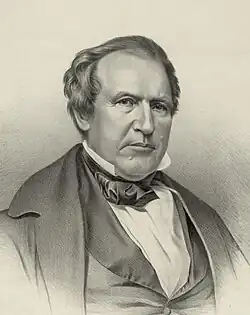 | ||||||||||||||||||||||||||||
| 13th President of the United States (1850–1853) |
2nd U.S. Envoy to Prussia (1846–1849) | ||||||||||||||||||||||||||||
Presidential
- Millard Fillmore, 13th President of the United States from New York (1850-1853) (Nominee)
- George Law, steamboat entrepreneur from New York
- Garrett Davis, former Congressman from Kentucky (1843-1847)
- Kenneth Rayner, former Congressman from North Carolina (1839-1845)
- Sam Houston, U.S. Senator from Texas (1846-1859) and 1st & 3rd President of the Republic of Texas (1836-1838, 1841-1844)
- Robert F. Stockton, former U.S. senator from New Jersey (1851-1853)
- John Bell, U.S. senator from Tennessee (1847-1859)
- Erastus Brooks, state senator from New York (1854-1857)
- John M. Clayton, U.S. senator from Delaware (1829-1836, 1845-1849, 1853-1856) and 18th U.S. Secretary of State (1849-1850)
- William F. Johnston, 11th Governor of Pennsylvania (1848-1852)
Vice Presidential
- Andrew Jackson Donelson, 3rd U.S. Minister to Prussia (1848-1852), 6th U.S. Chargé d'Affaires to Texas (1848-1852) and the 13th Private Secretary to the President (1829-1837) (Vice presidential nominee) (Nephew & Adopted son of 7th President Andrew Jackson [1829-1837])
- Henry Gardner, 23rd Governor of Massachusetts (1855-1858) (Not nominated)
- Kenneth Rayner, former Congressman from North Carolina (1839-1845)
- Alexander Stuart, 3rd U.S. Secretary of the Interior (1850-1853)
- William R. Smith, U.S. representative from Alabama (1851-1857)
- Richard K. Call, 3rd & 6th Territorial Governor of Florida (1835-1839, 1841-1844)
North American Party
Presidential
- John C. Frémont, former U.S. senator from California (1850-1851) (Nominee)
- Nathaniel P. Banks, U.S. representative from Massachusetts (1851-1855) and 21st Speaker of the House (1856-1857) (Declined)
- John McLean, Associate Justice of the Supreme Court from California (1829-1861)
- Robert F. Stockton, former U.S. senator from New Jersey (1851-1853)
- William F. Johnston, 11th Governor of Pennsylvania (1848-1852) (Vice presidential nominee)
Vice Presidential
- William F. Johnston, 11th Governor of Pennsylvania (1848-1852) (Vice presidential nominee)
- Thomas Ford, 3rd Lieutenant Governor of Ohio (1856-1858)
- John C. Frémont, former U.S. senator from California (1850-1851) (Presidential nominee)
Notes
- ↑ Cleveland was elected as the first of two presidents to be elected to two non consecutive terms as President, being elected as the 22nd President in 1884 and as the 24th President in 1892. However, he was the nominee in both elections, so as such, it is counted as one democrats instead of two Presidents
References
- ↑ "National General Election VEP Turnout Rates, 1789-Present". United States Election Project. CQ Press.