Ōyamatsumi
| Ōyamatsumi | |
|---|---|
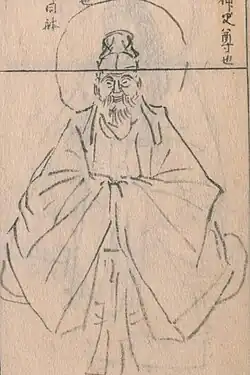 | |
| Personal information | |
| Children | Konohana Sakuya Ashinazuchi and Tenazuchi |
Ōyamatsumi is a Mountain God in Shinto and the father of Ashinazuchi and Tenazuchi.[1][2] He is also the father of Konohana Sakuya.
His name ends with Mi which is an honorific particle used to express authority or divinity in Old Japanese.[3]
Family tree
| Amaterasu | Takamimusubi | ||||||||||||||||||||||||||||||||||||||||||||||||||
| Ame-no-oshihomimi | Takuhadachiji-hime | Ōyamatsumi | |||||||||||||||||||||||||||||||||||||||||||||||||
| Ninigi-no-Mikoto (天孫) | Konohanasakuya-hime | Watatsumi | |||||||||||||||||||||||||||||||||||||||||||||||||
| Hoderi | Hosuseri (海幸彦) | Hoori (山幸彦) | Toyotama-hime | Utsushihikanasaku | Furutama-no-mikoto | ||||||||||||||||||||||||||||||||||||||||||||||
| Hayato people | Ugayafukiaezu | Tamayori-hime | Azumi people | (Owari clan Yamato clan) | |||||||||||||||||||||||||||||||||||||||||||||||
| Itsuse | Inahi | Mikeiri | Jimmu | ||||||||||||||||||||||||||||||||||||||||||||||||
| Imperial House of Japan | |||||||||||||||||||||||||||||||||||||||||||||||||||
- Red background is female.
- Green background means groups
- Bold letters are three generations of Hyuga.
| |||||||||||||||||||||||||||||||||||||||||||||||||||||||||||||||||||||||||||||||||||||||||||||||||||||||||||||||||||||||||||||||||||||||||||||||||||||||||||||||||||||||||||||||||||||||||||||||||||||||||||||||||||||||||||||||||||||||||||||||||||||||||||||||||||||||||||||||||||||||||||||||||||||||||||||||||||||||||||||||||||||||||||||||||||||||||||||||||||||||||||||||||||||||||||||||||||||||||||||||||||||||||||||||||||||||||||||||||||||||||||||||||||||||||||||||||||||||||||||||||||||||||||||||||||||||||||||||||||||||||||||||||||||||||||||||||||||||||||||||||||||||||||||||||||||||||||||||||||||||||||||||||||||||||||||||||||||||||||||||||||||||||||||||||||||||||||||||||||||||||||||||||||||||||||||||||||||||||||||||||||||||||||||||||||||||||||||||||||||||||||||||||||||||||||||||||||||||||||||||||||||||||||||||||||||||||||||||||||||||||||||||||||||||||||||||||||||||||||||||||||||||||||||||||||||||||||||||||||||||||||||||||||||||||||||||||||||||||||||||||||||||||||||||||||||||||||||||||||||||
- Pink is female.
- Blue is male.
- Grey means other or unknown.
- Clans, families, people groups are in green.
References
- ↑ Chamberlain (1882). Section XVIII.—The Eight-Forked Serpent.
- ↑ Philippi, Donald L. (2015). Kojiki. Princeton University Press. pp. 89–90. ISBN 978-1400878000.
- ↑ 本居宣長『古事記伝』七之巻。
- 1 2 3 4 5 6 7 8 9 10 11 12 13 14 15 16 17 18 19 20 21 22 23 24 25 26 27 28 29 30 31 32 33 34 35 36 37 38 39 40 41 42 43 44 45 46 47 48 49 50 51 52 53 54 Kojiki
- ↑ Kaoru, Nakayama (7 May 2005). "Ōyamatsumi". Encyclopedia of Shinto. Retrieved 2010-09-29.
- 1 2 3 Chamberlain (1882). Section XIX.—The Palace of Suga.
- 1 2 3 Chamberlain (1882). Section XX.—The August Ancestors of the Deity-Master-of-the-Great-Land.
- ↑ Atsushi, Kadoya (10 May 2005). "Susanoo". Encyclopedia of Shinto. Retrieved 2010-09-29.
- ↑ "Susanoo | Description & Mythology". Encyclopedia Britannica.
- 1 2 3 4 5 6 7 8 9 10 11 12 13 14 15 Herbert, J. (2010). Shinto: At the Fountainhead of Japan. Routledge Library Editions: Japan. Taylor & Francis. p. 402. ISBN 978-1-136-90376-2. Retrieved 2020-11-21.
- 1 2 大年神 [Ōtoshi-no-kami] (in Japanese). Kotobank. Archived from the original on 5 June 2023. Retrieved 5 May 2023.
- 1 2 大年神 [Ōtoshi-no-kami] (in Japanese). Kokugakuin University. Archived from the original on 5 June 2023. Retrieved 5 May 2023.
- 1 2 Mori, Mizue. "Yashimajinumi". Kokugakuin University Encyclopedia of Shinto.
- ↑ Frédéric, L.; Louis-Frédéric; Roth, K. (2005). Japan Encyclopedia. Harvard University Press reference library. Belknap Press of Harvard University Press. ISBN 978-0-674-01753-5. Retrieved 2020-11-21.
- 1 2 3 "My Shinto: Personal Descriptions of Japanese Religion and Culture". www2.kokugakuin.ac.jp. Retrieved 2023-10-16.
- ↑ “‘My Own Inari’: Personalization of the Deity in Inari Worship.” Japanese Journal of Religious Studies 23, no. 1/2 (1996): 87-88
- ↑ "Ōtoshi | 國學院大學デジタルミュージアム". 2022-08-17. Archived from the original on 2022-08-17. Retrieved 2023-11-14.
- ↑ "Encyclopedia of Shinto - Home : Kami in Classic Texts : Kushinadahime". eos.kokugakuin.ac.jp.
- ↑ "Kagutsuchi". World History Encyclopedia.
- ↑ Ashkenazi, M. (2003). Handbook of Japanese Mythology. Handbooks of world mythology. ABC-CLIO. p. 213. ISBN 978-1-57607-467-1. Retrieved 2020-11-21.
- ↑ Chamberlain, B.H. (2012). Kojiki: Records of Ancient Matters. Tuttle Classics. Tuttle Publishing. ISBN 978-1-4629-0511-9. Retrieved 2020-11-21.
- ↑ Philippi, Donald L. (2015). Kojiki. Princeton University Press. p. 92.
- ↑ Chamberlain (1882). Section XX.—The August Ancestors of the Deity-Master-Of-The-Great Land.
- ↑ Philippi, Donald L. (2015). Kojiki. Princeton University Press. pp. 104–112.
- ↑ Atsushi, Kadoya; Tatsuya, Yumiyama (20 October 2005). "Ōkuninushi". Encyclopedia of Shinto. Retrieved 2010-09-29.
- ↑ Atsushi, Kadoya (21 April 2005). "Ōnamuchi". Encyclopedia of Shinto. Retrieved 2010-09-29.
- 1 2 Varley, H. Paul. (1980). Jinnō Shōtōki: A Chronicle of Gods and Sovereigns. Columbia University Press. p. 89. ISBN 9780231049405.
- ↑ Atsushi, Kadoya (28 April 2005). "Kotoshironushi". Encyclopedia of Shinto. Retrieved 2010-09-29.
- ↑ Cite error: The named reference
The Emperorwas used but no text was provided for refs named (see the help page). - ↑ Sendai Kuji Hongi, Book 4 (先代舊事本紀 巻第四), in Keizai Zasshisha, ed. (1898). Kokushi-taikei, vol. 7 (国史大系 第7巻). Keizai Zasshisha. pp. 243–244.
- ↑ Chamberlain (1882). Section XXIV.—The Wooing of the Deity-of-Eight-Thousand-Spears.
- 1 2 3 4 5 6 7 8 9 10 11 12 13 14 15 16 17 18 19 20 "Kojiki (Chamberlain, 1882)/Section 26 - Wikisource, the free online library". en.wikisource.org. Retrieved 2026-02-15.
- 1 2 Kazuhiko, Nishioka (26 April 2005). "Isukeyorihime". Encyclopedia of Shinto. Archived from the original on 2023-03-21. Retrieved 2010-09-29.
- ↑ Cite error: The named reference
神話の中のヒメたち もうひとつの古事記was used but no text was provided for refs named (see the help page). - ↑ Cite error: The named reference
日本人名大辞典+Pluswas used but no text was provided for refs named (see the help page). - ↑ Cite error: The named reference
ANDASSOVA-2019was used but no text was provided for refs named (see the help page). - ↑ Cite error: The named reference
trips.klarna.comwas used but no text was provided for refs named (see the help page).