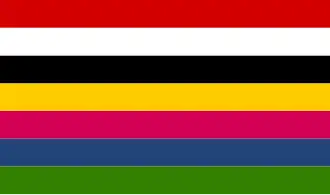
A Yek Salai (Meitei: ꯌꯦꯛ ꯁꯂꯥꯏ) or a Yek (Meitei: ꯌꯦꯛ) or a Salai (Meitei: ꯁꯥꯂꯥꯏ) refers to one member group within a union of seven groups, predominantly in the traditions of the indigenous communities, originated from Kangleipak (present day Manipur). The most notable example of such a union of 7 yek salai groups is that of the Meitei confederacy (Meitei: Meitei Yek Salai 7).[1][2][3] It also exists in other ethnicities, including but not limited to Aimol, Anal, Chiru, Chothe, Inpui, Kabui, Kharam, Koireng, Kom, Lamkang, Liangmei, Mao, Maram, Maring, Moyon, Monshang, Paomai, Purum, Rongmei, Tarao, Thangal, Tangkhul and Zemei groups of people.[4]
Laishram Basanti, Department of History (2019-07-23). Astudy of political history of Manipur from Pakhangba to Khagemba (Thesis). Attribution-NonCommercial-ShareAlike 4.0 International(CC BY-NC-SA 4.0). Heirem Khunjan, Hao-rok Konthou and some other ancient Manipuri text and archaeological findings. N. Birachandra, Meitei Leipakta Yek Salai Hourakpa. Amasy Chaokhalakpa
12Monihar, N. (2000). Sagei Salai Apoklon (in Manipuri). India: Internet Archive; Digital Library of India.{{cite book}}: CS1 maint: date and year (link)
12Neelbir, Sairem (2004). Erat Thouram Thounirol Lairik (in Manipuri). India: Internet Archive; Digital Library of India. p.140.{{cite book}}: CS1 maint: date and year (link)