The Ants Go Marching One By One
| "The Ants Go Marching One By One" | |
|---|---|
 | |
| Nursery rhyme | |
| Written | USA |
| Published | 1897-1898 |
| Songwriter(s) | Traditional |
| Composer(s) | Patrick Gilmore |
| Lyricist(s) | Robert D. Singleton |
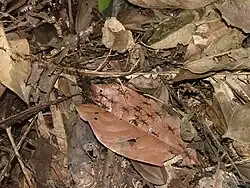
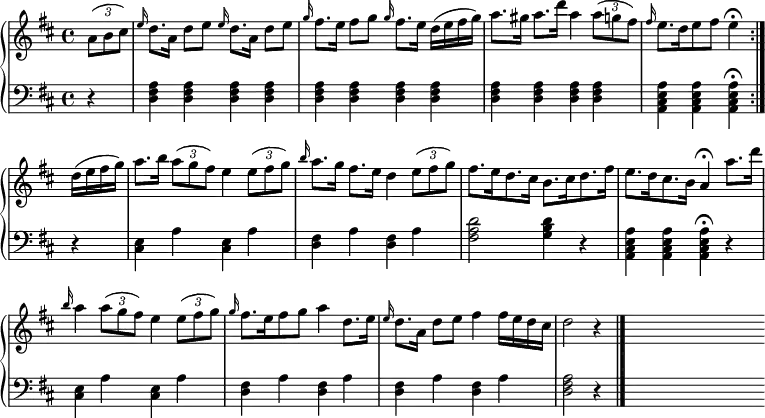
"The Ants Go Marching One By One" (also known as "The Ants Go Marching"), is a popular nursery rhyme , folksong, and children's song, sung to the tune of the Irish anti-war song Johnny I Hardly Knew Ye. It may be derived through the American Civil War song "When Johnny Comes Marching Home", which borrowed its tune from the Irish folk song. (The Ants Go Marching was subsequently also the ant army's marching song in the movie Antz.) Another commonly sung children's song is "The Animals go in Two by Two" (based around the Noah's Ark story) sung to the same melody.
Lyrics
At this time the author and publisher are unknown, but the lyrics to both songs are often sung as:
The ants go marching one by one, hurrah, hurrah
The ants go marching one by one, hurrah, hurrah
The ants go marching one by one,
The little one stops to suck his thumb
And they all go marching down to the ground
To get out of the rain, BOOM! BOOM! BOOM!
The ants go marching two by two, hurrah, hurrah
The ants go marching two by two, hurrah, hurrah
The ants go marching two by two,
The little one stops to tie his shoe
And they all go marching down to the ground
To get out of the rain, BOOM! BOOM! BOOM!
The ants go marching three by three, hurrah, hurrah
The ants go marching three by three, hurrah, hurrah
The ants go marching three by three,
The little one stops to climb a tree
And they all go marching down to the ground
To get out of the rain, BOOM! BOOM! BOOM!
The ants go marching four by four, hurrah, hurrah
The ants go marching four by four, hurrah, hurrah
The ants go marching four by four,
The little one stops to shut the door
And they all go marching down to the ground
To get out of the rain, BOOM! BOOM! BOOM!
The ants go marching five by five, hurrah, hurrah
The ants go marching five by five, hurrah, hurrah
The ants go marching five by five,
The little one stops to take a dive
And they all go marching down to the ground
To get out of the rain, BOOM! BOOM! BOOM!
The ants go marching six by six, hurrah, hurrah
The ants go marching six by six, hurrah, hurrah
The ants go marching six by six,
The little one stops to pick up sticks
And they all go marching down to the ground
To get out of the rain, BOOM! BOOM! BOOM!
The ants go marching seven by seven, hurrah, hurrah
The ants go marching seven by seven, hurrah, hurrah
The ants go marching seven by seven,
The little one stops to pray to heaven
And they all go marching down to the ground
To get out of the rain, BOOM! BOOM! BOOM!
The ants go marching eight by eight, hurrah, hurrah
The ants go marching eight by eight, hurrah, hurrah
The ants go marching eight by eight,
The little one stops to shut the gate
And they all go marching down to the ground
To get out of the rain, BOOM! BOOM! BOOM!
The ants go marching nine by nine, hurrah, hurrah
The ants go marching nine by nine, hurrah, hurrah
The ants go marching nine by nine,
The little one stops to check the time
And they all go marching down to the ground
To get out of the rain, BOOM! BOOM! BOOM!
The ants go marching ten by ten, hurrah, hurrah
The ants go marching ten by ten, hurrah, hurrah
The ants go marching ten by ten,
The little one stops to say "THE END!"
And they all go marching down to the ground
To get out of the rain, BOOM! BOOM! BOOM!
The Animals Go in Two by Two lyrics
The animals went in two by two, hurrah! hurrah!
The animals went in two by two, hurrah! hurrah!
The animals went in two by two, the elephant and the kangaroo
And they all went into the ark, for to get out of the rain.
The animals went in three by three, hurrah! hurrah!
The animals went in three by three, hurrah! hurrah!
The animals went in three by three, the wasp, the ant and the bumble bee
And they all went into the ark, for to get out of the rain.
The animals went in four by four, hurrah! hurrah!
The animals went in four by four, hurrah! hurrah!
The animals went in four by four, the great hippopotamus stuck in the door
And they all went into the ark, for to get out of the rain.
The animals went in five by five, hurrah! hurrah!
The animals went in five by five, hurrah! hurrah!
The animals went in five by five, they warmed each other to keep alive
And they all went into the ark, for to get out of the rain.
The animals went in six by six, hurrah! hurrah!
The animals went in six by six, hurrah! hurrah!
The animals went in six by six, they turned out the monkey because of his tricks
And they all went into the ark, for to get out of the rain.
The animals went in seven by seven, hurrah! hurrah!
The animals went in seven by seven, hurrah! hurrah!
The animals went in seven by seven, the little pig thought he was going to heaven
And they all went into the ark, for to get out of the rain.
Origins
Irish-American bandleader Patrick Gilmore wrote the lyrics to "When Johnny Comes Marching Home" during the American Civil War. Its first publication was deposited in the Library of Congress on September 26, 1863, with words and music credited to "Louis Lambert"; copyright was retained by the publisher, Henry Tolman & Co., of Boston. Why Gilmore published under a pseudonym is unclear, but popular songwriters of the period often employed pseudonyms to add a touch of romantic mystery to their songs. Gilmore is said to have written the song for his sister Annie as she prayed for the safe return of her fiancé, Union Light Artillery Captain John O'Rourke, from the Civil War, although it is not clear if they were already engaged in 1863; the two were not married until 1875.
The original lyrics, written by Patrick Gilmore during the American Civil War, were published in 1863 in Erastus Beadle's booklet, Beadle's Dime Song Book, No. 15: A Collection of New and Popular Comic and Sentimental Songs in pages 18 and 19.


When Johnny comes marching home again,
Hurrah, hurrah!
We'll give him a hearty welcome then,
Hurrah, hurrah!
The men will cheer, the boys will shout,
The ladies, they will all turn out,
And we'll all feel gay,
When Johnny comes marching home.
The old church bell will peal with joy,
Hurrah, hurrah!
To welcome home our darling boy,
Hurrah, hurrah!
The village lads and lassies say,
With roses, they will strew the way,
And we'll all feel gay,
When Johnny comes marching home.
Get ready for the jubilee,
Hurrah, hurrah!
We'll give the hero three times three,
Hurrah, hurrah!
The laurel wreath is ready now,
To place upon his loyal brow,
And we'll all feel gay,
When Johnny comes marching home.
Let love and friendship on that day,
Hurrah, hurrah!
Their choicest treasures then display,
Hurrah, hurrah!
And let each one perform some part,
To fill with joy the warrior's heart,
And we'll all feel gay,
When Johnny comes marching home.
Some later recordings substitute glad for gay.
In the John Ford western The Horse Soldiers, the last line was changed to "And we'll all raise hell when Johnny comes marching home".
Gilmore later acknowledged that the music was not original but was, as he put it in an 1883 article in the Musical Herald, "a musical waif which I happened to hear somebody humming in the early days of the rebellion, and taking a fancy to it, wrote it down, dressed it up, gave it a name, and rhymed it into usefulness for a special purpose suited to the times."
The melody was previously published around July 1, 1863, as the music to the Civil War drinking song "Johnny Fill Up the Bowl". A color-illustrated, undated slip of Gilmore's lyrics, printed by his own Boston publisher, actually states that "When Johnny Comes Marching Home" should be sung to the tune of "Johnny Fill Up the Bowl". The original sheet music for "Johnny Fill Up the Bowl" states that the music was arranged (not composed) by J. Durnal. There is a melodic resemblance of the tune to that of "John Anderson, My Jo" (to which Robert Burns wrote lyrics to fit a pre-existing tune dating from about 1630 or earlier), and Jonathan Lighter has suggested a connection to the 17th-century ballad "The Three Ravens".
"When Johnny Comes Marching Home" is also sung to the same tune as "Johnny I Hardly Knew Ye" and is frequently thought to have been a rewriting of that song. "Johnny I Hardly Knew Ye" was not published until 1867, however, and it originally had a different melody.
"When Johnny Comes Marching Home" was immensely popular and was sung by both sides of the American Civil War. It became a hit in England and Ireland as well and was eventually lyrically rewritten and became the related tune "Johnny I Hardly Knew Ye".
Quite a few variations on the song, as well as songs set to the same tune but with different lyrics, have appeared since "When Johnny Comes Marching Home" was popularized. The alleged larcenous tendencies of some Union soldiers in New Orleans were parodied in the lyrics "For Bales", to the same tune. A British version appeared in 1914 with a similar title, "When Tommy Comes Marching Home". The 1880 U.S. presidential election campaign featured a campaign song called "If the Johnnies Get into Power," which supported the Republicans James A. Garfield and Chester A. Arthur against the "Johnnies" (Democrats Winfield S. Hancock and William H. English).
"Johnny Fill Up the Bowl", which provided the tune for "When Johnny Comes Marching Home", was a topical drinking song that commented on events in the American Civil War. It was frequently refitted with new words by soldiers and other publishers.
A satirical variant of "Johnny Fill Up the Bowl", entitled "For Bales" or, more fully, "For Bales! An O'er True Tale. Dedicated to Those Pure Patriots Who Were Afflicted with 'Cotton on the Brain' and Who Saw The Elephant", was published in New Orleans in 1864, by A. E. Blackmar.
An "American Salute", which is a more modern setting of "When Johnny Comes Marching Home", is the 1942 version of the popular American song created by composer, conductor, and bandleader Morton Gould.
Proposed as a full set of variations on the theme of the song with a bombastic finale that also reprises the theme of the tune, the composition is a staple of American classical music and was recorded many times, especially by the composer himself.
The exact origin for the song "The Ants Go Marching One By One" songwriter is unknown, A version recorded in 1896 in Maryland recorded from a college commencement resembles the common modern version:
The bloody ants go marching one by one, hurrah, hurrah
The bloody ants go marching one by one, hurrah, hurrah
The bloody ants go marching one by one,
This little one stops to suck his thumb
But they all go marching down to the ground
To get out of the rain, BOOM! BOOM! BOOM!
The song can also be found in early musical publications such as the book Caden and Maria (1897), where it is referred to as [the classic] "The Marching Ants".
Lyrics as described in 1897 as being from the 'classic' "The Marching Ants":
Oh, The blooming ants go marching one by one, hurrah, hurrah
The blooming ants go marching one by one, hurrah, hurrah
The blooming ants go marching one by one,
That little one stops to suck his thumb
And they all go marching down to the ground
To get out of the rainstorm, BOOM! BOOM! BOOM!
The second earliest recording of the song of, When Johnny Comes Marching Home, was recorded in a Gramophone in 1898 by John Terrell.
The Washington Post reported a blooded ant in 1901 that was said as:
The blooded ants go marching one by one, hurrah, hurrah
The blooded ants go marching one by one, hurrah, hurrah
The blooded ants go marching one by one,
The little one stops to see the sun
They all go marching down to the ground
To get out the blasted rain, BOOM! BOOM! BOOM!
It was sung in summer camps in the 1940s.
It was founded in The Hour magazine in 1951, and even a book in 1973.
The lyrics are credited to Robert D. Singleton, and can be heard in the 1990 Barney special Campfire Sing-Along.
Score
Recordings and Pop Culture
The Dave Matthews Band recorded "Ants Marching" which was a title just like the children's song. The song has been recorded by various popular artists such as:
- Stevie Wonder
- Katy Perry
- Nina Simone
- Usher
- The Beatles
- Queen
- Raffi
- Lady Gaga
- Carly Simon
- Patsy Biscoe
- K. Michelle
The song became popular during World War II with recordings in 1942 by Glenn Miller on RCA Bluebird Records with vocals by Tex Beneke, Marion Hutton, and The Modernaires, and Guy Lombardo and The Andrews Sisters on Decca Records.
In 1959, Mitch Miller recorded the song, followed by Jaye P. Morgan the following year.
Jazz organist Jimmy Smith recorded a version for his 1960 album, Crazy! Baby.
English pop singer Adam Faith sang a version titled "Johnny Comes Marching Home", used over the opening and closing title credits for the British crime thriller Never Let Go (1960). This version was arranged and conducted by John Barry. Another version was released as a single, reaching No. 5 in the UK Singles Chart.
British punk band The Clash recorded a reworded version in 1978 titled "English Civil War (Johnny Comes Marching Home)". This version was covered by The Levellers on the Julie EP released in 1994.
In 1979, Bollywood Movie Baton Baton Mein released a popular song Na Bole Tum, Na Maine Kuch Kaha using the same tune.
In 1983–84, the French punk band Bérurier Noir took up the melody on the track "Johnny Reviens d'la Guerre" (English: "Johnny returns from the war") from the album Macadam Massacre.
The song Civil War from the 1991 album Use Your Illusion II by the US band Guns N' Roses uses the melody of the song "When Johnny Comes Marching Home" in the Axl Rose whistle in the intro and outro of the song.
The 2015 anime film Girls und Panzer der Film recorded an original orchestra rendition of the track.
"The Ants Go Marching One By One" predates Barney and the Backyard Gang's version. It was used to sing this song as kids at camp, back in the early to mid 1980s. It was later used in the SpongeBob SquarePants episode Plankton's Army. The song has been used in various television shows such as Family Guy, The Simpsons, South Park, Barney and Friends, Dora the Explorer, The Charlie Brown and Snoopy Show, Peppa Pig, Bluey, Blue's Clues, Bubble Guppies, Classic Caillou Gets Grounded, Caillou, Hey Arnold, Arthur, Daniel Tiger's Neighborhood, The Muppet Show, and Sesame Street.
This song is prominently used in the films Dr. Strangelove or: How I Learned to Stop Worrying and Love the Bomb, Die Hard With a Vengeance, Cromwell, When Pigs Can Fly, Chicken Run, Stalag 17, Gone with the Wind, and The Great Dictator.
YouTube Videos
These YouTube videos has uploaded such as:
- Turtle Interactive
- The Kiboomers
- Little Baby Bum
- Cocomelon
- English Singing
- Super Simple Songs
- Lingokids
See also
External links
- The Ants Go Marching lyrics at National Institutes of Health website
- The Animals Go in Two by Two lyrics Archived 2023-12-06 at the Wayback Machine
- Behind the Deeper Origin of the Nursery Rhyme, “Ants Go Marching”