Phenolic content in wine
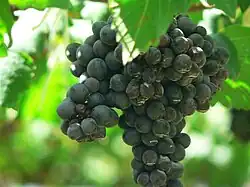
Phenolic compounds found in wine are natural phenol and polyphenols and they happen naturally. These include a large group of several hundred chemical compounds that affect the taste, color and smoothness of wine. These compounds include phenolic acids, stilbenoids, flavonols, dihydroflavonols, anthocyanins (enocyanin), flavanol monomers (catechins) and flavanol polymers (proanthocyanidins).[1]
This large group of natural phenols can be separated into two categories, flavonoids and non-flavonoids. Flavonoids include the anthocyanins and tannins which help create the color and smooth feeling of the wine.[2] The non-flavonoids include the stilbenoids such as resveratrol and phenolic acids such as benzoic, caffeic and cinnamic acids.[3]
References
- ↑ Costa de Camargo, Adriano; Bismara Regitano-d'Arce, Marisa Aparecida; Camarão Telles Biasoto, Aline; Shahidi, Fereidoon (2014). "Low Molecular Weight Phenolics of Grape Juice and Winemaking Byproducts: Antioxidant Activities and Inhibition of Oxidation of Human Low-Density Lipoprotein Cholesterol and DNA Strand Breakage". Journal of Agricultural and Food Chemistry. 62 (50): 12159–12171. doi:10.1021/jf504185s. PMID 25417599.
- ↑ Kennedy JA, Matthews MA, Waterhouse AL (2002). "Effect of Maturity and Vine Water Status on Grape Skin and Wine Flavonoids". Am. J. Enol. Vitic. 53 (4): 268–74. doi:10.5344/ajev.2002.53.4.268. S2CID 10545757.
- ↑ Vrhovsek U. (1998). "Extraction of Hydroxycinnamoyltartaric Acids from Berries of Different Grape Varieties". J Agric Food Chem. 46 (10): 4203–8. doi:10.1021/jf980461s.