Papal States
State of the Church | |||||||||||||||||||||||||||
|---|---|---|---|---|---|---|---|---|---|---|---|---|---|---|---|---|---|---|---|---|---|---|---|---|---|---|---|
| |||||||||||||||||||||||||||
 | |||||||||||||||||||||||||||
| Anthem: Noi vogliam Dio, Vergine Maria (1815–1857) (Italian) "We want God, Virgin Mary"
| |||||||||||||||||||||||||||
Papal Shield | |||||||||||||||||||||||||||
 | |||||||||||||||||||||||||||
 | |||||||||||||||||||||||||||
| Capital | |||||||||||||||||||||||||||
| Official languages | Latin | ||||||||||||||||||||||||||
| Common languages | |||||||||||||||||||||||||||
| Religion | Catholicism (state religion) | ||||||||||||||||||||||||||
| Government |
| ||||||||||||||||||||||||||
| Pope | |||||||||||||||||||||||||||
• 756–757 (first) | Stephen II | ||||||||||||||||||||||||||
• 1846–1870 (last) | Pius IX | ||||||||||||||||||||||||||
| Cardinal Secretary of State | |||||||||||||||||||||||||||
• 1551–1555 (first) | Girolamo Dandini | ||||||||||||||||||||||||||
• 1848–1870 (last) | Giacomo Antonelli | ||||||||||||||||||||||||||
| Prime Minister | |||||||||||||||||||||||||||
• 1847–1848 (first) | Gabriele Ferretti | ||||||||||||||||||||||||||
• 1848–1849 (last) | Carlo E. Muzzarelli | ||||||||||||||||||||||||||
| Legislature | Parliament (1848) | ||||||||||||||||||||||||||
| History | |||||||||||||||||||||||||||
• Donation of Pepin | 756 | ||||||||||||||||||||||||||
| 781 | |||||||||||||||||||||||||||
• Treaty of Venice (sovereignty reaffirmed) | 1177 | ||||||||||||||||||||||||||
• Publication of the Constitutiones Aegidianae | 1357 | ||||||||||||||||||||||||||
• Roman Republic (1798–1799) | 15 February 1798 | ||||||||||||||||||||||||||
• Schönbrunn Palace Declarations | 17 May 1809 | ||||||||||||||||||||||||||
• Capture of Rome | 20 September 1870 | ||||||||||||||||||||||||||
• Annexation to the Kingdom of Italy | 9 October 1870 | ||||||||||||||||||||||||||
| 11 February 1929 | |||||||||||||||||||||||||||
| Area | |||||||||||||||||||||||||||
| Before 1859[7] | 44,000 km2 (17,000 sq mi) | ||||||||||||||||||||||||||
| Population | |||||||||||||||||||||||||||
• 1853[8] | 3,124,668 | ||||||||||||||||||||||||||
| Currency |
| ||||||||||||||||||||||||||
| |||||||||||||||||||||||||||
| Today part of | |||||||||||||||||||||||||||

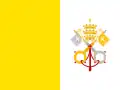
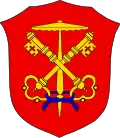






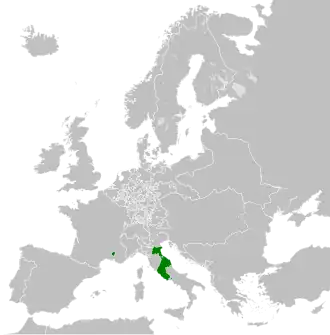
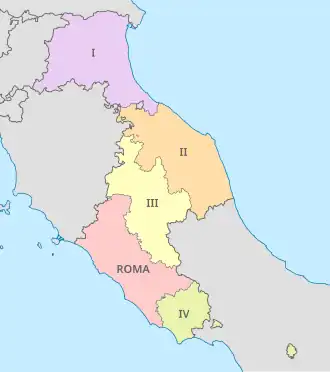
The Papal States, officially the State of the Church (Italian: Stato della Chiesa, Italian pronunciation: [ˈstato della ˈkjɛːza]; Latin: Status Ecclesiasticus;[9] also Dicio Pontificia), were a series of territories in the Italian Peninsula under the direct sovereign rule of the Pope, from the 8th century until 1870.
By 1861, much of the Papal States' territory had been conquered by the Kingdom of Italy. In 1870, the Pope lost Lazio and Rome and had no physical territory at all, except the Vatican.
Related pages
- History of Rome
- Donation of Constantine
- Italian unification
References
- ↑ Moya, Gonzalo J. Herreros (2016). "Heráldica y emblemática en las cofradías de Córdoba. Algunos apuntes". Córdoba Cofrade (in Spanish). 142: 60.
Si hubiera que ser fieles a la realidad histórica, no obstante, los colores de esta bandera no son exactamente fieles, ya que el amarillo y blanco usados en la actualidad por el Vaticano fueron una reforma de los colores de los Estados Pontificios acometida por Pío VII en 1808, pues históricamente, hasta entonces, se habían empleado amarillo y rojo, y por tanto, para describir el escudo de Alejandro VII -muy anterior a este cambio- hubiera sido preferible diseñarla con estos colores papales antiguos.
- ↑ "Storia della Bandiera dello Stato della Città del Vaticano". vatican.va (in Italian). 31 December 2000.
Anticamente la bandiera dello Stato pontificio era giallorossa (o per meglio dire amaranto e rossa, colori derivati dai colori dello stemma della Santa Sede), i due colori tradizionali del Senato e del Popolo romano, che vennero tuttavia sostituiti con il bianco e il giallo nel 1808.
[In ancient times, the flag of the Papal States was yellow and red (or rather amaranth and red, colours derived from the traditional colours of the Holy See), the two traditional colours of the Senate and People of Rome, which however came to be substituted with white and yellow in 1808.] - ↑ "Bandiera pontificia" (in Spanish). Estado de la Ciudad del Vaticano. Archived from the original on 31 July 2010. Retrieved 2024-03-09.
En el pasado, la bandera del Estado pontificio era de color amarillo y granate (o mejor dicho, carmesì y rojo, colores relacionados con el escudo de la Santa Sede), dos colores tradicionales del Senado y del Pueblo romano.
[In ancient times, the flag of the Papal States was yellow and red (or rather amaranth and red, colours derived from the traditional colours of the Holy See), the two traditional colours of the Senate and People of Rome.] - ↑ [1][2][3]
- ↑ Vaticano, la bandiera di Porta Pia ritorna dopo 141 anni. www.lastampa.it. 2011. Retrieved 29 September 2011.
- ↑ "Inno Pontificio e la sua storia" (in Italian). Stato della città del Vaticano. Archived from the original on 13 March 2010. Retrieved 26 August 2021.
- ↑ Saylin, Gregory M. (November 1995). "The United Nations International Conference on Population and Development: Religion, Tradition, and Law in Latin America". Vanderbilt Journal of Transnational Law. 28 (5): 1263.
- ↑ Statistica della popolazione dello Stato pontificio dell'anno 1853 (PDF) (in Italian). Ministry of Commerce and Public Works. 1857. p. xxii. Archived from the original (PDF) on 2 March 2018. Retrieved 1 March 2018.
- ↑ Frederik de Wit, "Status Ecclesiasticus et Magnus Ducatus Thoscanae" (1700)