Muhammad Ilyas Kandhlawi
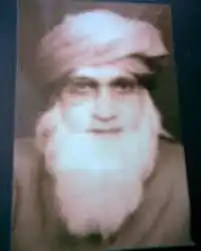
Sheikh Muhammad Ilyas Kandhlawi (1885 – 13 July 1944) was an Indian Islamic religious scholar. He started Jamaat at-Tabligh in 1925 in Mewat province.[1][2]
Birth
Muhammad Ilyas ibn Muhammad Ismail Kandhlawi Dehlawi was born in the year 1303 AH (1885/1886 CE) in the village of Kandhla. He was named after this village. He was also linked to Delhi and was called Dehlawi.
Education
Kandhlawi started memorizing the Quran in a village school. He later finished memorizing it in Delhi with his father. His father also taught him the Arabic and Persian languages,[3] then he became a student of Rashid Ahmad Gangohi. After Gangohi died, he joined Darul Uloom Deoband in the year 1908.
Founding of Jamaat at-Tabligh
At the start of the 1920s, Kandhlawi prepared a group of young men who finished religious schools from Deoband and Saharanpur. He sent them to Mewat to build many mosques and Islamic schools in the area. Kandhlawi later gave this group the name Jamaat al-Tabligh (Urdu: تَبْلُّىغَى جَمَاعَتْ). Sheikh Muhammad Ilyas Kandhlawi also influenced many scholars, such as Sheikh Abu al-Hasan al-Nadwi and Sheikh Muhammad Umar Palanpuri.[4]
Further reading
- দ্বীনদরদি আলেম ইলিয়াস (রহ.)
- Nadwi, Abul Hasan Ali Hasani (2001). Shafi, Muhammad (ed.). Urdu Daira Maarif Islamiya (PDF) (in Urdu). Vol. 19. Lahore, Pakistan: University of the Punjab. pp. 373–375.
- Nadwi, Abu'l-Hasan `Ali. Life and Mission of Maulana Muhammad Ilyas.
- "Profile of Maulana Mohammad Ilyas Kandhlawi". Madrasa Islamia Arabia Khadimul-Uloom Baghonwali and Bajheri. Archived from the original on 12 February 2019. Retrieved 3 May 2017.
- Yoginder Sikand (17 April 2010). "The Tablighi Jamaat in Mewat -- Part 2". TwoCircles.net. Archived from the original on 27 February 2019. Retrieved 3 May 2017.
References
- ↑ "Deobands battle for survival". Dawn. Pakistan. 3 December 2009. Retrieved 27 February 2020.
- ↑ Alper, Ömer Mahi̇r (1988–2016). "KANDEHLEVÎ, Muhammed İlyas". TDV Encyclopedia of Islam (44+2 vols.) (in Turkish). Istanbul: Turkiye Diyanet Foundation, Centre for Islamic Studies.
- ↑ Template:استشهاد بكتاب
- ↑ [http://www.binatiih.com/book/lsanadawh.rar Book: Lisan al-Da‘wah wa al-Tabligh] Archived 28 March 2017 at the Wayback Machine