Leptodactylus caatingae
| Leptodactylus caatingae | |
|---|---|
Scientific classification  | |
| Kingdom: | Animalia |
| Phylum: | Chordata |
| Class: | Amphibia |
| Order: | Anura |
| Family: | Leptodactylidae |
| Genus: | Leptodactylus |
| Species: | L. caatingae |
| Binomial name | |
| Leptodactylus caatingae Heyer and Juncá, 2003 | |
The calf frog (Leptodactylus caatingae) is a frog. It lives in Venezuela.[2][3][1]
Body
This frog looks almost exactly like Leptodactylus latinasus, but their voices sound different. Frogs in this species can look different from each other. The skin of the frog's back can have dark marks on it. There can be one line of marks or two lines of marks. Some frogs have thin light lines on their backs and some do not. Some frogs have stripes on their mouths and some do not. Most of these frogs have a light stripe from the face to the top of the back leg. The back legs have dark sideways lines on them. The frogs can have different marks on their bellies: Some have dark spots or patterns and some do not. Some of these frogs have white bumps on their legs and feet and some do not.[3]
Home
This frog lives in Caatinga, Cerrado, and Atlantic forest places. People have seen it in grassy places next to forests and in forests that grow next to rivers and streams, and in places without many trees. Scientists have seen it between 0 and 400 meters above sea level.[1]
Scientists have seen these frogs in protected places: APA do Cariri, APA Dunas e Veredas do Baixo Medio Sao Francisco, and FLONA Contendas do Sincora.[1]
Young
The male frog sits in a crack or hole in the ground or between small woody plants and calls to the female frogs. The female frog puts her eggs in ponds that dry up for part of the year. The tadpoles swim in the water.[1]
Danger
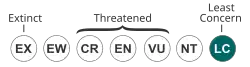
Scientists from the IUCN say this frog is not some danger of dying out. Scientists say this frog is good at living in places that human beings have changed. In some places, the frogs are in some danger from fires and people letting animals eat grass in its home.[1]
First paper
- Heyer, W. R.; F. A. Junca (2003). "Leptodactylus caatingae, a new species of frog from eastern Brazil (Amphibia: Anura: Leptodactylidae)". Proceedings of the Biological Society of Washington. 116: 317–329.
References
- 1 2 3 4 5 6 IUCN SSC Amphibian Specialist Group; Instituto Boitatá de Etnobiologia e Conservação da Fauna (2023). "Leptodactylus caatingae". IUCN Red List of Threatened Species. 2023: e.T179010524A199315296. doi:10.2305/IUCN.UK.2023-1.RLTS.T179010524A199315296.en. Retrieved January 1, 2026.
- ↑ Frost, Darrel R. "Leptodactylus caatingae Heyer and Juncá, 2003". Amphibian Species of the World, an Online Reference. Version 6.0. American Museum of Natural History, New York. Retrieved January 1, 2026.
- 1 2 Benjamin Fryer (May 12, 2004). Tate Tunstall (ed.). "Leptodactylus caatingae Heyer & Juncá, 2003". AmphibiaWeb. University of California, Berkeley. Retrieved January 1, 2026.