La Habana
Havana
Provincia de La Habana | |
|---|---|
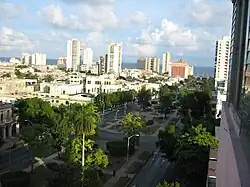 17th Street of El Vedado | |
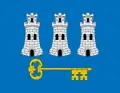 Flag 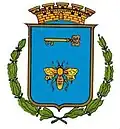 Seal | |
| Nickname: The City of Collumns | |
| Country |  Cuba |
| Area | |
| • Total | 730 km2 (281 sq mi) |
| Highest elevation | 220 m (722 ft) |
| Population (2012 Census) | |
| • Total | 2 106 146 |
| • Rank | 1 |
| • Density | 2,890/km2 (7,490/sq mi) |
| Demonym | Habaneros-Habaneras |
La Habana (Havana) is the capital and largest city of Cuba. It sits on the island’s northwestern coast along the Straits of Florida, facing the Gulf of Mexico.
Founded in the early colonial period, Havana developed into one of the most important ports in the Spanish Empire in the Americas, which is reflected today in its historic architecture, fortifications, and urban layout. The city is known for a mix of preserved colonial-era districts, mid-20th-century urban development, and later architectural layers that reflect different periods of Cuban history.
Havana serves as Cuba’s political, administrative, cultural, and economic center. It is home to the country’s main government institutions, major universities, cultural organizations, and a large share of national industry and services. Areas such as Habana Vieja (Old Havana) are recognized for their historical value, with plazas, churches, and buildings that date back several centuries, while newer districts show more modern urban planning and residential expansion from the 20th century.
A key aspect of Havana’s modern administrative identity involves changes to its surrounding provincial structure. Historically, “La Habana” was also used to refer to a much larger provincial territory that included the capital and extensive surrounding municipalities. This larger La Habana Province was a broad administrative region encircling the city and combining urban, suburban, and rural areas under one provincial government.
In 2011, Cuba reorganized its internal provincial divisions, resulting in the dissolution of the old, larger La Habana Province. That territory was split into two separate provinces: Artemisa to the west and Mayabeque to the east. At the same time, the city of Havana was established as its own distinct provincial-level entity. This change significantly reduced the geographic size of what had previously been considered “La Habana Province,” meaning the modern administrative Havana is much smaller in area than the earlier provincial configuration.
Today, Havana remains the central urban hub of the country, while the surrounding provinces that were once part of the larger La Habana region function as separate administrative areas with their own local governments. Despite the administrative change, the term “La Habana” is still commonly used in everyday language to refer both to the city itself and, more broadly, to the surrounding metropolitan region.