John Zápolya
| John I | |
|---|---|
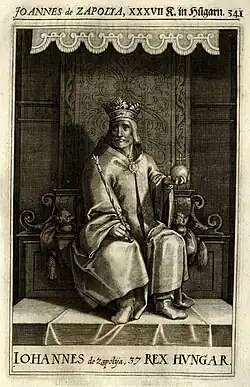 | |
| King of Transylvania | |
| Reign | 1526-1540 |
| Coronation | 11 November 1526 |
| Predecessor | Louis II (King of Hungary) |
| Successor | John II Sigismund |
| Born | 1487 Spišské Podhradie, Slovakia |
| Died | 22 July 1540 Sebeș, Romania |
| Burial | Székesfehérvár Basilica |
| Spouse | Isabella of Poland and Lithuania |
| Issue | John II Sigismund |
| House | Zápolya |
| Father | Stephen Zápolya |
| Mother | Hedwig of Cieszyn |
| Signature | 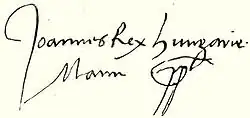 |
John Zápolya (Hungarian: Zápolya János; Slovak: Ioan Zápolya) was born in Spiš Castle in 1487, John and his younger brother George inherited their father's domains in January 1500, John can read and write in Latin, showing that his mother provided him with excellent education; John began his public career as a member of the Diet at Zugló in 1505.
Voivode of Transylvania
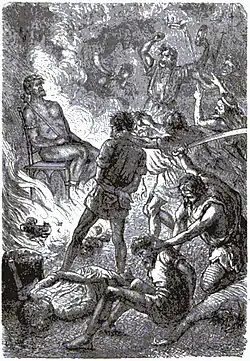
Wladyslaw II appointed John as Voivode of Transylvania on 8 November 1510. Tamás Bakócz, Archbishop of Esztergom, declared a Crusade against the Ottomans on 9 April 1514; about 40,000 peasants joined the crusade and assembled near Pest, although their lords had tried to retain them before the harvest. The "crusade" soon turned into a peasant rebellion, as the peasant army marched toward Turkish territory, looting nearby noble manors, many villagers refused to pay taxes and duties.
The army commanded by György Dózsa, laid siege to Timișoara, Stephan Báthory defended the town, Zápolya who had returned from Bulgaria, came to relieve Timișoara, his army routed the peasants on 15 July. The leaders of the revolt were tortured to death. Zápolya's victory strengthened his authority, the Diet hailed Zápolya as the "liberator of the realm" and rewarded him with a payment of 20 denars for each peasant household; in 1522, John helped Radu of Afumați gain the Wallachian throne in 1522.
King of Transylvania
On 29 August 1526, Louis II of Hungary and Bohemia died in the Battle of Mohács, around 19,000 soldiers including his brother were killed, 10,000 captured and 2,000 prisoners executed; Zápolya was proclaimed King of Hungary by the Gentry on 11 November 1526 at Székesfehérvár, but Louis brother-in-law Ferdinand was also elected king by magnates, barons and Catholic clergy on 17 December 1526 at Pozsony.
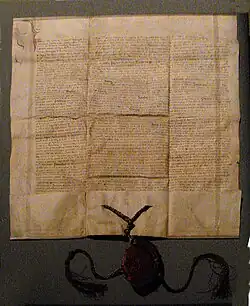
He drew on his vast private wealth, the unconditional support of the lesser nobility and the assistance of some aristocrats to impose his policies in domestic affairs. However, in the crucial sphere of foreign relations, success eluded him. He negotiated an alliance with the Habsburgs against the Ottomans, but Ferdinand rejected all attempts of reconciliation, John envoys fanned across europe for support, only in France he found a positive response.
On 27 September 1527, Ferdinand invaded Transylvania with 18,000 men, mostly German mercenaries and some Hungarian supporters. Zápolya with 7000-8000 men from Serbia and Transylvania attacked Ferdinand's force in Tarcal, but Ferdinand's troops flanked Zápolya's army and swept through cavalry.
On 20 March 1528, Zápolya advanced into Hungary with approximately 15,000 recruits, Johann Katzianer and Bálint Török with 13,000-14,000 men marched against Zápolya and the 2 armies met in Seňa, Zápolya's Infantry was less skilled than the Hungarian army and Zápolya was defeated.
In 1529 Zápolya sent Heironymus Laski to Constantinople for help, but the Sultan will only help if Zápolya becomes a vassal