Jean-Jacques-Régis de Cambacérès
Jean-Jacques-Régis de Cambacérès Duke of Parma | |
|---|---|
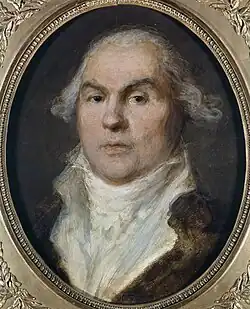 Portrait by Jean-Baptiste Greuze, late 18th century | |
| Second Consul of France | |
| In office 12 December 1799 – 18 May 1804 | |
| Preceded by | Emmanuel Joseph Sieyès (as Provisional Consul) |
| Succeeded by | Republic abolished |
| Archchancellor of the Empire | |
| In office 18 May 1804 – 14 April 1814 20 March 1815 – 22 June 1815 | |
| Monarch | Napoleon I |
| Minister of Justice | |
| In office 20 March 1815 – 22 June 1815 | |
| Preceded by | Charles Dambray |
| Succeeded by | Antoine Jacques Claude Joseph, comte Boulay de la Meurthe |
| 52nd President of the National Convention | |
| In office 7 October 1794 – 22 October 1794 | |
| Preceded by | André Dumont |
| Succeeded by | Pierre Louis Prieur |
| Personal details | |
| Born | 18 October 1753 Montpellier, France |
| Died | 8 March 1824 (aged 70) Paris, France |
| Resting place | Père Lachaise Cemetery |
| Signature | 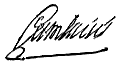 |
Jean-Jacques-Régis de Cambacérès, Duke of Parma ( 18 October 1753 – 8 March 1824), was a French nobleman, lawyer, freemason and statesman during the French Revolution and the First Empire.
He is best remembered as one of the authors of the Napoleonic Code.