Duchy of Modena and Reggio
Duchy of Modena and Reggio | |||||||||||||||||||||||||||
|---|---|---|---|---|---|---|---|---|---|---|---|---|---|---|---|---|---|---|---|---|---|---|---|---|---|---|---|
| 1452–1796 1814–1859 | |||||||||||||||||||||||||||
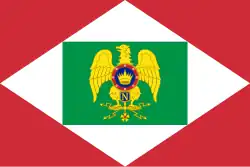
 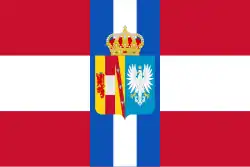 Top: Flag (1452–1830)
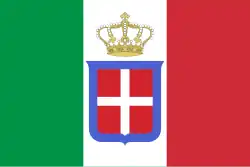
Bottom: Flag (1830–1859)  Coat of arms used from 1830 until 1859
| |||||||||||||||||||||||||||
| Motto: Dextera Domini exaltavit me for The right hand of the Lord ‘has’ exalted me | |||||||||||||||||||||||||||
| Anthem: Gott erhalte Franz den Kaiser (From 1815) "God Save Emperor Francis" Royal anthem "Popular Hymn" (Prayers to be sung during the Mass and the Blessing of the Blessed Sacrament by the Este's troops) | |||||||||||||||||||||||||||
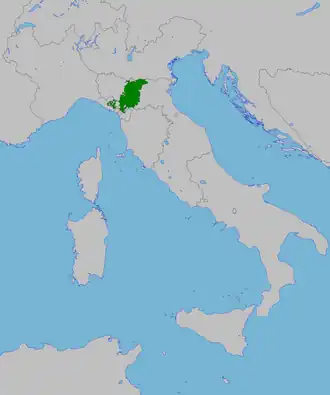 The Duchy of Modena and Reggio in 1815 | |||||||||||||||||||||||||||
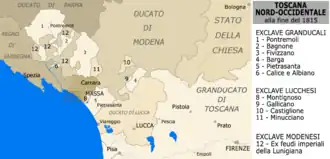 The intricate southern border area of the Duchy at the end of 1815, following the acquisition of the former imperial fiefdoms of Lunigiana. | |||||||||||||||||||||||||||
| Capital | Modena | ||||||||||||||||||||||||||
| Common languages | |||||||||||||||||||||||||||
| Religion | Roman Catholicism | ||||||||||||||||||||||||||
| Government | Duchy | ||||||||||||||||||||||||||
| Duke | |||||||||||||||||||||||||||
• 1452–1471 | Borso d'Este (first) | ||||||||||||||||||||||||||
• 1846–1859 | Francesco V (last) | ||||||||||||||||||||||||||
| Historical era | Early modern era | ||||||||||||||||||||||||||
• Created | 1452 | ||||||||||||||||||||||||||
• Conquered by France | 1796 | ||||||||||||||||||||||||||
• Re-established | 1814 | ||||||||||||||||||||||||||
• Merged to form the United Provinces of Central Italy | 1859 | ||||||||||||||||||||||||||
| Population | |||||||||||||||||||||||||||
• 1846 estimate | 238,000[2] | ||||||||||||||||||||||||||
| |||||||||||||||||||||||||||
| Today part of | Italy | ||||||||||||||||||||||||||
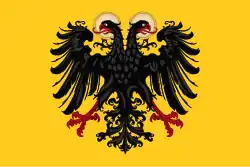




The Duchy of Modena and Reggio (Italian: Ducato di Modena e Reggio; Latin: Ducatus Mutinae et Regii; Emilian: Duchêt ed Mòdna e Rèz[3]) was an Italian state created in 1452 located in Northwestern Italy, in the present-day region of Emilia-Romagna. It was ruled since its establishment by the noble House of Este, and from 1814 by the Austria-Este branch of the family.[4] The Este dynasty was a great sponsor of the arts, making the Duchy a cultural reference during the Renaissance and Baroque periods.[5][6]
Reference
- ↑ L'Aşèj Balsâmich
- ↑ Manuale di scienze ed arti, ossia Repertorio metodico di storia universale (in Italian). 1846. p. 675.
- ↑ Francesco III d'Este
- ↑ Trudy Ring; Robert M. Salkin; Sharon La Boda (1 January 1996). International Dictionary of Historic Places: Southern Europe. Taylor & Francis. pp. 446–. ISBN 978-1-884964-02-2. Retrieved 21 February 2011.
- ↑ Costa, Carla. "Modena barocca". baroque, arte e cultura nel periodo barocco (in Italian). Retrieved 2022-04-23.
- ↑ "Gli Este. Rinascimento e Barocco a Ferrara e Modena - S. Casciu - M. Toffanello - Libro - Franco Cosimo Panini - Arte estensi | IBS". www.ibs.it (in Italian). Retrieved 2022-04-23.