Deobandi jihadism
| Deobandi Jihadism الْجِهَادِيَّةُ الدِّيُوبَنْدِيَّةُ | |
|---|---|
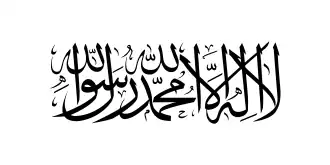
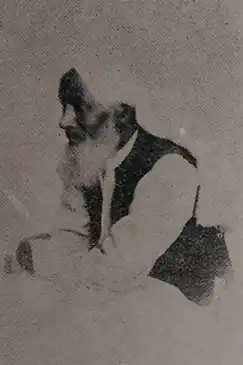
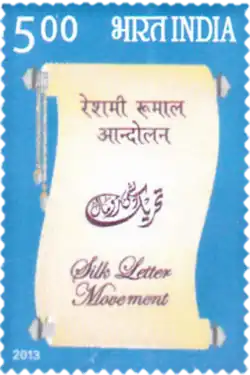
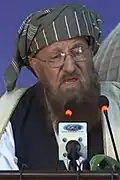
From top to bottom: Islamic flag, Silk Letter Movement, Mullah Omar, Darul Uloom Haqqania, Sami-ul-Haq, Mahmud Hasan Deobandi | |
| Leaders | Imdadullah Muhajir Makki, Muhammad Qasim Nanautavi, Rashid Ahmad Gangohi, Mahmud Hasan Deobandi, Sami-ul-Haq, Mullah Omar, Masood Azhar, Ilyas Kashmiri |
| Motives | Islamic state, Caliphate [2] |
| Active regions | Afghanistan, Pakistan, Kashmir, Bangladesh, India |
| Battles and wars | Battle of Shamli, Silk Letter Movement, Soviet–Afghan War, Insurgency in Jammu and Kashmir, Afghan Civil War (1992–1996), Internal conflict in Bangladesh, War in Afghanistan (2001–2021) |
| Organization(s) | Taliban, Sipah-e-Sahaba Pakistan, Aid Organization of the Ulema, Lashkar-e-Jhangvi, Jaish-e-Mohammed, Harkat-ul-Jihad al-Islami, Haqqani network, Pakistani Taliban, Harkat-ul-Mujahideen, Lashkar-e-Islam, Jamiat Ulema-e-Islam (S), Jamaat-ul-Mujahideen Bangladesh, Allah'r Dal |
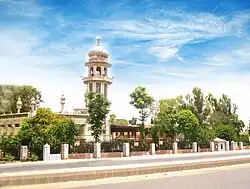
Deobandi Jihadism is a jihadist understanding of Islam, which is built based on the teachings of the Deobandi movement that came from the Indian subcontinent in the nineteenth century.
The Deobandi movement carried three waves of armed jihad.
In the Indian Rebellion of 1857, a few years before the founding of Darul Uloom Deoband, senior people of the movement were involved in making an Islamic region centered on Thana Bhawan, and Imdadullah Muhajir Makki was the Amir al-Mu'minin of that Islamic land.[3]
After the Battle of Shamil, when the British Empire defeated the Deobandi forces, this region fell.
After the founding of Darul Uloom Deoband, Mahmud Hasan Deobandi led the teaching of the second wave. Through different actions, including forming secret training plans, he built armed resistance against the British. When the British were able to uncover the Silk Letter Movement, they arrested him and kept him imprisoned in Malta. After his release, he and his students entered mainstream politics and actively took part in the democratic process.[3]
In late 1979, the Pakistan–Afghanistan border became the center of the third wave of Deobandi jihadism, which was connected to the Soviet–Afghan War. With the support of Pakistan President Muhammad Zia-ul-Haq, Darul Uloom Haqqania and Jamia Uloom-ul-Islamia were established, and through them many madrasas spread. Jamiat Ulema-e-Islam (S) gave political support to this movement. Fighters trained from the Pak-Afghan border took part in the Afghan jihad. Later, they formed different groups including the Taliban. The most organized and most successful example of Deobandi jihadism is the Taliban, who established Islamic rule (Sharia) in Afghanistan. The head of Jamiat Ulema-e-Islam (S), Sami-ul-Haq, is called the “Father of the Taliban.”
References
- ↑ Ingram, Brannon D. (2018). Revival from Below: The Deoband Movement and Global Islam. Oakland: University of California Press. ISBN 978-0520298002. LCCN 2018014045.
- ↑
Syed, Jawad; Pio, Edwina; Kamran, Tahir; Zaidi, Abbas, eds. (2016). Faith-Based Violence and Deobandi Militancy in Afghanistan, Indian subcontinent. Basingstoke: Palgrave Macmillan. p. 139. doi:10.1057/978-1-349-94966-3. ISBN 978-1-349-94965-6. LCCN 2016951736.
Some prominent founders of the Darul Uloom Deoband, such as Muhammad Qasim Nanautavi and Rashid Ahmad Gangohi, drew further inspiration from the religiopolitical concept of Shah Waliullah Dehlawi and they set up an Islamic seminary at Deoband in UP on 30 May 1866
- 1 2 Abul Fatah Muhammad Yahya: Deoband Movement: History, Tradition, Contribution.