Caramelization
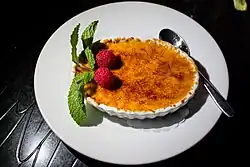
Caramelization is a process when sugars go brown when heated.[1] It also gives sugar a more nutty taste. Caramelans (C24H36O18), caramelens (C36H50O25), and caramelins (C125H188O80) are responsible for the brown color.
Uses in food
Caramelization is used to in several foods:
- Caramel sauce, a sauce made with caramel
- Confiture de lait and Dulce de leche, caramelized, sweetened milk
- Caramel candies
- Creme Caramel, and the similar Crème Brûlée, a custard dish topped with sugar caramelized with a blowtorch
- Caramelized onions, which are used in dishes like French onion soup. Onions require 30 to 45 minutes of cooking to caramelize.[2][3]
- Caramelized potatoes
- Caramelized pears[4]
- Cola, of which some brands use caramelized sugar in small amounts for color
Note that many caramelized foods also uses the Maillard reaction; particularly recipes having protein.
References
- ↑ "Caramelization: new science, new possibilities". Curious Cook. Retrieved 2021-05-13.
- ↑ Scocca, Tom. Layers of Deceit: Why do recipe writers lie and lie and lie about how long it takes to caramelize onions? Slate.com, May 2, 2012.
- ↑ Child, Julia. "French Onion Soup". Archived from the original on 2012-05-02. Retrieved 2017-03-08.
- ↑ Farley, Jennifer (2016-10-10). "Caramelizing Pears". Stemilt. Retrieved 2016-10-27.